Skip to content
You can now search across every topic, entity and event.What's new
Iran Conflict 2026
1MAR

11.7m barrels of Iran oil reach China

4 min read
19:00UTC

Satellite tracking reveals half of all Hormuz transits in March are shadow fleet vessels carrying Iranian crude to China — protected by PLA Navy escort and formal Tehran-Beijing negotiations.

ConflictDeveloping
Key takeaway

China imports Iranian oil at a discount while competitors pay the war premium — a compounding competitive advantage.

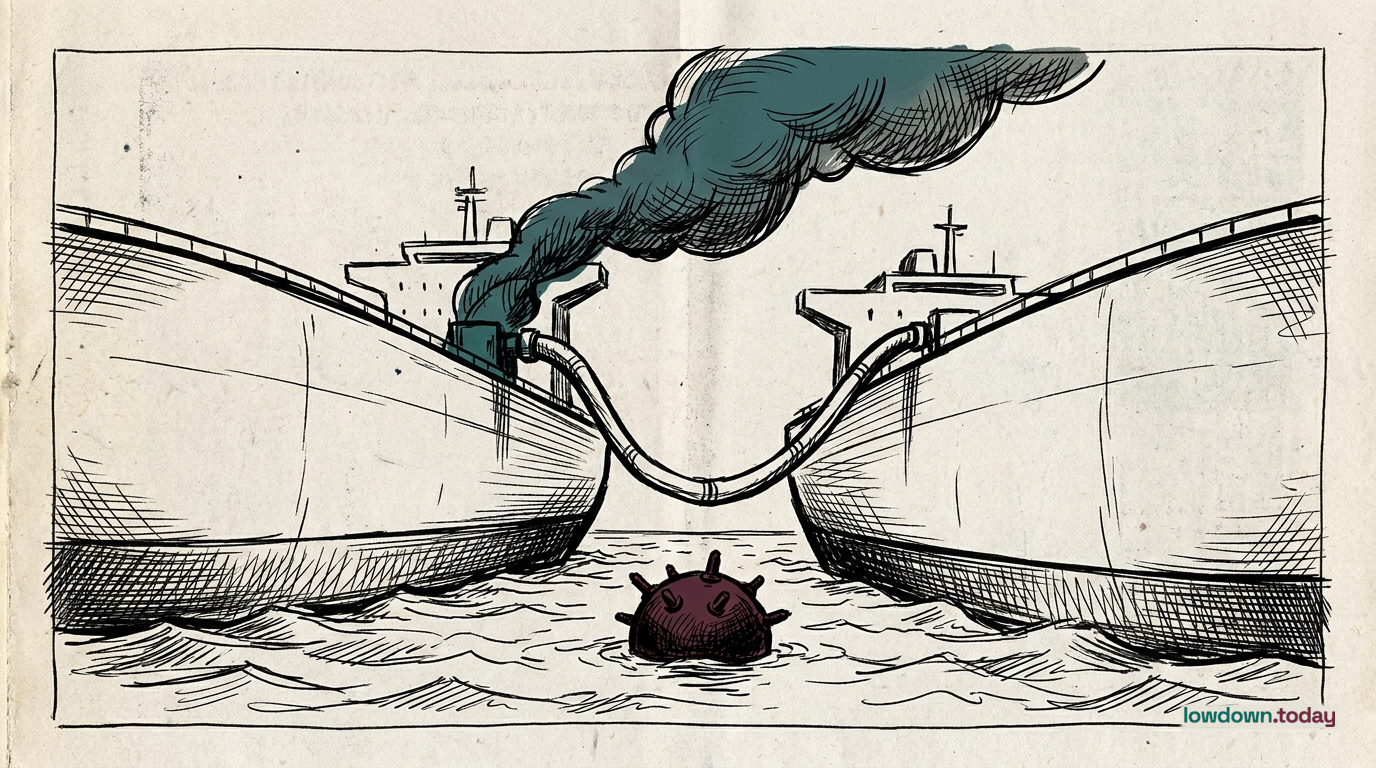
11.7 million barrels of Iranian crude have transited the strait of Hormuz since 28 February, all bound for China, according to Samir Madani, co-founder of TankerTrackers.com, using satellite tracking. Shadow fleet vessels — tankers operating outside mainstream insurance and regulatory frameworks — account for half of all Hormuz transits in March. Chinese-operated ships systematically broadcast AIS messages emphasising Chinese ownership and crew composition, a practice that began in the conflict's first week and became systematic as the PLA Navy's 48th fleet, including the 30,000-tonne signals intelligence vessel Liaowang-1 , took position in The Gulf.

What began as individual captains broadcasting Chinese identity to avoid interdiction has become an organised arrangement. Reuters reported that China entered direct formal negotiations with Iran to guarantee safe passage for crude and Qatari LNG through the strait . Fortune documented that vessels claiming Chinese or "Muslim" ownership receive de facto IRGC protection from interdiction . The progression — from improvised flag-switching to negotiated safe passage to PLA Navy escort — produced a two-tier energy order in under a fortnight.

The economics are direct. Europe, Japan, South Korea, and India pay the war premium — Brent has risen 41% from $67.41 on 27 February to the $90–95 corridor. China does not. Beijing receives discounted Iranian crude through a protected corridor while its commercial rivals face a 90% reduction in Hormuz tanker traffic and war risk insurance costs that make remaining shipments prohibitively expensive. Iran decides who transits and who does not, and the sorting criterion is diplomatic alignment: Beijing abstained on Resolution 2817 rather than opposing it, and receives energy security in return.

The arrangement has a precedent. During the 1980–88 Tanker War, Iran granted passage to vessels it deemed friendly while attacking Iraqi-linked and neutral shipping — the same selective enforcement principle. The difference is the scale of the beneficiary. In the 1980s, no single buyer dominated Gulf crude flows. In 2026, China imports more oil from the Persian Gulf than any other nation. A two-tier strait controlled by Tehran and navigated primarily by Chinese-linked vessels restructures global energy trade around a Beijing-Tehran axis — not through formal alliance, but through the practical geometry of who is allowed to buy and who is not.

Deep Analysis

In plain English

A shadow fleet is a collection of tankers — typically old, uninsured, and owned through opaque corporate structures — that specialise in moving oil from sanctioned countries without being easily traced or stopped. Iran built this network over five years of US sanctions. The ships falsify or switch off their GPS tracking signals to hide their routes and identities. Now, in wartime, the same fleet is moving Iranian oil through the very strait Iran claims to have closed — but only to China. Chinese-operated ships are broadcasting their national identity as a signal to Iranian authorities that they are the protected party. It is a sophisticated, pre-built system now running at full capacity, creating a two-tier energy order in which China pays less and everyone else pays more.

Deep Analysis
Synthesis

The oil corridor to China is not merely a revenue stream — it is the material basis for Iranian strategic endurance. Without Chinese purchases, Iran's war economy faces hard constraints within months. Beijing's continuation of purchases under active wartime conditions transforms it from a diplomatic supporter into a co-enabler of the conflict's duration. The selective blockade and the Chinese oil corridor are operationally the same instrument: one closes the strait to adversaries; the other keeps it open for the patron that makes the closure economically sustainable.

Escalation

The systematic AIS nationality-broadcasting by Chinese vessels creates an explicit, public test for US enforcement policy. Each week of tolerated Chinese shadow transits strengthens the precedent that China holds a formal Hormuz exemption. If the US intercepts a Chinese-linked vessel, it risks the first direct US-China naval confrontation in the Persian Gulf — a threshold neither side has previously crossed. Washington has so far chosen not to test this line, allowing the two-tier order to harden.

What could happen next?
  • Meaning

    China is simultaneously receiving discounted energy and geopolitical leverage — the war is, for now, net economically advantageous for Beijing.

    Immediate · Assessed
  • Risk

    Any US interdiction of Chinese-linked shadow vessels triggers the first direct US-China naval confrontation in the Persian Gulf, with escalation pathways extending beyond the current conflict.

    Short term · Suggested
  • Consequence

    The competitive energy cost gap between China and import-dependent economies widens materially if the $90–95 price corridor persists beyond four to six weeks.

    Medium term · Assessed
  • Precedent

    The shadow fleet model demonstrates that a determined state actor can effectively defeat Western sanctions enforcement given a single sufficiently powerful patron willing to absorb all exports.

    Long term · Assessed
First Reported In

Update #32 · UN condemns Iran 13-0; ceasefire blocked

CNBC· 12 Mar 2026
Read original
Causes and effects
This Event
11.7m barrels of Iran oil reach China
Satellite tracking data from TankerTrackers.com confirms a two-tier passage system where Chinese-linked vessels transit freely while all others are excluded. Backed by PLA Navy presence and direct negotiations between Beijing and Tehran, the arrangement gives China discounted Iranian crude through a protected corridor while Europe, Japan, South Korea, and India pay a 41% war premium on energy. Gulf energy flows are being reorganised around Beijing-Tehran alignment.
Different Perspectives
Oil traders
Oil traders
Sent Brent down 2.29 per cent to $98.38 a barrel on reports that mediation was reviving, moving the price on CENTCOM's quiet night rather than on Trump's same-day promise of a bigger operation with no deadline attached.
Iran
Iran
An Iranian official called the same mediation account completely misleading, denying it received any US proposal via Baghdad on the same day Iraq denied delivering one, leaving neither denial able to settle what actually passed between the two capitals.
Iraq
Iraq
Called groundless the New York Times account that its prime minister carried a US ceasefire proposal to Tehran, a denial that also protects Baghdad's effort to avoid becoming a party to a war fought by aircraft it does not control.
OHCHR
OHCHR
Recorded 17 civilian seafarer deaths since the war began, a population neither the Pentagon nor Iran's Health Ministry counts in its own tally, and called for urgent action on 6,000 crew stranded across roughly 400 vessels in the Strait of Hormuz.
Houthis
Houthis
Enforced the blockade on Saudi-linked shipping it declared on 20 July by hitting the NCC Masa and then an Aramco facility at Jazan, moving from radio warnings to strikes on land after four days without a confirmed hit.
Saudi Arabia
Saudi Arabia
Struck Houthi military sites near Hodeidah the same day the NCC Masa was hit, while its coalition spokesman insisted Hodeidah, Ras Issa and Salif all remain open to navigation. The distinction protects the ports Yemen's population depends on for food and fuel even while punishing the group behind the tanker strike.