Skip to content
You can now search across every topic, entity and event.What's new
Iran Conflict 2026
4APR

Philippines Cuts Bilateral Hormuz Deal, Bypassing US Posture

3 min read
09:24UTC

The Philippines secured toll-free passage through the Strait of Hormuz on 2 April via a direct call between Foreign Minister Lazaro and Iran's Abbas Araghchi. Manila is the first US ally to negotiate separately with Tehran since the blockade began.

ConflictAssessed
Key takeaway

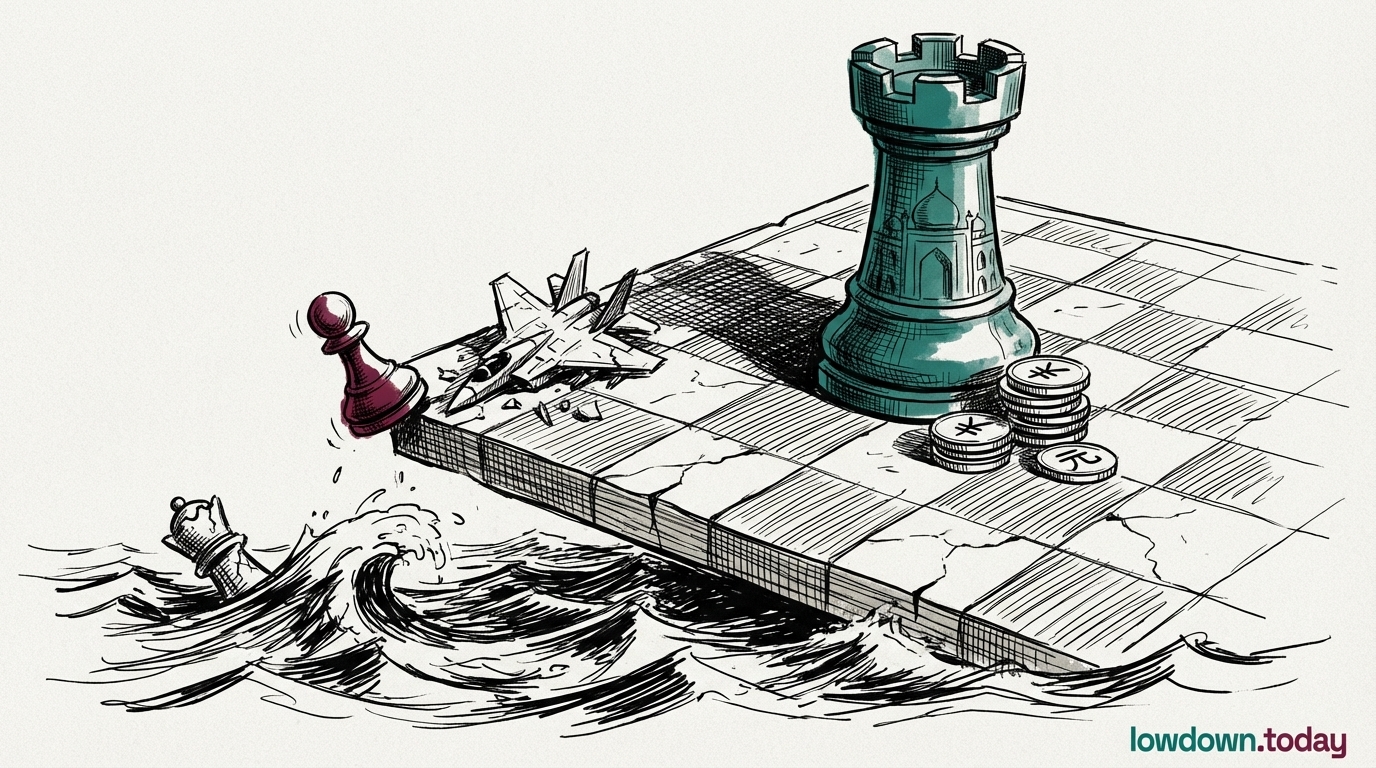
Manila's bilateral deal is the first formal fracture in US allies' collective stance against Iran's Hormuz toll.

Philippines Foreign Minister Lazaro spoke directly with Iranian Foreign Minister Abbas Araghchi on 2 April, securing toll-free Hormuz passage for Philippine-flagged vessels. Manila becomes the first US treaty ally to negotiate bilaterally with Tehran since the IRGC Larak Island toll system became operational .

The Philippines was among the first countries to declare a national energy emergency as the blockade tightened in late March . With 45 days of fuel reserves and a heavily import-" "dependent energy system, Manila had direct economic pressure " "to act. The bilateral deal solves the Philippines problem. It does not solve the alliance problem.

Iran's parliament voted to codify the Hormuz toll into permanent domestic law , explicitly banning US and Israeli ships. The Philippines deal demonstrates what that law's exemption architecture looks like in practice: Iran selects which states receive access and on what terms. Manila accepted those terms. That is a meaningful concession from a US ally, irrespective of the fuel arithmetic that drove it.

Japan, South Korea, and Taiwan now face identical domestic pressure. Each depends heavily on Gulf energy imports. Each is a US ally. If any follows Manila's precedent, the collective posture Washington has relied on since the blockade began effectively dissolves into a series of bilateral licensing arrangements administered by Tehran.

Deep Analysis

In plain English

The Philippines cut its own side deal with Iran so its ships can pass through the Strait of Hormuz without paying Iran's toll. It is the first US ally to do this. If other countries follow, Iran's ability to use the strait as leverage over the whole world weakens, because each country will just negotiate its own quiet arrangement.

Deep Analysis
Root Causes

The Philippines' decision stems from a structural vulnerability that predates the conflict: ASEAN economies are disproportionately dependent on Gulf oil, with limited domestic production and no strategic petroleum reserve adequate to absorb a sustained Hormuz disruption. Manila had no spare buffer.

The secondary cause is the absence of any US mechanism to compensate allies for bearing Hormuz toll costs. Washington demanded solidarity without offering offsetting support. The Philippines simply acted on its interests when the cost exceeded a political threshold.

Escalation

De-escalatory for the Philippines specifically, escalatory for the collective posture. Iran's incentive to extend the conflict increases as more bilateral exemptions legitimise its toll authority. The deal makes a negotiated end to the Hormuz blockade harder because Iran now has demonstrated that individual deals are achievable.

What could happen next?
  • Precedent

    First bilateral Hormuz toll exemption by a US ally; creates a template for Japan, South Korea, Taiwan, and India to follow.

    Immediate · High
  • Consequence

    US leverage over allied shipping policy diminishes with each bilateral deal; the collective pressure architecture fragments from the outside in.

    Short term · High
  • Risk

    Iran's toll evolves from a wartime measure to a permanent licensing framework, effectively privatising passage through an international strait under its unilateral authority.

    Medium term · Medium
  • Opportunity

    The Philippines deal creates a backchannel that could be used for broader indirect diplomacy if Washington chooses to engage it rather than condemn it.

    Short term · Low
First Reported In

Update #57 · Bridge strike kills eight; Army chief fired

Philippines Department of Foreign Affairs· 3 Apr 2026
Read original
Causes and effects
This Event
Philippines Cuts Bilateral Hormuz Deal, Bypassing US Posture
Manila's deal is the first formal crack in the collective posture Washington has maintained since the Hormuz toll began. Each bilateral exception normalises Iran's authority over passage and weakens US leverage over allied shipping.
Different Perspectives
Oil market and P&I insurers
Brent cleared $87 intraday only once CENTCOM's blockade became physical rather than declared, even though P&I Clubs had already excluded Hormuz war risk a week earlier on 7 July: capital hedged ahead of enforcement, but prices moved only after it.
UAE reporting
UAE reporting
UAE reporting placed the Omani tanker deaths at one seafarer against the International Maritime Agency's count of two, the first time in this war that a Gulf state's casualty figures have diverged from an international monitor's.
Jordan
Jordan
Iranian strikes reached Jordan again on 14 July as part of the Gulf-wide retaliation for the Hormuz blockade, extending the conflict's geographic footprint to a state with no direct stake in the strait itself.
Bahrain
Bahrain
Bahrain sounded air-raid sirens on 14 July during Iran's Gulf-wide retaliation, the same day CENTCOM's blockade order and fourth night of strikes pushed the conflict's physical reach into the wider Gulf littoral.
Kuwait
Kuwait
Kuwait intercepted Iranian missiles and drones on 14 July as Tehran's blockade retaliation reached Gulf states beyond Iran's immediate shoreline, confirming Kuwaiti airspace now sits inside Iran's retaliatory envelope.
Oman
Oman
Oman absorbed the war's first tanker casualties in its own waters on 14 July, with two supertankers disabled and seafarers killed, putting the sultanate's shipping lanes directly in the path of the blockade fight for the first time.