Skip to content
You can now search across every topic, entity and event.What's new
Iran Conflict 2026
4APR

Europe condemns war it will not fight

3 min read
09:24UTC

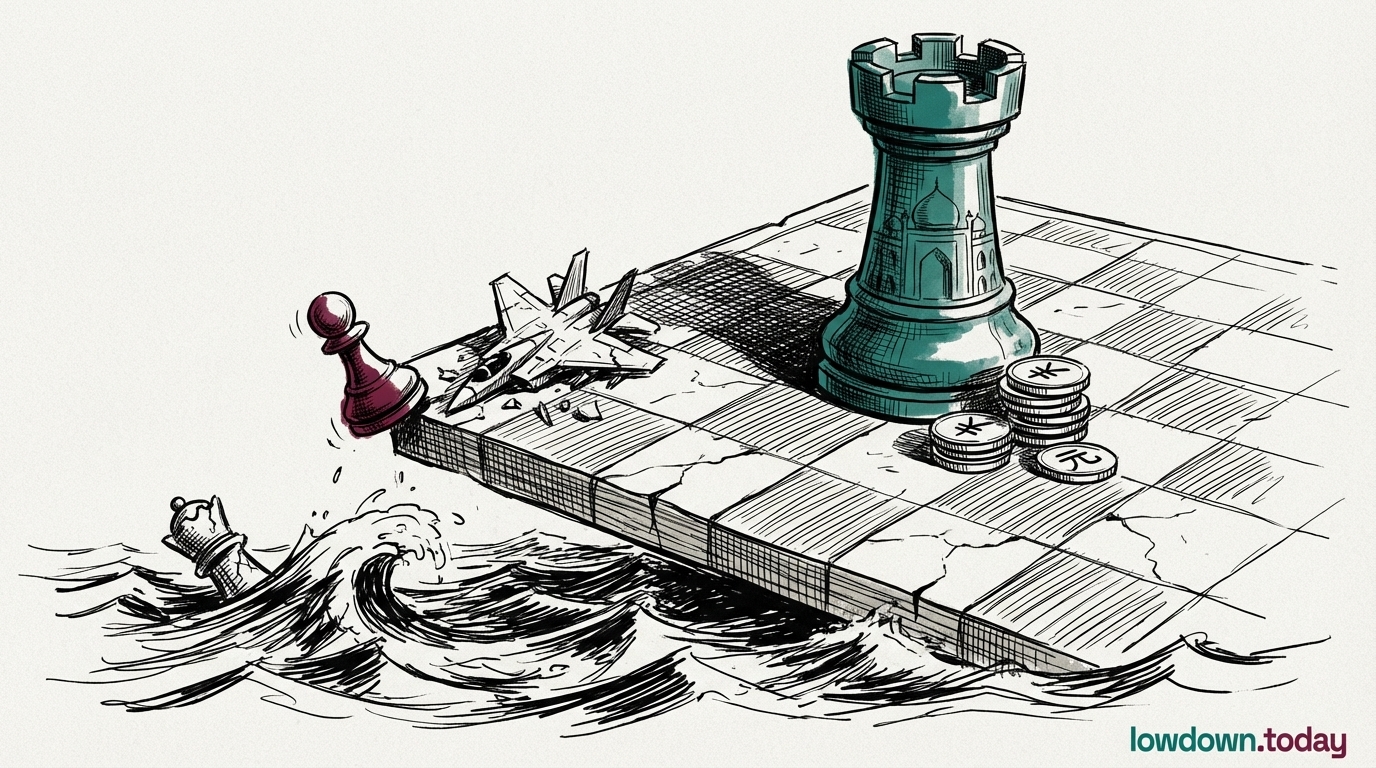
France demanded a UN Security Council session, Spain called the operation destabilising, and the EU called for restraint — but no European government has offered forces, mediation, or a plan to end it.

ConflictDeveloping
Key takeaway

France's UNSC call cannot produce a binding resolution but is likely the opening move toward a 'Uniting for Peace' General Assembly vote that would formally delegitimise the operation in the eyes of most of the world without constraining it militarily.

France called for an emergency UN Security Council session. The European Union called for "restraint." Spain described the US-Israeli operation as contributing to "a more uncertain and hostile international order." The statements arrived within the same 72-hour window as Britain's refusal to join offensive operations — a cascade of European distancing that left Washington and Jerusalem prosecuting Operation Epic Fury without a single NATO ally.

The fracture is wider than Iraq. In February 2003, France and Germany opposed the invasion, but Britain, Poland, Spain under Aznar, Denmark, and Australia joined a coalition that eventually numbered over 40 states. In 2011, France and Britain led the Libya intervention with broad European participation. Here, no European state has committed forces. Even Britain's contribution is limited to base access described as defensive , and London has publicly refused to go further. The coalition consists of two states: the United States and Israel.

France's Security Council call is procedurally available but practically constrained — the United States holds a permanent veto, and no resolution condemning the strikes can pass without American consent. The session's value is forensic: a forum where the legal basis for the campaign will be examined on the record. That record matters because the Pentagon's 90-minute congressional briefing reportedly produced no evidence of the imminent Iranian threat cited as the operation's justification , a gap Senator Mark Warner of the Senate Intelligence Committee confirmed publicly on NPR. Spain's position carries additional weight because the Sánchez government recognised Palestinian statehood in May 2024, establishing Madrid as among the more willing European critics of Israeli military operations.

The EU's collective "restraint" is the institutional minimum — the lowest common denominator among 27 member states whose positions range from Spain's open criticism to the near-silence of countries with close US defence ties. What is absent from every European statement is any proposal for intervention, mediation, or enforcement. South Africa, which brought the ICJ genocide case against Israel, has not criticised Washington. India condemned Iran's retaliatory strikes on Gulf States at the UN but issued no statement on the US-Israeli strikes that started the campaign . Europe, the Global South's leading diplomatic voices, and the BRICS bloc — which has issued no joint statement more than a week into the strikes — have opinions about this war. None has a plan to end it.


Deep Analysis

In plain English

The UN Security Council is the only body that can legally authorise or stop a war — but the United States can veto anything it dislikes, making France's emergency session call more symbolic than decisive. What France is actually building is a diplomatic record: countries going on record opposing the strikes, potentially setting up a vote in the broader UN General Assembly where there is no veto. Such a vote cannot stop the war or impose sanctions, but a result like the 141-nation vote condemning Russia's Ukraine invasion would formally label Operation Epic Fury as illegal under international law in the eyes of most states — with downstream consequences for international institutions, courts, and eventually post-war reconstruction funding. Spain going further than EU consensus language suggests at least some European governments believe Washington is too absorbed by the Iran campaign to punish dissent right now.

Deep Analysis
Synthesis

A successful 'Uniting for Peace' General Assembly resolution would have a precedent-setting function beyond this conflict: it would establish that US military operations lacking Security Council authorisation and contested on imminent-threat grounds can be multilaterally condemned through the same mechanism used against Russia — reducing the legal asymmetry that has historically shielded US operations from that treatment.

Root Causes

The EU's inability to produce stronger than 'restraint' language reflects the unanimity requirement for EU Common Foreign and Security Policy hard security decisions — the lowest-common-denominator position that kept Hungary and potentially other US-sympathetic members from blocking even minimal collective expression. Spain's willingness to exceed that consensus reflects Madrid's calculation that Washington's attention is currently too absorbed to impose costs on European dissent.

Escalation

Channelling European opposition into UNSC procedure and potential General Assembly action reduces the risk of military escalation by European powers but could increase indirect pressure on shipping insurers, financial institutions, and multilateral lenders to treat the operation as unlawful — with consequences for post-conflict reconstruction financing if a General Assembly resolution passes.

What could happen next?
  • Precedent

    A General Assembly resolution condemning the strikes through 'Uniting for Peace' would establish that US military operations can be subjected to the same multilateral delegitimisation mechanism previously applied to Russia — reducing legal asymmetry that has historically shielded US action.

    Long term · Suggested
  • Consequence

    European diplomatic opposition documented at the UNSC will shape post-conflict reconstruction negotiations, potentially conditioning EU financial contributions on accountability for civilian casualties.

    Medium term · Suggested
  • Risk

    A non-binding UNGA resolution condemning the operation could provide legal basis for international financial institutions and private insurers to decline participation in post-conflict reconstruction, complicating whatever governance arrangement follows the military phase.

    Medium term · Suggested
  • Meaning

    Spain's willingness to exceed EU consensus language signals that at least some European governments calculate Washington lacks the bandwidth to punish allied dissent during an active multi-front campaign.

    Immediate · Suggested
First Reported In

Update #9 · IRGC HQ destroyed; Britain quits coalition

Al Jazeera· 2 Mar 2026
Read original
Causes and effects
This Event
Europe condemns war it will not fight
No European ally has joined the US-Israeli campaign, producing the narrowest coalition for a major American military operation since the 1986 US strikes on Libya. The transatlantic fracture is wider than Iraq 2003, when Britain, Poland, and over 30 states participated.
Different Perspectives
Oil traders
Oil traders
Sent Brent down 2.29 per cent to $98.38 a barrel on reports that mediation was reviving, moving the price on CENTCOM's quiet night rather than on Trump's same-day promise of a bigger operation with no deadline attached.
Iran
Iran
An Iranian official called the same mediation account completely misleading, denying it received any US proposal via Baghdad on the same day Iraq denied delivering one, leaving neither denial able to settle what actually passed between the two capitals.
Iraq
Iraq
Called groundless the New York Times account that its prime minister carried a US ceasefire proposal to Tehran, a denial that also protects Baghdad's effort to avoid becoming a party to a war fought by aircraft it does not control.
OHCHR
OHCHR
Recorded 17 civilian seafarer deaths since the war began, a population neither the Pentagon nor Iran's Health Ministry counts in its own tally, and called for urgent action on 6,000 crew stranded across roughly 400 vessels in the Strait of Hormuz.
Houthis
Houthis
Enforced the blockade on Saudi-linked shipping it declared on 20 July by hitting the NCC Masa and then an Aramco facility at Jazan, moving from radio warnings to strikes on land after four days without a confirmed hit.
Saudi Arabia
Saudi Arabia
Struck Houthi military sites near Hodeidah the same day the NCC Masa was hit, while its coalition spokesman insisted Hodeidah, Ras Issa and Salif all remain open to navigation. The distinction protects the ports Yemen's population depends on for food and fuel even while punishing the group behind the tanker strike.



