Skip to content
Briefings are running a touch slower this week while we rebuild the foundations.See roadmap
Iran Conflict 2026
26MAR

124m barrels of Russian crude freed

4 min read
09:36UTC

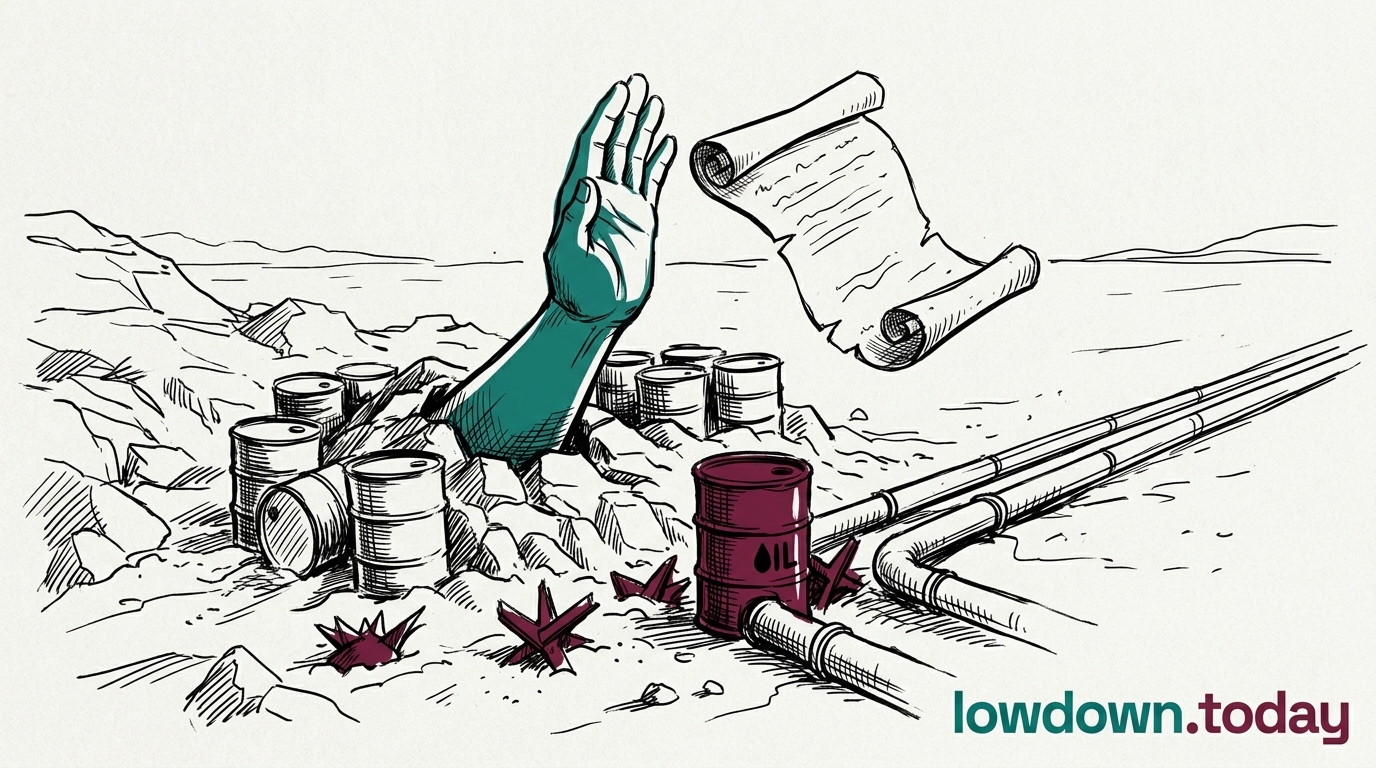
The US Treasury permitted any country to purchase Russian oil already at sea, drawing sharp rebukes from European leaders who warned Washington was dismantling the sanctions regime it built.

ConflictDeveloping
Key takeaway

Washington has formally acknowledged that energy market stability now outweighs Russian revenue denial.

The US Treasury issued 30-day sanctions waivers on 12 March permitting any country to purchase approximately 124 million barrels of Russian oil already at sea, with the window running through 11 April 1. The waivers began on 5 March covering Indian refineries before expanding globally a week later. Treasury Secretary Scott Bessent called the measure "narrowly tailored" but told Sky News that Russian revenue gains were "an inevitability" 2.

The waivers arrive against a transformed price environment. In January, Urals Crude traded below $38 per barrel against Brent at $62.50, and Russian oil revenues had fallen roughly 32% year-on-year . The Iran conflict reversed that trajectory. Brent reached approximately $103 per barrel by 18 March — a 65% increase — driven by the near-collapse of tanker traffic through the strait of Hormuz. Analysts at Rapidan Energy and Wood Mackenzie have called this the largest energy supply disruption since the 1973 oil embargo 3. The IEA's 400-million-barrel strategic reserve release — its largest-ever coordinated drawdown — failed to arrest the climb. Prices briefly touched $126 at peak.

European leaders responded in terms that left little ambiguity. German Chancellor Friedrich Merz — who told Trump on 3 March that Europe would not accept Ukraine terms negotiated without European participation — stated: "Easing sanctions now, for whatever reason, is wrong." European Council President António Costa said the move "impacts European security." Zelenskyy warned Russia could earn "$10 billion" over a fortnight. From Moscow, RDIF head and Special Presidential Envoy Kirill Dmitriev pushed the opposite direction, arguing the global energy market "cannot remain stable" without Russian oil 4.

The waivers expose a structural contradiction in Western sanctions policy. The regime was designed to constrain Russian revenue during a period of low oil prices. The Iran war has created conditions where every barrel Russia sells generates more revenue than the sanctions architecture was built to prevent — and where the US itself needs Russian crude on the market to contain domestic energy costs. The peace talks that froze when the Iran conflict began remain suspended; the sanctions leverage built for those negotiations is now eroding under the weight of an unrelated war. The 11 April expiry date will test whether the waiver was genuinely temporary or whether market pressure makes renewal politically unavoidable.


Deep Analysis

In plain English

The US government temporarily lifted rules preventing countries from buying Russian oil sitting on ships at sea. With oil prices spiking because of the Iran war, letting those cargoes sell was seen as the lesser evil. But once you issue this kind of temporary permission, it becomes very hard to withdraw — markets, shipping contracts, and payment channels all adapt to the new reality. Critics argue Russia collects the windfall either way, and the pause creates political and commercial pressure for further pauses.

Deep Analysis
Synthesis

The waiver is the first formal US acknowledgement that its dual-war economic containment strategy is self-defeating. It establishes a hierarchy — energy market stability ranks above revenue denial — that will constrain future sanctions design and provide adversaries with a replicable template: creating enough energy market disruption to force Western self-exemption from their own sanctions regimes.

Root Causes

The structural incompatibility of simultaneous Iran and Russia energy containment was inherent from the conflict's first week — no sanctions architecture designed for a single-conflict environment can restrict two major hydrocarbon producers simultaneously without triggering market failure. The G7 price cap ($60/barrel) was calibrated for a sub-$80 Brent environment; above $90, circumvention incentives for non-G7 buyers structurally exceed compliance costs, rendering the cap inoperative regardless of waiver decisions.

Escalation

The 11 April expiry falls during peak market stress — Brent at $103 and Hormuz disruption ongoing. Structural market pressure for extension materially exceeds political pressure for termination. The waiver's expansion from India-specific to global within one week signals scope creep that the Iran waiver precedent suggests will accelerate rather than reverse before expiry.

What could happen next?
  • Precedent

    Sanctions waivers issued under energy market duress establish a replicable template for future erosion whenever geopolitical pressure and market stability objectives conflict.

    Long term · Assessed
  • Risk

    If the 11 April expiry triggers an oil price spike, extension becomes politically mandatory — effectively converting a temporary waiver into a permanent accommodation.

    Short term · Assessed
  • Consequence

    EU member states maintaining harder sanctions lines than Washington face commercial disadvantage as non-G7 buyers access Russian oil with implicit US blessing.

    Immediate · Assessed
  • Meaning

    The seven-day expansion from India-specific to global waivers reveals Treasury had minimal confidence in a narrow application holding against market pressure.

    Immediate · Assessed
First Reported In

Update #5 · Trump frees 124m barrels; Russia earns €6bn

NBC News· 18 Mar 2026
Read original
Different Perspectives
Markets
Markets
Brent crude rose 2.2 per cent to $96.34 on 10 June, reversing a 7 per cent weekly decline built on deal optimism, as the overnight exchange repriced the Strait of Hormuz risk premium in a single session. The move reflects transit-risk repricing rather than supply shock: Iran's exports had already collapsed to below 300,000 barrels per day.
Pakistan
Pakistan
Pakistan's Naqvi channel, the only mediation track carrying both civilian and military buy-in, was stress-tested by live ordnance within 48 hours of the 6-7 June Tehran visit. Whether Washington informed Islamabad of the imminent strike plan while Naqvi was in Tehran remains undisclosed, putting the channel's neutrality under scrutiny.
Kuwait
Kuwait
Kuwait hosted the third Iranian strike on its soil since the 3 June airport drone attack, with Ali Al Salem airbase targeted in the three-country salvo. Its recent $1.98 billion Anduril Anvil counter-drone purchase signals it is rearming rather than reconsidering its hosting posture.
Bahrain
Bahrain
Bahrain absorbed the IRGC barrage via PAC-3 intercepts with its magazine already at 87 per cent depletion and no resupply before 2027. Sounding air-raid sirens over Manama, it faced the intercept burden with the thinnest defensive stack in the Gulf coalition.
Jordan
Jordan
Jordan reported all five incoming missiles intercepted with no injuries and no damage, a clean defensive performance that strengthens Amman's case for staying in the Western coalition without escalating its own posture. It now sits on Iran's target list for the first time despite not being a party to the Abraham Accords confrontation.
Iran / IRGC
Iran / IRGC
Foreign Minister Araghchi posted on X that US forces should 'leave our region if you want to be safe' and framed the exchange as a US defeat, while the IRGC claimed 21 targets hit and an F-35 hangar destroyed. The claims serve a domestic and Arab-audience framing rather than a verified battle-damage assessment.



