Skip to content
Briefings are running a touch slower this week while we rebuild the foundations.See roadmap
Iran Conflict 2026
28FEB

Iran War Hands Russia an Unexpected Oil Windfall

2 min read
19:00UTC

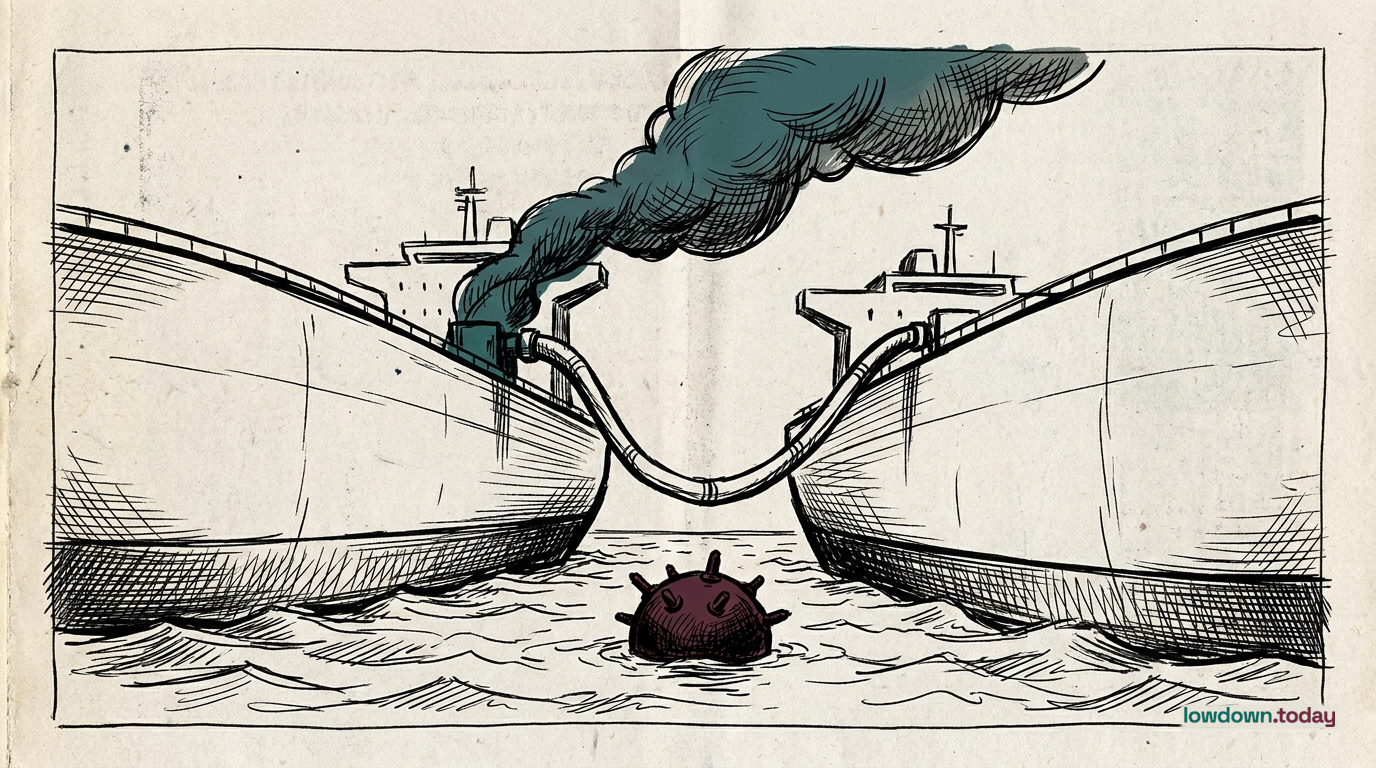
Ukraine's Baltic port strikes cut Russian crude exports by 43%, but the Iran war more than doubled the per-barrel price, projecting a 70% April revenue jump over March.

ConflictDeveloping
Key takeaway

Iran war doubled the per-barrel price, creating a net Russian windfall only sustained Baltic disruption can reverse.

Urals crude reached $123.45 per barrel on 3 April, more than double Russia's $59 budget assumption and nearly triple the January average. The cause is not Russian strength; it is the Iran war, which disrupted Gulf supplies and dragged global benchmarks upward.

Ukraine's Baltic drone campaign inflicted genuine physical damage: 15 tankers did not sail, weekly revenue fell by roughly $1 billion, and Primorsk lost 40% of storage capacity. But the Iran war has separated price from volume in a way the infrastructure campaign cannot control. At $123 per barrel, Russia earns approximately $64 more per barrel than its budget assumed. The G7 price cap of $44.10, enforced through insurance and shipping restrictions, is arithmetically irrelevant. CREA data shows 68% of Russian seaborne crude was already on sanctioned shadow tankers before the surge, meaning the enforcement architecture cannot reach two-thirds of exports even in normal conditions.

The physical threat remains real. Both terminals are offline for petroleum products. Russia's gasoline export ban through July signals domestic storage saturation, not export preference. A refinery specialist told Reuters stockpiles would fill within days, forcing output cuts. Russia's National Wealth Fund had already lost $4.8 billion in two months , but elevated prices now mask the structural erosion.

The decisive variable is strike tempo. Ukraine must sustain Baltic attacks long enough for storage saturation to force output curtailment before Transneft completes Arctic rerouting. That window is measured in weeks, not months.

Deep Analysis

In plain English

Ukraine successfully damaged Russia's ability to ship oil from its Baltic ports, cutting shipments by nearly half. But at the same time, a separate war in the Middle East caused global oil prices to more than double. Russia now earns so much more money per barrel that it is actually making more revenue overall, even though it is selling less oil. The question is whether Ukraine can keep damaging the ports long enough that Russia's storage tanks fill up, forcing it to cut production entirely — which would hurt Russia even at high prices.

Deep Analysis
Root Causes

The Iran war is the primary external cause of the price surge — unrelated to Ukrainian or Russian strategy. Russia's shadow fleet infrastructure (built since 2022) and CREA-documented circumvention of the price cap are the enabling structural conditions allowing Moscow to realise the windfall.

Escalation

The price windfall reduces Russia's incentive to negotiate on energy infrastructure and increases Ukraine's incentive to escalate Baltic strikes. Both sides now have stronger reasons to continue the infrastructure war through April.

What could happen next?
  • Consequence

    Russia's April oil revenues may be the highest since before Western sanctions, directly funding continued war prosecution.

    Immediate · High
  • Risk

    OFAC GL 134A expires 11 April; extension at $121/barrel would hand Moscow far greater revenue per barrel than when issued at $73.

    Immediate · High
  • Consequence

    The G7 price cap enforcement architecture is rendered ineffective while Urals trades at more than double the cap level.

    Short term · High
  • Opportunity

    Forced production cuts from storage saturation would compress Russian revenues even at elevated prices — achievable if Ukraine sustains strike tempo through April.

    Short term · Medium
First Reported In

Update #11 · Russia Sells Less Oil but Earns More

Gulf News / Bloomberg / Business Standard· 5 Apr 2026
Read original
Different Perspectives
Oil markets / Lloyd's underwriters
Futures markets priced CENTCOM's strikes-complete statement as a de-escalation signal and pushed Brent down 1.7 per cent to $94.71, even as the IRGC declared Hormuz closed. Lloyd's war-risk premiums held elevated because institutional de-listing requires a UN Security Council resolution that Russia and China have just shown they will block.
Pakistan (mediator)
Pakistan (mediator)
Interior minister Mohsin Naqvi carried dual civilian and military letters to Mojtaba Khamenei in Tehran on 6-7 June with no public response. The IRGC's Hormuz closure on 11 June shows the corps is acting independently of the channel Pakistan is using, making the mediation structurally unable to produce a binding commitment without direct IRGC access.
Russia and China
Russia and China
Russia and China voted against GOV/2026/40 at the IAEA Board, following through on the blocking position coordinated with Grossi in Geneva on 5 June; both states continue to oppose Western institutional pressure on Iran at every multilateral venue.
E3 and IAEA (UK, France, Germany)
The E3 co-sponsored IAEA resolution GOV/2026/40, adopted 21-3-10 on 10 June, demanding Iran disclose 440.9 kg of unaccounted HEU and admit inspectors to four denied facilities. The 10 abstentions and Russia-China noes leave any Security Council referral without a viable enforcement path.
IRGC / Iran military command
The corps declared Hormuz closed to all traffic on 11 June and claimed two vessels struck, overriding the MoU its own civilian negotiators were pursuing through Pakistan. The closure order used the Persian Gulf Strait Authority apparatus to convert a toll mechanism into a military prohibition.
Trump administration / CENTCOM
CENTCOM completed a second day of strikes on Tehran, Sirik and Minab, rejected the IRGC Hormuz closure as inconsistent with observed transit, and said strikes were complete. Hegseth framed the bombing explicitly as the negotiation: the method is coercive deal-making with no stated pause threshold.