Skip to content
Briefings are running a touch slower this week while we rebuild the foundations.See roadmap
Iran Conflict 2026
28FEB

Iran fires on 7 countries in retaliation

1 min read
19:00UTC

Iran fired dozens of ballistic missiles at Israel and at US military installations across seven countries on 28 February 2026 — the widest geographic spread of Iranian offensive missile use in history.

ConflictDeveloping
Key takeaway

Iran's direct ballistic missile response across seven countries ends proxy-mediated deterrence as Iran's default posture and creates immediate US political obligations to respond.

Iran's decision to retaliate directly — rather than routing its response entirely through proxy forces — marks a change from the posture Tehran maintained through 2024 and early 2025, when Hezbollah, the Houthis, and Iraqi militias were used to maintain plausible deniability. Direct ballistic missile strikes on US military bases across seven countries remove that deniability entirely and signal that Iran has concluded the era of calibrated, deniable escalation is over.

The seven-country targeting demonstrates a pre-positioned strike capability that had been mapped and planned well in advance of 28 February. Iran's ballistic missile arsenal — including Fattah, Kheibar Shekan, and Emad variants — has sufficient range to reach US bases across the Gulf and the Levant. The simultaneous nature of the strikes suggests launch windows were coordinated to prevent interception assets in one country from being redirected to defend another.

Direct Iranian retaliation also forecloses certain de-escalation paths that proxies left open. When Iran uses proxies, it retains the option of claiming non-involvement and negotiating a pause. A direct ballistic missile attack on US military installations in seven countries creates a legal and political obligation on the United States to respond, regardless of damage levels. The strike's geographic breadth makes any US non-response politically untenable.

Deep Analysis

Deep Analysis
Escalation

Seven-country targeting creates simultaneous political and military crises across the Gulf, Levant, and potentially wider region — each host country faces Iranian retaliation risk regardless of whether it sanctioned the original US strikes, generating pressure for US force withdrawal requests that would weaken US regional posture.

What could happen next?
  • Meaning

    Short term · Assessed
  • Meaning

    Short term · Assessed
  • Meaning

    Short term · Assessed
First Reported In

Update #2 · Five cities struck on opening night

Al Jazeera· 28 Feb 2026
Read original
Different Perspectives
Gulf shipping and insurance markets
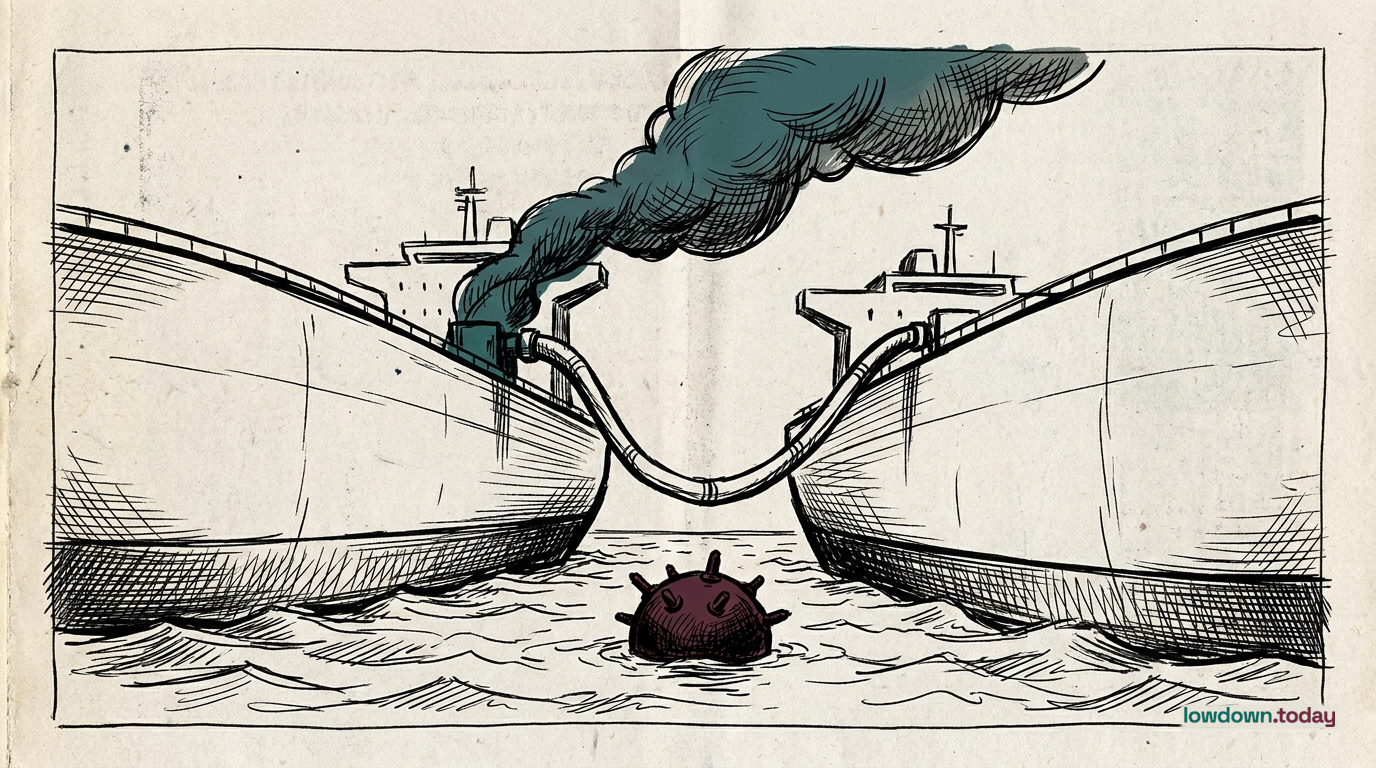
With Hormuz and Bab el-Mandeb both hostile at once, war-risk underwriters face their first dual-chokepoint pricing problem; the rerouting hedge that absorbed one closure is gone for Israeli-linked hulls. Any deal that reopens Hormuz without a Houthi stand-down clause delivers only partial shipping relief.
Russia and China
Russia and China
Russia and China met IAEA chief Grossi jointly in Geneva on 5 June to coordinate an advance blocking position against Washington's censure resolution, the first documented instance of proactive pre-session obstruction rather than reactive post-vote dissent. Beijing's move came four days after OFAC designated Shanghai Qianye Energy under Iran energy sanctions.
Saudi Arabia
Saudi Arabia
Saudi Arabia was left out of the emergency $4.01 billion Patriot waiver Qatar received on 2 May as its own PAC-3 stocks ran near-empty from intercepting Iranian salvoes over Aramco facilities. Riyadh is on a standard 18-month FMS queue behind a production line booked through 2030, with no equivalent priority to Qatar's Al Udeid basing role.
Houthis (Ansar Allah)
The Houthis declared a complete ban on Israeli Red Sea navigation on 8 June and struck Jaffa, their first attack on Israeli territory since April, seven days after the Tasnim authorisation to activate other fronts including Bab el-Mandeb. The declaration put both chokepoints under hostile authority simultaneously.
Iran
Iran
Iran agreed the 9 June mutual halt after the Mahshahr exchange and coordinated with Russia and China to block Washington's IAEA censure resolution, using the Board as a second front while the bilateral pause held on the military one. Tehran's acceptance of the Lebanon carve-out contradicts the linkage position it stated on 1 June.
Benjamin Netanyahu and the IDF
Israel struck the Karun Petrochemical plant at Mahshahr on 8 June over Trump's explicit objection, then agreed a halt with Iran the following day scoped on Israeli terms with Lebanon carved out. Netanyahu's posture is that the IDF will not accept Iranian missile factories as off-limits regardless of US diplomatic timelines.