Skip to content
You can now search across every topic, entity and event.What's new
Iran Conflict 2026
3SEP

Iran's parliament claims the strait too

2 min read
16:40UTC

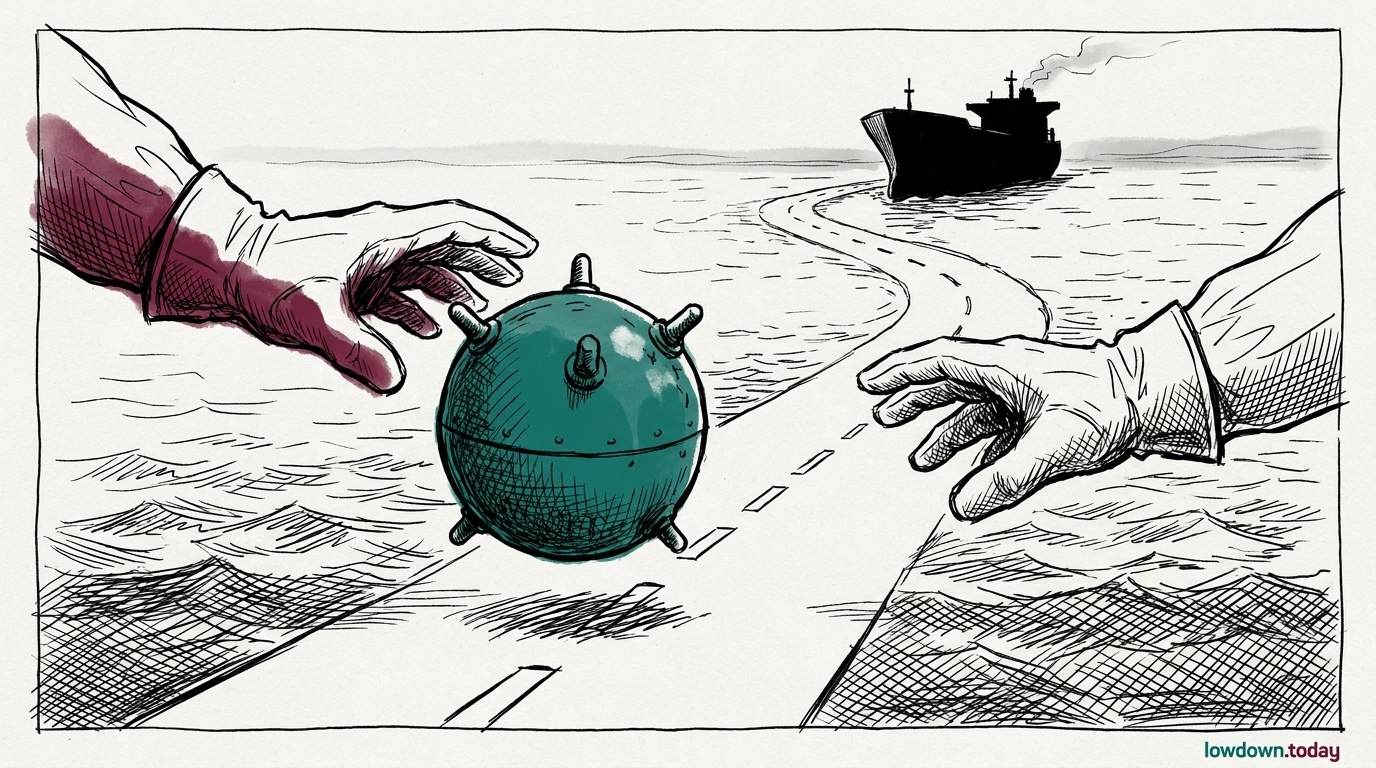
Majlis Speaker Mohammad Bagher Ghalibaf declared Iran the war's winner on 16 August. The same day, his parliament's security commission sat down to discuss managing the Strait of Hormuz.

ConflictDeveloping
Key takeaway

Parliament joined the security council and the foreign ministry in claiming a say over Hormuz.

Majlis Speaker Mohammad Bagher Ghalibaf said on Sunday 16 August that Iran had won the recent war "both militarily and politically", according to Mehr News Agency, an Iranian state wire 1. The same day, the Majlis National Security Commission met on the management of the Strait of Hormuz, reported by the Islamic Consultative Assembly News Agency (ICANA), the parliament's own outlet 2. Both accounts come from Iranian state media, and neither has been matched independently.

The meeting matters more than the claim. Parliament is now the third Iranian body with a stated interest in who administers the waterway, alongside the executive's security apparatus and the foreign ministry. Mohsen Rezaei has run the Supreme National Security Council (SNSC) track since President Masoud Pezeshkian appointed him following Zolghadr's resignation . He told China's ambassador in Tehran that the strait reopens only once Washington ends the war and unblocks Iran's frozen funds, the line he first drew on 11 August . The version now on the record adds a region-wide ceasefire covering Lebanon and Gaza to the price 3.

Ghalibaf's victory claim does not obviously contradict Rezaei's lengthening terms. A state that holds a chokepoint and refuses to trade it away can call that winning, whatever its wells are producing. The practical effect of a third claimant is arithmetic rather than rhetorical: every additional authority with a position on Hormuz is another position a mediator has to satisfy, and Oman, Qatar and Pakistan are all currently carrying messages into a system that has not yet said which of its three voices is binding.

Deep Analysis

In plain English

Iran's parliament, the Majlis, has a Speaker, Mohammad Bagher Ghalibaf, who on 16 August said Iran had won its recent war with the US and Israel. The same day, a Majlis committee that handles security matters met specifically to discuss the Strait of Hormuz, the narrow waterway Iran borders that carries a large share of the world's oil. That gives Iran a third body with a public position on the strait, alongside its foreign ministry and its top security council. Anyone trying to work out what Iran actually wants now has to track three separate channels rather than one.

Deep Analysis
Root Causes

A state that wants to keep a chokepoint while appearing to negotiate benefits from running three separate channels at once: a diplomatic track that cannot bind it, an executive track that sets a price nobody will pay, and a legislative track that can be presented as domestic pressure.

Under the doctrine of velayat-e faqih, the Majlis is formally subordinate to the Supreme Leader, so a parliamentary committee position never has to reconcile with the negotiating track even when it is presented as pressure on it.

What could happen next?
  • Consequence

    Any outside reading of an Iranian concession on Hormuz must now specify which of the three institutions made it, since the parliamentary and executive tracks are not bound to agree.

  • Risk

    Oman's shipping-map arrangement now has to survive three separate Iranian veto points rather than one.

First Reported In

Update #171 · A 35-party Iran action, invisible to search

Mehr News Agency· 17 Aug 2026
Read original
Different Perspectives
China's foreign ministry
Spokesman Lin Jian rejected Treasury Secretary Scott Bessent's 25 August warning that Iranian oil buyers face an "economic D-Day", saying sanctions do not help and that Beijing would safeguard its own rights and interests. China's Iranian crude imports had already halved for unrelated reasons.
Iraq's government and Erbil authorities
Erbil authorities said 10 explosive-laden drones were shot down over the city on 1-2 September with no casualties. Iraq's government condemned the attacks without naming Iran as their source, and neither Washington nor Baghdad confirmed the IRGC's claim to have hit US bases there.
Bahrain Defence Force
The General Command said air defences intercepted several Iranian missiles and drones on 1-2 September and called the use of such weapons against civilians and private property a flagrant violation of international humanitarian law.
Kuwait's Fire Force and foreign ministry
KUNA reported a hostile Iranian drone struck a residential complex in Kuwait City on 2 September; Fire Force spokesman Brigadier General Mohammad Al-Gharib said losses were confined to property. Kuwait's foreign ministry called the attack a clear breach of its sovereignty.
Jordan's Armed Forces
Petra carried a statement that air defences intercepted eight missiles violating Jordanian airspace early on 31 August and 10 of 13 fired on 1 September. The statement named no target and did not address the IRGC's claim to have struck Camp Titin and killed US personnel.
CENTCOM
CENTCOM
CENTCOM's 1 September target list named IRGC air defence, radar, maritime and mine-laying sites in Iran but no tanker, after Axios reported anonymous officials describing a Trump-approved "tanker for tanker" drone policy. A CENTCOM spokesman declined to confirm the policy and referred questions to policymakers.