Skip to content
You can now search across every topic, entity and event.What's new
Iran Conflict 2026
3SEP

Rezaei takes over Iran's security council

2 min read
16:40UTC

President Masoud Pezeshkian appointed Mohsen Rezaei secretary of the Supreme National Security Council on 9 August, a day after his predecessor published Iran's terms for Hormuz.

ConflictDeveloping
Key takeaway

Iran changed the official who signs off on Hormuz policy and gave no reason for it.

President Masoud Pezeshkian named Mohsen Rezaei to run the SNSC (Supreme National Security Council), the body that sets Iranian security policy, on Sunday 9 August, after Mohammad Bagher Zolghadr resigned and moved to an advisory role 1. Rezaei commanded the IRGC (Islamic Revolutionary Guard Corps), Iran's ideological military force, from 1981 to 1997, and arrives at the council from the Expediency Discernment Council. Mojtaba Khamenei, Supreme Leader since March after his father was killed, separately made Rezaei his own representative on the body.

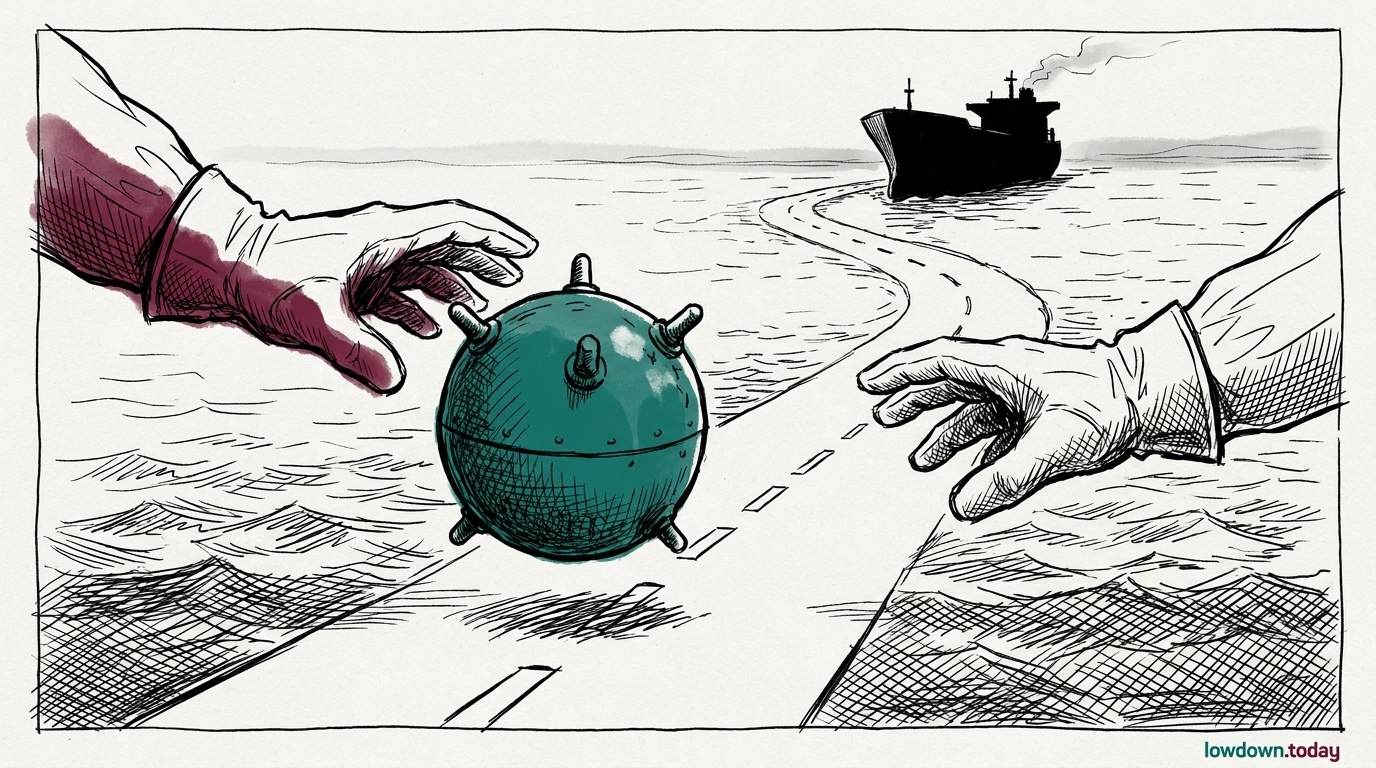
The council converts a negotiated text into Iranian policy, which is why its secretary matters to anyone outside Iran. Abbas Araghchi gave preliminary approval to a Hormuz draft on 5 August that has been waiting on this council ever since . The secretary who would have carried that draft to The Supreme Leader published Iran's maximum position on the strait on Saturday and was out of the job by Sunday. No Iranian outlet has given a reason for either the resignation or its timing, and none should be assumed.

Two readings survive the record. Rezaei is a Guard veteran succeeding a Guard veteran, Zolghadr moved sideways rather than out, and every new Supreme Leader installs people he trusts. Set against that, Rezaei has already named Iran's price in public. Tehran's demand for released assets stood at $12bn in May ; in June Rezaei told CNN that any deal needs $24bn, doubling a figure Qatar had already refused to carry . The man who doubled the price now runs the council that decides whether the strait reopens, and an official who has stated a number on the record has less room to accept a smaller one in private. Pezeshkian himself wrote to Khamenei on 1 June accusing the IRGC of cutting the presidency out of war decisions . The appointment he has now signed seats a former Guard commander at the centre of the body that decides how the war ends.

Deep Analysis

In plain English

The Supreme National Security Council brings together Iran's president, senior military figures and security officials. It decides how broad national-security choices become policy. Rezaei is a former commander of the Islamic Revolutionary Guard Corps, Iran's powerful ideological military force. His move puts a veteran of that force at the council's administrative centre.

Deep Analysis
Root Causes

Mojtaba Khamenei inherited the leadership in March after his father was killed on 28 February. A new Supreme Leader needs trusted links across the council, armed forces and clerical institutions, especially while war decisions move quickly.

Iran's constitution gives the president a seat in security policy, but the Islamic Revolutionary Guard Corps controls much of the coercive capacity. Pezeshkian's reported June complaint that the Guard had excluded the presidency shows the institutional constraint .

What could happen next?
  • Meaning

    The official who organises council business now has deep Guard experience and a public record on Hormuz.

  • Risk

    A disagreement over the Hormuz draft may become harder to resolve if civilian and security priorities diverge.

First Reported In

Update #168 · Iran replaces the man who set its terms

Islamic Republic News Agency· 11 Aug 2026
Read original
Different Perspectives
China's foreign ministry
Spokesman Lin Jian rejected Treasury Secretary Scott Bessent's 25 August warning that Iranian oil buyers face an "economic D-Day", saying sanctions do not help and that Beijing would safeguard its own rights and interests. China's Iranian crude imports had already halved for unrelated reasons.
Iraq's government and Erbil authorities
Erbil authorities said 10 explosive-laden drones were shot down over the city on 1-2 September with no casualties. Iraq's government condemned the attacks without naming Iran as their source, and neither Washington nor Baghdad confirmed the IRGC's claim to have hit US bases there.
Bahrain Defence Force
The General Command said air defences intercepted several Iranian missiles and drones on 1-2 September and called the use of such weapons against civilians and private property a flagrant violation of international humanitarian law.
Kuwait's Fire Force and foreign ministry
KUNA reported a hostile Iranian drone struck a residential complex in Kuwait City on 2 September; Fire Force spokesman Brigadier General Mohammad Al-Gharib said losses were confined to property. Kuwait's foreign ministry called the attack a clear breach of its sovereignty.
Jordan's Armed Forces
Petra carried a statement that air defences intercepted eight missiles violating Jordanian airspace early on 31 August and 10 of 13 fired on 1 September. The statement named no target and did not address the IRGC's claim to have struck Camp Titin and killed US personnel.
CENTCOM
CENTCOM
CENTCOM's 1 September target list named IRGC air defence, radar, maritime and mine-laying sites in Iran but no tanker, after Axios reported anonymous officials describing a Trump-approved "tanker for tanker" drone policy. A CENTCOM spokesman declined to confirm the policy and referred questions to policymakers.