Skip to content
You can now search across every topic, entity and event.What's new
Iran Conflict 2026
23JUL

US diesel tops $5 a gallon, up 34%

3 min read
19:27UTC

US diesel has jumped 34% since 28 February and petrol is at its highest since October 2023, translating a distant conflict into a cost every American driver can read on the pump sign.

ConflictDeveloping
Key takeaway

Diesel at $5 activates trucking surcharge tiers that feed consumer price inflation within weeks.

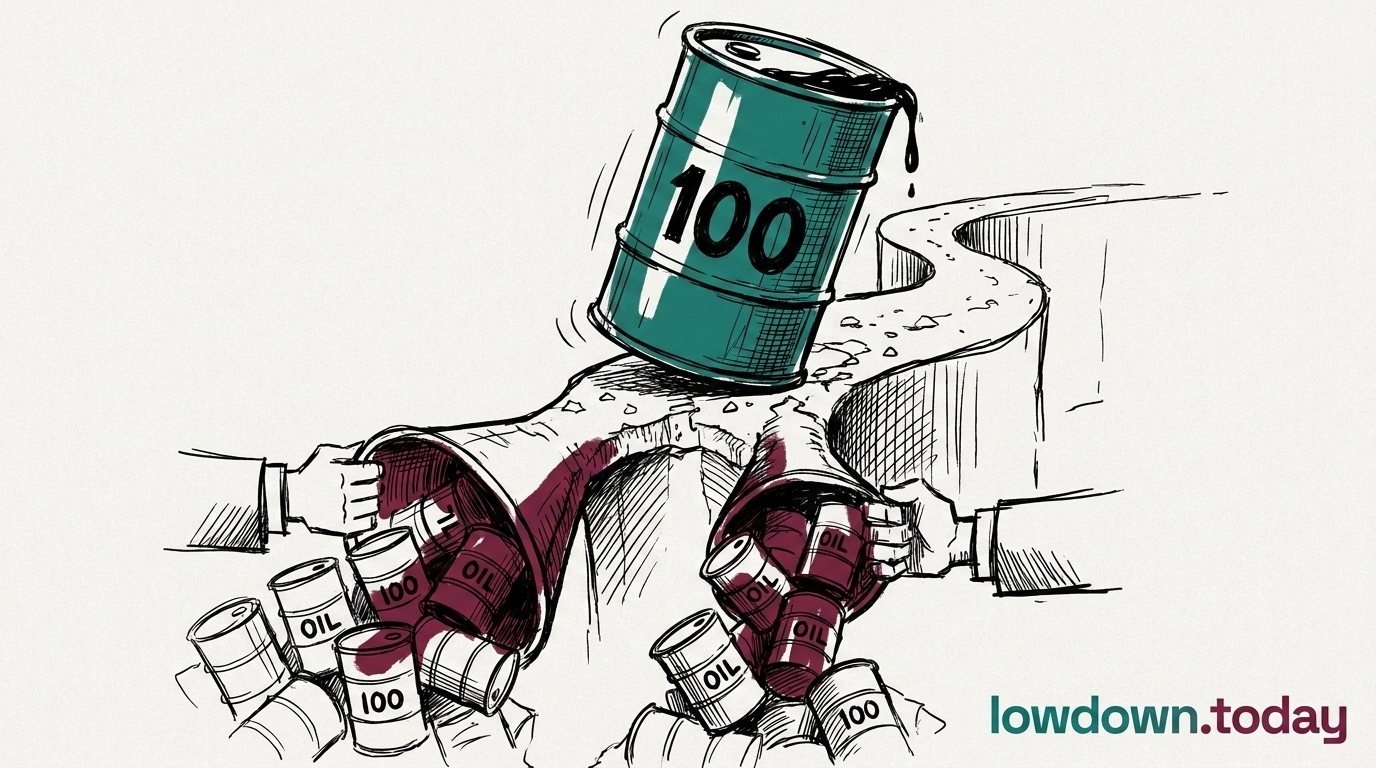
US diesel topped $5 per gallon on 17 March — up 34% since the war began on 28 February 1. Petrol averaged $3.79 per gallon, a 27% increase and the highest price since October 2023. Brent Crude closed at $100.21, down from the previous Friday's $103.14 but still 49% above the pre-war baseline of $67.41.

The Brent pullback from its war-high of $106.18 on 15 March has not reached consumer fuel prices, which typically lag crude by one to two weeks. Diesel's steeper rise — 34% against petrol's 27% — reflects the fuel's sensitivity to supply disruptions: middle distillate markets tighten faster when refining and export capacity is removed from the system. The IEA declared this the largest supply disruption in the history of the global oil market , with Gulf production down at least 10 million barrels per day.

The projections compound the current pain. Chatham House assessed that if the conflict persists for months, Brent could reach $130 and the Eurozone would 'probably' contract in Q2 2. CSIS calculated Operation Epic Fury costs nearly $900 million per day 3. The IISS characterised the conflict as at risk of becoming a 'battle of endurance' 4. Trump told NBC that Iran is ready for a deal but 'the terms aren't good enough yet' 5 — a position that faces a daily test at $5 diesel, with Deutsche Bank and Oxford Economics already warning of Stagflation in the second and third quarters .

Deep Analysis

In plain English

Diesel is the fuel of the economy's logistics arteries — it powers the lorries delivering groceries, the trains moving industrial goods, and the farm equipment harvesting crops. When diesel rises 34% in 18 days, those costs don't stay at truck stops. Freight carriers apply automatic fuel surcharges that pass costs to retailers, who pass them to shoppers. The lag between a diesel spike and grocery price increases is typically four to eight weeks. Petrol matters to household budgets, but diesel is the more economically contagious price because it enters the cost of nearly every physical good before it reaches a consumer.

Deep Analysis
Synthesis

Brent falling from $103.14 to $100.21 in one week while US pump prices remain at record post-2023 levels indicates refinery margin capture and regional product supply bottlenecks — not simple crude cost pass-through. This divergence matters because diplomatic progress on Hormuz alone will not immediately reduce US pump prices; the supply chain dislocation has created secondary pricing dynamics that persist even when crude settles.

Root Causes

US Strategic Petroleum Reserve stocks entered this conflict at multi-decade lows following sustained drawdowns in 2021–2022, reducing the government's primary buffer tool. Domestic refinery capacity remains below pre-COVID peak, limiting the ability to translate increased crude output into product price relief at the pump.

What could happen next?
  • Consequence

    Freight surcharge activation will translate diesel prices into broader consumer goods inflation within four to eight weeks, disproportionately affecting lower-income households.

    Short term · Assessed
  • Risk

    Strategic Petroleum Reserve depletion limits the administration's ability to use reserve releases as a price-dampening tool, as deployed effectively in 2022.

    Immediate · Assessed
  • Consequence

    Sustained $100+ Brent will likely delay Federal Reserve rate-cut expectations, tightening financial conditions at a moment of rising economic stress.

    Short term · Suggested
  • Risk

    If Fujairah bunkering disruption persists, delivered-fuel costs will decouple from Brent spot price, making diplomatic solutions slower to reach consumers at the pump.

    Medium term · Suggested
First Reported In

Update #40 · Larijani dead; Israel hunts the new leader

CNBC· 18 Mar 2026
Read original
Causes and effects
This Event
US diesel tops $5 a gallon, up 34%
Fuel prices are the most politically immediate channel through which the Iran war reaches American voters. With Brent still 49% above pre-war levels, think tanks projecting $130 oil if the conflict persists, and Trump rejecting daily off-ramp options, the war's domestic sustainability is now measurable at every petrol station and freight terminal in the country.
Different Perspectives
India
India
India buys more Saudi crude than any other country and has 2.5 million nationals working in the kingdom, so a $100 Brent and a live strike on Saudi tankers reach New Delhi through both fuel bills and remittance risk. Neither channel has an alternative route the way Saudi Arabia's own pipeline does.
Qatar
Qatar
Qatar co-authored the four-mediator ten-day ceasefire proposal alongside Egypt, Pakistan and Oman, centred on resuming Hormuz navigation, while separately pursuing its dated compensation claim against Iran at the UN Security Council filed on 21 July. Doha is mediating and litigating in the same week.
Israel
Israel
Israeli intelligence, reported by the Wall Street Journal, assesses Iran moved thousands of centrifuges and part of its roughly 440kg enriched-uranium stock into Pickaxe Mountain after the June 2025 strikes on its three main nuclear sites. Some of the US refuelling aircraft now deploying to the region are bound for Israeli bases and Ramon Airport.
Houthis
Houthis
Yahya Saree announced the missile and drone strikes on the Encelia and Layla on 22 July as enforcement of the embargo his forces had declared by radio warning alone two days earlier. Six vessels already turned back on the broadcast; the strike shows Houthi forces will use weapons once warnings stop working.
Saudi Arabia
Saudi Arabia
Saudi Arabia's state news agency confirmed only a fire on the Encelia's bow, with the crew safe; the Layla strike remains unconfirmed by Riyadh. The kingdom built its Petroline pipeline specifically to bypass Hormuz through the Red Sea, so the tanker fire lands on the route Riyadh had already spent billions escaping.
United States
United States
Washington is weighing both ten-day proposals but wants a longer truce than either offers, and moved F-16 and F-35 jets plus refuelling aircraft into the region while it decides. That deployment, not Trump's Pickaxe Mountain remarks, is the measurable US action, buying options for the day talks fail rather than betting on them.