Skip to content
You can now search across every topic, entity and event.What's new
Iran Conflict 2026
23JUL

Pakistan Brokers First Ceasefire Framework of the War

3 min read
19:27UTC

The Islamabad Accord offers specific terms for the first time in six weeks of conflict, but Iran's military council holds the veto.

ConflictAssessed
Key takeaway

Pakistan produced the terms; Iran's military council holds the veto.

Pakistan has produced the first concrete ceasefire framework of the war . The two-tier plan, negotiated overnight by Field Marshal Asim Munir, calls for an immediate ceasefire followed by a 15-to-20-day comprehensive settlement period. Iran would commit to abandoning nuclear weapons pursuit. In return: sanctions relief, frozen asset releases, and immediate Strait of Hormuz reopening. The memorandum of understanding would be finalised electronically, with Pakistan as the sole channel.

The key players in the room: Vice President JD Vance, Special Envoy Steve Witkoff, and Foreign Minister Abbas Araghchi. Ynet News reported the ceasefire could take effect as early as Monday 7 April, though this is a single-source claim that should be treated with caution.

Iran's civilian government, which might accept terms, cannot reach the Supreme Leader . The IRGC military council that controls access to Mojtaba Khamenei benefits from continued conflict. The Islamabad Accord asks the IRGC to negotiate away its own wartime authority. No ceasefire framework in history has succeeded when the veto holders profit from the war it would end.

China pledged strategic coordination with Pakistan on the mediation effort. Beijing's backing gives the accord geopolitical weight that previous mediation attempts lacked. But weight is not leverage. The accord exists because five empty deadlines created a vacuum. Whether it can fill that vacuum depends on actors in Tehran who have spent six weeks proving they answer to no one.

Deep Analysis

In plain English

Pakistan put forward a peace plan with specific terms for the first time in six weeks of war. The plan says: stop fighting immediately, then negotiate a full deal over the next two to three weeks. Iran would give up its nuclear weapons programme and get sanctions lifted in return. The problem is that the people who would need to agree to it in Tehran are the same people whose power depends on the war continuing.

Deep Analysis
Root Causes

The ceasefire vacuum exists because US coercive diplomacy required credible escalation, which five deadline extensions destroyed.

Pakistan's mediation opportunity is a direct consequence of Washington's inability to enforce its own threats. The IRGC's wartime power consolidation means the actors who could accept peace are not the actors who hold the veto.

Escalation

De-escalatory in intent, but the framework's existence does not change structural barriers. Iran's non-response is itself an escalation indicator: silence preserves optionality for the IRGC while the civilian government lacks authority to commit. If the accord collapses, the diplomatic space it briefly opened closes harder than before.

What could happen next?
  • Pakistan-China axis becomes the primary mediation channel, displacing US bilateral leverage

    days · Assessed
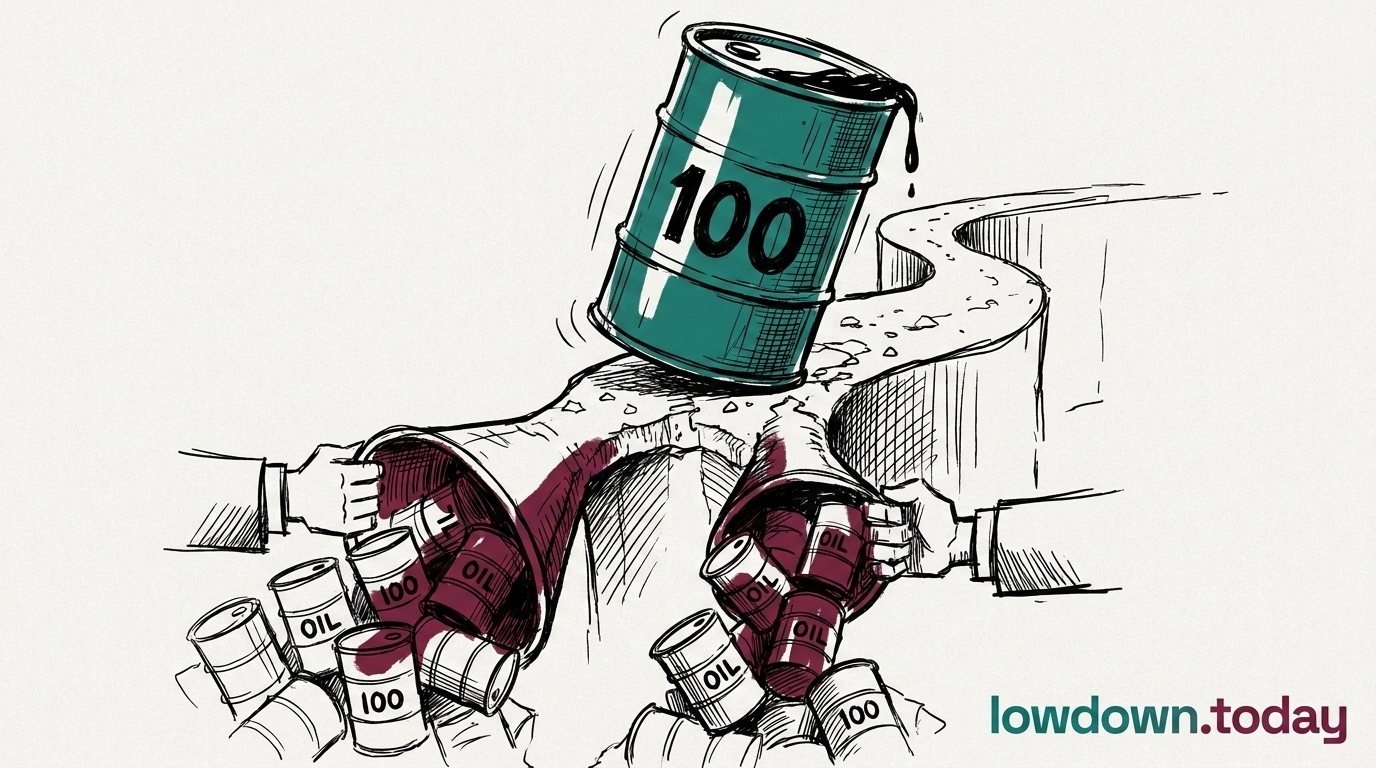
  • Immediate Hormuz reopening, if achieved, could cut oil prices by $20 or more per barrel within a week

    weeks · Suggested
  • IRGC faces first external framework that offers Iran's civilian government a concrete alternative to war

    days · Assessed
First Reported In

Update #60 · Pakistan's Ceasefire Plan Fills the Vacuum

Al-Monitor / Reuters· 6 Apr 2026
Read original
Different Perspectives
India
India
India buys more Saudi crude than any other country and has 2.5 million nationals working in the kingdom, so a $100 Brent and a live strike on Saudi tankers reach New Delhi through both fuel bills and remittance risk. Neither channel has an alternative route the way Saudi Arabia's own pipeline does.
Qatar
Qatar
Qatar co-authored the four-mediator ten-day ceasefire proposal alongside Egypt, Pakistan and Oman, centred on resuming Hormuz navigation, while separately pursuing its dated compensation claim against Iran at the UN Security Council filed on 21 July. Doha is mediating and litigating in the same week.
Israel
Israel
Israeli intelligence, reported by the Wall Street Journal, assesses Iran moved thousands of centrifuges and part of its roughly 440kg enriched-uranium stock into Pickaxe Mountain after the June 2025 strikes on its three main nuclear sites. Some of the US refuelling aircraft now deploying to the region are bound for Israeli bases and Ramon Airport.
Houthis
Houthis
Yahya Saree announced the missile and drone strikes on the Encelia and Layla on 22 July as enforcement of the embargo his forces had declared by radio warning alone two days earlier. Six vessels already turned back on the broadcast; the strike shows Houthi forces will use weapons once warnings stop working.
Saudi Arabia
Saudi Arabia
Saudi Arabia's state news agency confirmed only a fire on the Encelia's bow, with the crew safe; the Layla strike remains unconfirmed by Riyadh. The kingdom built its Petroline pipeline specifically to bypass Hormuz through the Red Sea, so the tanker fire lands on the route Riyadh had already spent billions escaping.
United States
United States
Washington is weighing both ten-day proposals but wants a longer truce than either offers, and moved F-16 and F-35 jets plus refuelling aircraft into the region while it decides. That deployment, not Trump's Pickaxe Mountain remarks, is the measurable US action, buying options for the day talks fail rather than betting on them.