Skip to content
You can now search across every topic, entity and event.What's new
Iran Conflict 2026
23JUL

Islamabad four stall on Hormuz terms

2 min read
19:27UTC

Pakistan, Turkey, Egypt, and Saudi Arabia launched the war's most ambitious diplomatic effort, but Iran's non-negotiable sovereignty claim over Hormuz leaves the core dispute structurally deadlocked.

ConflictDeveloping
Key takeaway

The Islamabad talks are diplomatically visible but structurally incapable of resolving the Hormuz dispute.

Foreign ministers from Pakistan, Turkey, Egypt, and Saudi Arabia met in Islamabad on 29 to 30 March for the most substantial multilateral diplomatic initiative since the war began 1. The conference follows Pakistan's confirmation that indirect US-Iran talks had stalled.

Iran's Condition 5 demands recognition of Iranian sovereignty over the strait of Hormuz as a "natural and legal right." Under UNCLOS Article 38, the strait is an international waterway with guaranteed transit passage. Accepting Iran's position would set a precedent the US has resisted globally for decades: no state may claim sovereignty over an international strait. Iran simultaneously notified the IMO of its legal position , building the kind of two-layer legal architecture (domestic statute plus international notification) that Egypt used after nationalising the Suez Canal in 1956.

Iran's Foreign Minister Abbas Araghchi has been direct: "intermediary messages are not direct negotiations." Tehran rejected the US 15-point plan as exclusively benefiting American and Israeli interests . The Islamabad Four can signal diplomatic intent. They cannot bridge the Hormuz sovereignty gap.

Deep Analysis

In plain English

Four countries (Pakistan, Turkey, Egypt, and Saudi Arabia) met in Islamabad to try to negotiate a ceasefire. All four are Muslim-majority states with different but overlapping interests in ending the conflict. The problem is that the central dispute is not about territory or money, but about who has the legal right to control the Strait of Hormuz. Iran says it does. International law says no nation can block international shipping lanes. Pakistan, Turkey, Egypt, and Saudi Arabia cannot resolve that disagreement. Only the US and Iran can, and Iran has said it will not sit down directly with the Americans.

Deep Analysis
Root Causes

Iran's Hormuz sovereignty demand has deep domestic legitimacy. The strait's control has been a central element of IRGC and Islamic Republic ideology since 1979; any leader who conceded it could face the accusation of surrendering national territory.

The UNCLOS Article 38 incompatibility is not a negotiating position; it is a structural conflict between Iran's constitutional claim and international maritime law as enforced by the US Navy for four decades. No regional diplomatic process can bridge that gap without US and Iranian leadership at the table.

What could happen next?
  • Consequence

    The Islamabad summit's failure to produce a framework shifts pressure back to the 6 April power grid deadline as the next decision point.

    Immediate · 0.8
  • Risk

    Each failed multilateral initiative reinforces Iran's reading that it can outlast diplomatic pressure and that time is on its side.

    Short term · 0.7
  • Opportunity

    If Pakistan's bilateral relationship with Iran yields a broader passage deal, other nations may replicate the model, creating a de facto two-tier maritime system.

    Short term · 0.6
First Reported In

Update #51 · Iran hits aluminium plants; Hormuz emptying

Egyptian Streets· 29 Mar 2026
Read original
Different Perspectives
India
India
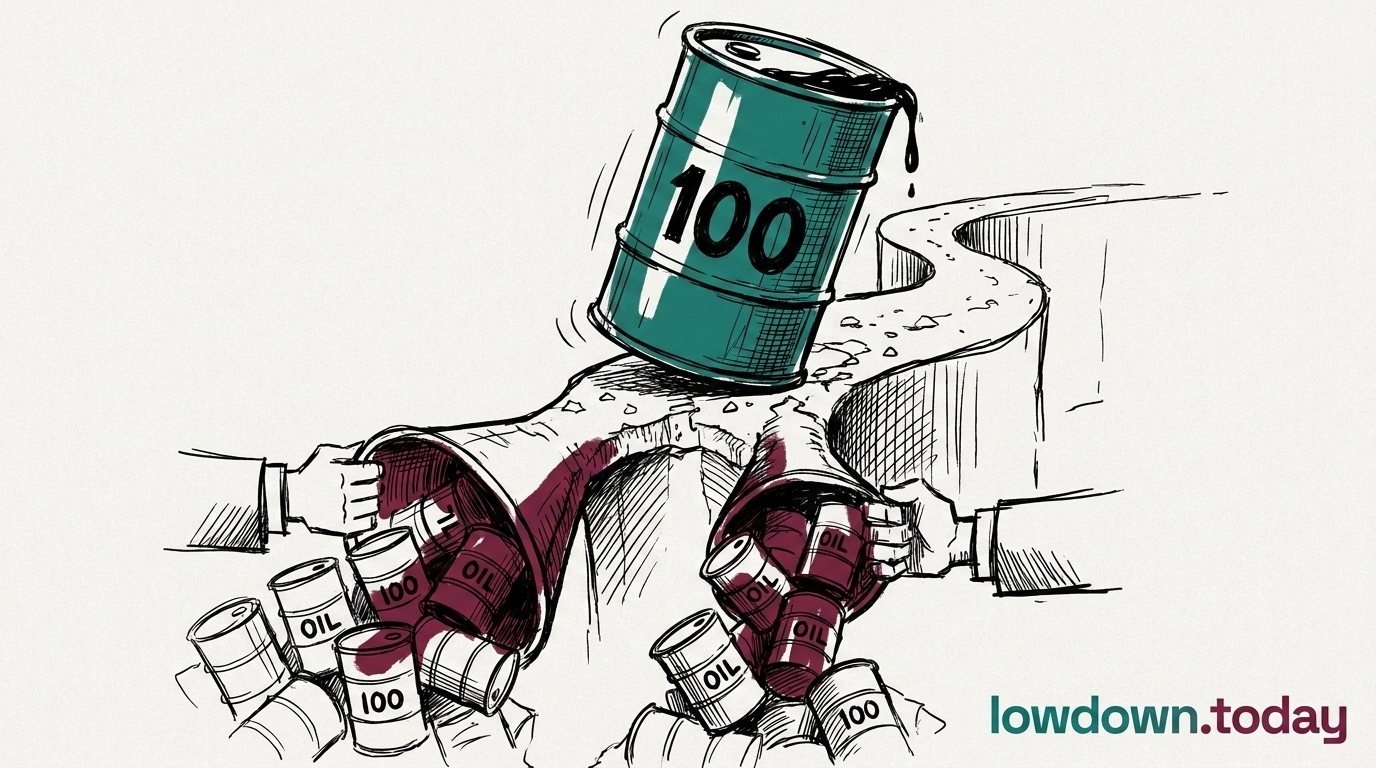
India buys more Saudi crude than any other country and has 2.5 million nationals working in the kingdom, so a $100 Brent and a live strike on Saudi tankers reach New Delhi through both fuel bills and remittance risk. Neither channel has an alternative route the way Saudi Arabia's own pipeline does.
Qatar
Qatar
Qatar co-authored the four-mediator ten-day ceasefire proposal alongside Egypt, Pakistan and Oman, centred on resuming Hormuz navigation, while separately pursuing its dated compensation claim against Iran at the UN Security Council filed on 21 July. Doha is mediating and litigating in the same week.
Israel
Israel
Israeli intelligence, reported by the Wall Street Journal, assesses Iran moved thousands of centrifuges and part of its roughly 440kg enriched-uranium stock into Pickaxe Mountain after the June 2025 strikes on its three main nuclear sites. Some of the US refuelling aircraft now deploying to the region are bound for Israeli bases and Ramon Airport.
Houthis
Houthis
Yahya Saree announced the missile and drone strikes on the Encelia and Layla on 22 July as enforcement of the embargo his forces had declared by radio warning alone two days earlier. Six vessels already turned back on the broadcast; the strike shows Houthi forces will use weapons once warnings stop working.
Saudi Arabia
Saudi Arabia
Saudi Arabia's state news agency confirmed only a fire on the Encelia's bow, with the crew safe; the Layla strike remains unconfirmed by Riyadh. The kingdom built its Petroline pipeline specifically to bypass Hormuz through the Red Sea, so the tanker fire lands on the route Riyadh had already spent billions escaping.
United States
United States
Washington is weighing both ten-day proposals but wants a longer truce than either offers, and moved F-16 and F-35 jets plus refuelling aircraft into the region while it decides. That deployment, not Trump's Pickaxe Mountain remarks, is the measurable US action, buying options for the day talks fail rather than betting on them.