Skip to content
Briefings are running a touch slower this week while we rebuild the foundations.See roadmap
Iran Conflict 2026
27MAR

Iran: only allied ships may pass Hormuz

2 min read
14:13UTC
ConflictDeveloping

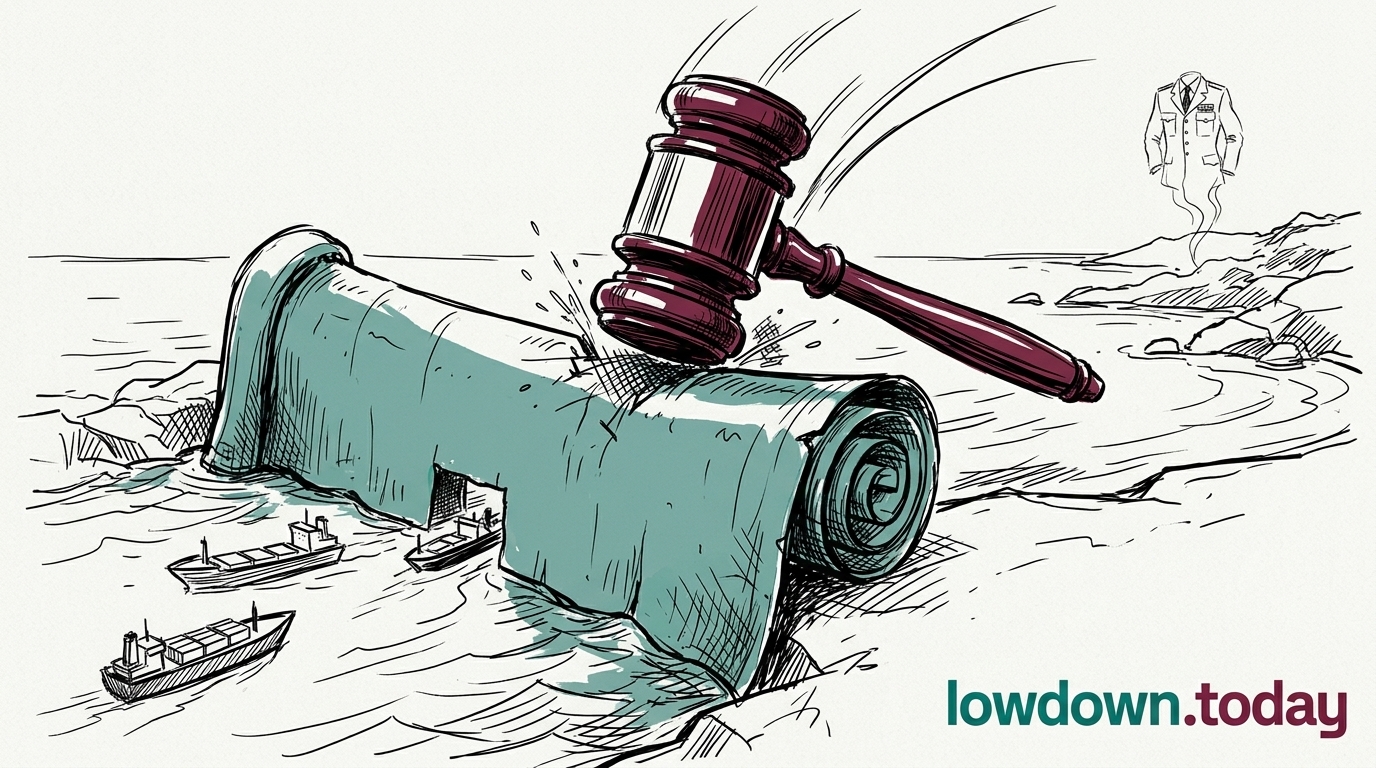
Iran's UN representative Ali Mousavi told the International Maritime Organisation this week that vessels belonging to or linked to 'aggressor parties' forfeit the right of innocent passage through the strait of Hormuz. 1 PressTV, Iran's official state broadcaster, confirmed the statement as Iran's official legal position. Permitted countries under the vetting system are India, China, Russia, Iraq, and Pakistan.

The IMO statement is the formal legal scaffolding for the parliamentary toll bill being drafted simultaneously. Iran is constructing a two-layer legal architecture: domestic statute (the Majlis bill) combined with formal international notification (the IMO submission) that pre-empts claims that Iran is acting without legal notice. The IMO notification mirrors Egypt's communication to the Suez Canal Users Association in 1956 after nationalisation.

Trump had claimed Iran offered Hormuz concessions , and Pakistan confirmed the 15-point US proposal . The IMO statement directly contradicts the framing that Iran is moving toward reopening the strait: Iran is doing the opposite, establishing formal legal grounds for continued selective passage that would survive any ceasefire under the pending domestic legislation. Pentagon planning for a Kharg Island assault continues ; the IMO statement is Iran's legal counter-move to that planning, establishing that any forcible passage would constitute a violation of Iran's defined legal framework rather than merely a military confrontation.


Deep Analysis

In plain English

Iran told the international shipping authority that ships linked to countries attacking it lose the right to pass through the Strait of Hormuz freely. This would let Iran legally charge or block ships from the US, Israel, and their allies. International law says countries cannot block international waterways, but Iran argues it is defending itself.

Deep Analysis
Root Causes

Iran is exploiting a gap in UNCLOS: the convention assumes coastal states will not be at war with the states whose vessels transit their waters. The legal framework was not designed for a scenario where a coastal state is under active military attack.

By framing the toll as a defensive measure rather than an offensive blockade, Iran creates legal ambiguity that is harder to challenge than a straightforward closure.

First Reported In

Update #49 · Hormuz toll into law; Tangsiri killed

Times of Israel / CENTCOM· 27 Mar 2026
Read original
Different Perspectives
IAEA
IAEA
Director General Rafael Grossi appeared in person at the UNSC on 19 May and warned that a direct hit on an operating reactor 'could result in very high release of radioactivity'. The session produced a condemnation record but no resolution, and the Barakah perimeter was already struck on 17 May.
Hengaw (Kurdish rights monitor)
Hengaw documented three judicial executions and the detention of Kurdish writer Majid Karimi in Tehran on 19 May, establishing Khorasan Razavi province as the newest geography in Iran's wartime judicial record. The organisation's Norway-based operation continues to surface a domestic repression track running in parallel with every diplomatic and military development.
India
India
Six India-flagged vessels conducted a coordinated cluster transit under PGSA bilateral assurances during the 17 May window, paying no yuan tolls. New Delhi's inclusion in Iran's state-to-state passage track insulates Indian energy supply without requiring endorsement of the PGSA's yuan-toll architecture or alignment with the US coalition.
Pakistan
Pakistan
Pakistan is the only functioning diplomatic bridge between Tehran and Washington. Its role is relay, not mediation in the settlement sense: it conveyed Iran's 10-point counter-MOU in early May, relayed the US rejection, and is now passing 'corrective points' in the third documented exchange of this sub-cycle without either side working from a shared text.
UK and France (Northwood coalition)
Twenty-six coalition members have published no rules of engagement eight days after the Bahrain joint statement; Lloyd's underwriters have conditioned war-risk reopening on written ROE from either Iran or the coalition. Italian and French mine-countermeasures deployments are operating on the in-water clearance task CENTCOM Admiral Brad Cooper's 90% mine-stockpile claim does not address.
Saudi Arabia
Saudi Arabia
Riyadh has not publicly commented on the Barakah strike or the 50-47 discharge vote. Saudi output feeds the IEA's $106 base case; the $5 Brent premium above that model reflects institutional uncertainty no Gulf producer can compress through supply adjustment alone.



