Skip to content
You can now search across every topic, entity and event.What's new
Iran Conflict 2026
23JUL

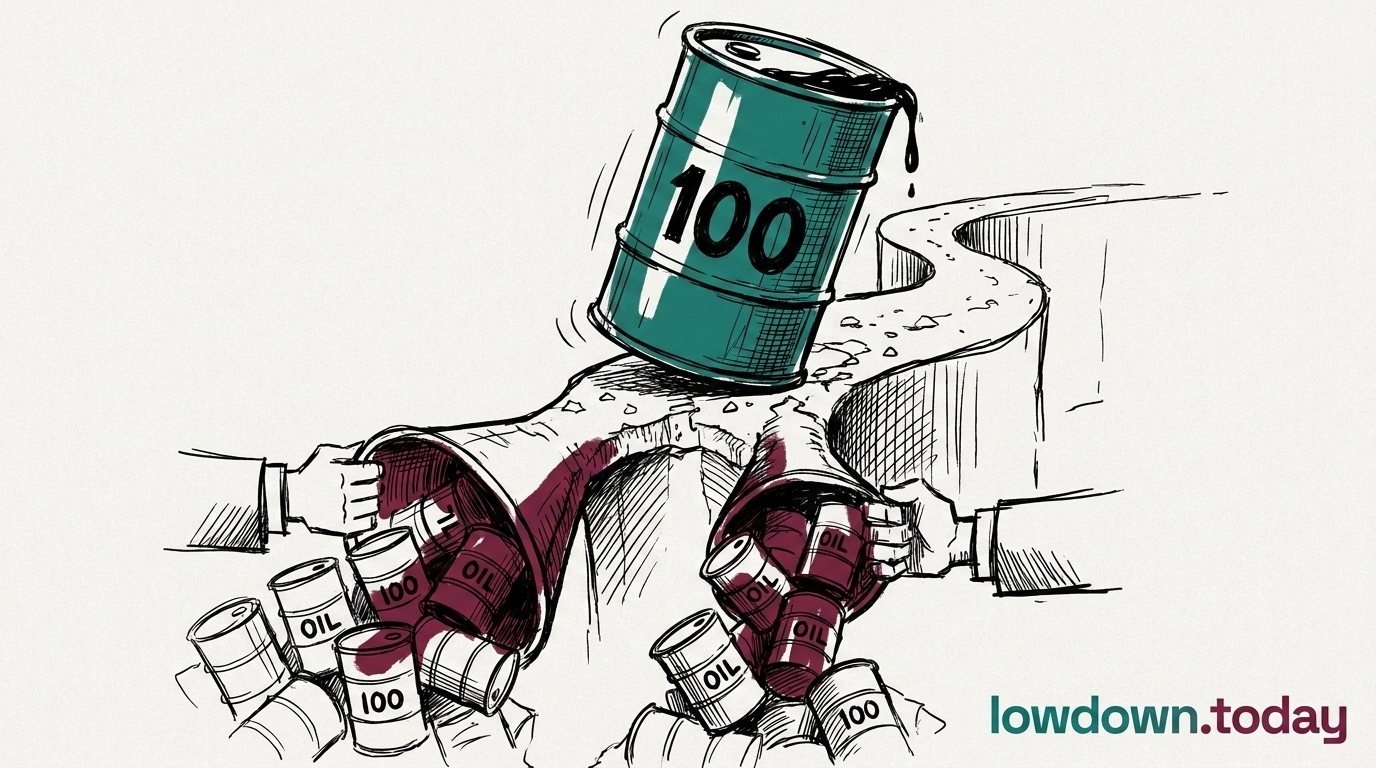
Brent $108 as CENTCOM seizes more tankers

3 min read
19:27UTC

Brent crude rose to $108.11 on Monday across the same two-session window that produced Araghchi's three-capital diplomatic circuit. CENTCOM's cumulative vessel-intercept count reached 38, including the LPG SEVAN seized in the Arabian Sea.

ConflictDeveloping
Key takeaway

Brent at $108 and 38 CENTCOM intercepts price the war ahead of the talks; markets read no-deal.

Brent Crude rose from $105.33 on Saturday 25 April to $108.11 on Monday 27 April 1, a 2.64 per cent move higher across the same two-session window in which Abbas Araghchi met Sultan Haitham in Muscat and Vladimir Putin in St Petersburg. Brent is the North Sea benchmark used to price roughly two-thirds of internationally traded crude; the contract had been trading inside a $96-108 band since the ceasefire extension last week. Monday's close put it at the top of that band on the most active negotiating day of the war so far.

United States Central Command, the Pentagon's combatant command for the Middle East and Arabian Sea, reached a cumulative blockade-phase intercept count of 38 vessels on Monday, up five from the prior two-session readout , the highest two-session pace in available CENTCOM tallies for the conflict 2. The LPG SEVAN, an Iranian-flagged liquefied petroleum gas carrier, was seized in the Arabian Sea on 25 April and folded into the count CENTCOM announced on Monday. The seizure expands the kinetic profile beyond crude tankers to LPG carriers, a category the blockade had not visibly touched before.

The price action contradicts the negotiating optics. Brent at the top of its trading range during the most public diplomatic window of the war tells traders what Tehran's offer cannot: the apparatus to receive the offer does not appear to exist before Friday's legal expiry, and the wind-down on the only signed paper of the war runs to 24 May. Markets discount probability-weighted outcomes; the rise is consistent with shippers and refiners pricing the next two dated triggers as binding rather than performative. P&I insurers (the protection-and-indemnity mutuals that cover third-party liability for tanker traffic) hold Hormuz exposure at war-rate premia and have not adjusted on the diplomatic news.

For UK drivers, $108 Brent translates to forecourt diesel and petrol stabilising roughly a tenth above March levels on the four-to-six-week pass-through pipeline through the Antwerp-Rotterdam-Amsterdam refining complex. Operation Epic Fury is running its blockade and the price screen is reading the result: the diplomacy is not yet inside the price.

Deep Analysis

In plain English

Oil prices went up while Iran's foreign minister was travelling to meet world leaders with a peace offer. The market does not believe the offer will lead to a deal. The US Navy seized five more ships in two days, including a gas tanker. For UK drivers, the oil price at this level means petrol and diesel prices will stay 8-12 per cent above March prices through May.

What could happen next?
  • Consequence

    CENTCOM reaching 38 cumulative intercepts, with five in 48 hours, sets the operational precedent that the blockade actively widens even during diplomatic peaks, removing any market expectation that talks pause kinetic activity.

  • Risk

    The LPG SEVAN seizure raises South Asian and East African LPG supply exposure; India, Pakistan and Bangladesh source residential cooking fuel via Gulf LPG exporters whose shipping routes now pass through CENTCOM's intercept zone.

First Reported In

Update #82 · Iran writes Phase 1; Washington still has no pen

Trading Economics· 28 Apr 2026
Read original
Different Perspectives
India
India
India buys more Saudi crude than any other country and has 2.5 million nationals working in the kingdom, so a $100 Brent and a live strike on Saudi tankers reach New Delhi through both fuel bills and remittance risk. Neither channel has an alternative route the way Saudi Arabia's own pipeline does.
Qatar
Qatar
Qatar co-authored the four-mediator ten-day ceasefire proposal alongside Egypt, Pakistan and Oman, centred on resuming Hormuz navigation, while separately pursuing its dated compensation claim against Iran at the UN Security Council filed on 21 July. Doha is mediating and litigating in the same week.
Israel
Israel
Israeli intelligence, reported by the Wall Street Journal, assesses Iran moved thousands of centrifuges and part of its roughly 440kg enriched-uranium stock into Pickaxe Mountain after the June 2025 strikes on its three main nuclear sites. Some of the US refuelling aircraft now deploying to the region are bound for Israeli bases and Ramon Airport.
Houthis
Houthis
Yahya Saree announced the missile and drone strikes on the Encelia and Layla on 22 July as enforcement of the embargo his forces had declared by radio warning alone two days earlier. Six vessels already turned back on the broadcast; the strike shows Houthi forces will use weapons once warnings stop working.
Saudi Arabia
Saudi Arabia
Saudi Arabia's state news agency confirmed only a fire on the Encelia's bow, with the crew safe; the Layla strike remains unconfirmed by Riyadh. The kingdom built its Petroline pipeline specifically to bypass Hormuz through the Red Sea, so the tanker fire lands on the route Riyadh had already spent billions escaping.
United States
United States
Washington is weighing both ten-day proposals but wants a longer truce than either offers, and moved F-16 and F-35 jets plus refuelling aircraft into the region while it decides. That deployment, not Trump's Pickaxe Mountain remarks, is the measurable US action, buying options for the day talks fail rather than betting on them.