Skip to content
You can now search across every topic, entity and event.What's new
Iran Conflict 2026
19JUL

Fourth night of strikes hits Abadan

2 min read
14:05UTC

CENTCOM ran a fourth consecutive night of strikes into 14 July, hitting Bandar Abbas, the Abadan refinery and Gulf islands, as Trump said Iran "shot first".

ConflictAssessed
Key takeaway

The fourth strike night moved the campaign onto Iran's refineries and strait islands, beyond military targets.

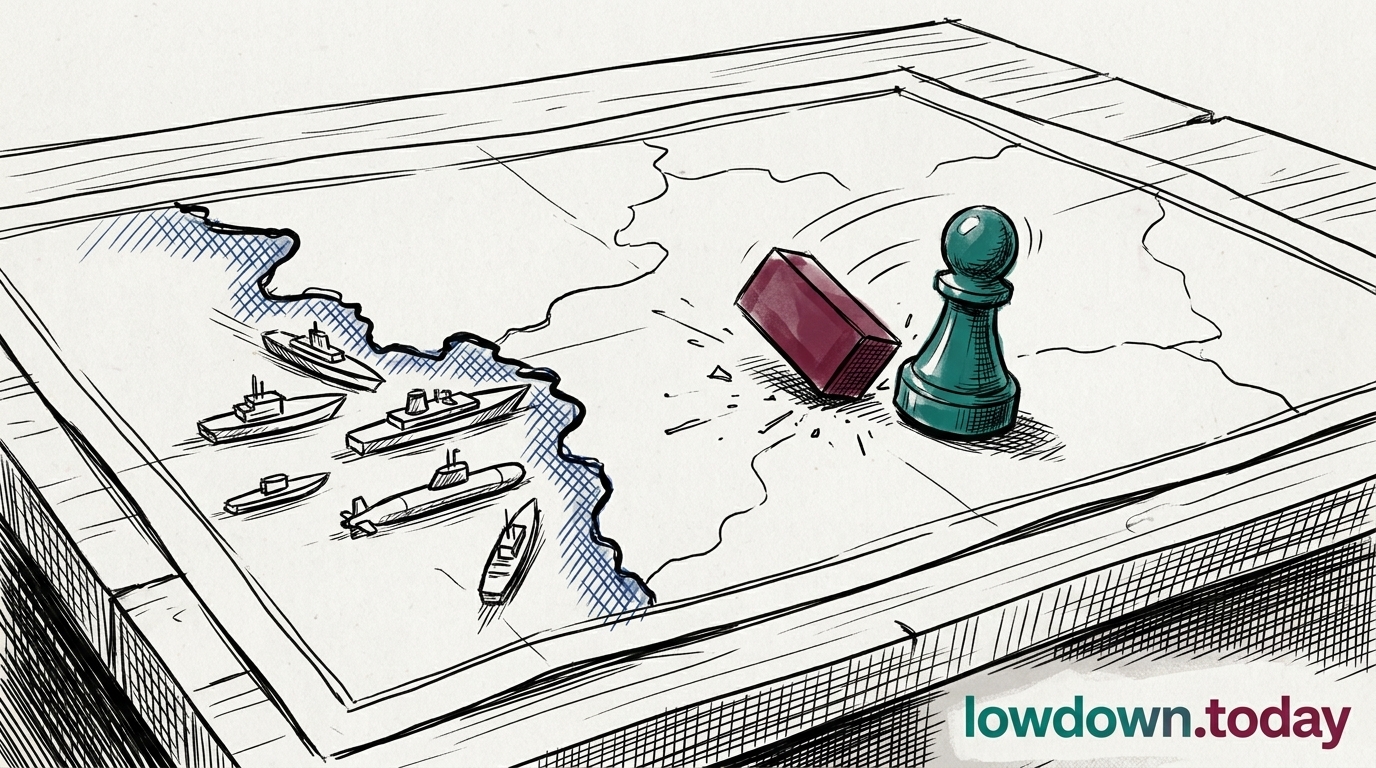
CENTCOM ran a fourth consecutive night of strikes into 14 July, hitting Bandar Abbas and Sirik on the mainland coast, the Abadan refinery, and Mahshahr, Qeshm Island and Kish Island 1. Donald Trump framed the campaign as reprisal, saying "they shot first ... we have been knocking the hell out of them" 2.

The target list tells the story. Abadan, commissioned in 1912 and the oldest refinery in the Middle East, and Mahshahr are refining and petrochemical hubs, while Qeshm and Kish sit astride the strait's approaches. Washington is now striking the infrastructure that makes Iranian oil sellable and the islands from which the Islamic Revolutionary Guard Corps (IRGC) polices transit, well beyond the military sites of earlier waves.

This is the third strike wave inside a week, after roughly 140 targets on 12 July and about 90 on 8 July . The cadence has hardened from punitive raids into a sustained bombardment of Iran's coastal energy belt, which is what converts a blockade order into an enforced one.

Deep Analysis

In plain English

Four nights of strikes on a naval base city, a century-old refinery and three Gulf islands is not one raid but a sustained campaign to make it harder for Iran to threaten the strait again, which is why it lands on the same day as the renewed blockade.

Deep Analysis
Root Causes

The strike run follows the same enforcement logic as the Hormuz blockade: having reinstated the naval closure, CENTCOM is degrading the port city, refinery and strait-adjacent islands that give Iran the means to contest it at source.

A second driver is domestic messaging: Trump's own framing, that Iran shot first, ties the strike campaign to the tanker and drone escalation record built since early July, giving each new strike a retaliatory justification regardless of scale.

What could happen next?
  • Risk

    Hitting refining capacity at Abadan, rather than purely military targets, risks disrupting domestic Iranian fuel supply in a way that could sharpen Tehran's incentive to escalate against Gulf shipping rather than absorb the loss quietly.

First Reported In

Update #154 · US enforces Hormuz closure with blockade

Al Jazeera· 15 Jul 2026
Read original
Causes and effects
This Event
Fourth night of strikes hits Abadan
Washington has widened its target list from military sites to the refining and island infrastructure that makes Iranian oil sellable and shippable.
Different Perspectives
Jordan
Jordan
Jordan has not addressed the IRGC's claim that Jordanian civilians and soldiers supplied targeting intelligence for the 20 July Aqaba strike, even as its deputy prime minister received a condemnation call over Iran's earlier missile fire. The base has now produced the war's first confirmed American deaths on Jordanian soil.
CENTCOM
CENTCOM
CENTCOM confirmed a third American service member died in northern Iraq on 19 July clearing unexploded ordnance from a downed Iranian drone, and recovered unidentified remains at Muwaffaq Salti Air Base in Jordan. The Pentagon has framed its Khuzestan strikes as degrading IRGC capacity, a rationale that stretches to explain a reactor foundation with no nuclear material in it.
Kuwait
Kuwait
Kuwait's military said it was confronting Iranian attacks after the Shuaiba power and desalination complex burned for the second time in two days on 19 July, following an earlier ministry request that households ration water. Roughly 90 per cent of Kuwait's drinking water depends on the same generating units Iran keeps hitting.
IRGC
IRGC
The IRGC claimed a 21st wave of Operation Nasr-2 struck Aqaba Airport and Azraq on 20 July, destroying hangars and aircraft, and thanked Jordanians for supplying intelligence. No US, Jordanian or Kuwaiti source has confirmed any part of the claim, which Press TV alone carried.
IAEA
IAEA
The IAEA said it is looking into reports of a 19 July strike on the Darkhovin nuclear plant construction site, confirming inspectors found no nuclear material there on their last visit. Grossi again called for restraint near nuclear sites, a faster response than the four months of silence that followed the disputed Bushehr strike.
Shipping and war-risk insurers
War-risk premiums for Hormuz transits reached 3 to 10 per cent of hull value on 17 July, against 0.25 per cent before the war, as Brent cleared $87 and daily transits fell to eight vessels. Underwriters are pricing the confirmed UKMTO mine near the Traffic Separation Scheme, not the IRGC's unconfirmed 18 July mining claim, which CENTCOM called false.