Skip to content
You can now search across every topic, entity and event.What's new
Iran Conflict 2026
15JUL

Day 138: US enforces Hormuz closure with blockade

2 min read
13:29UTC

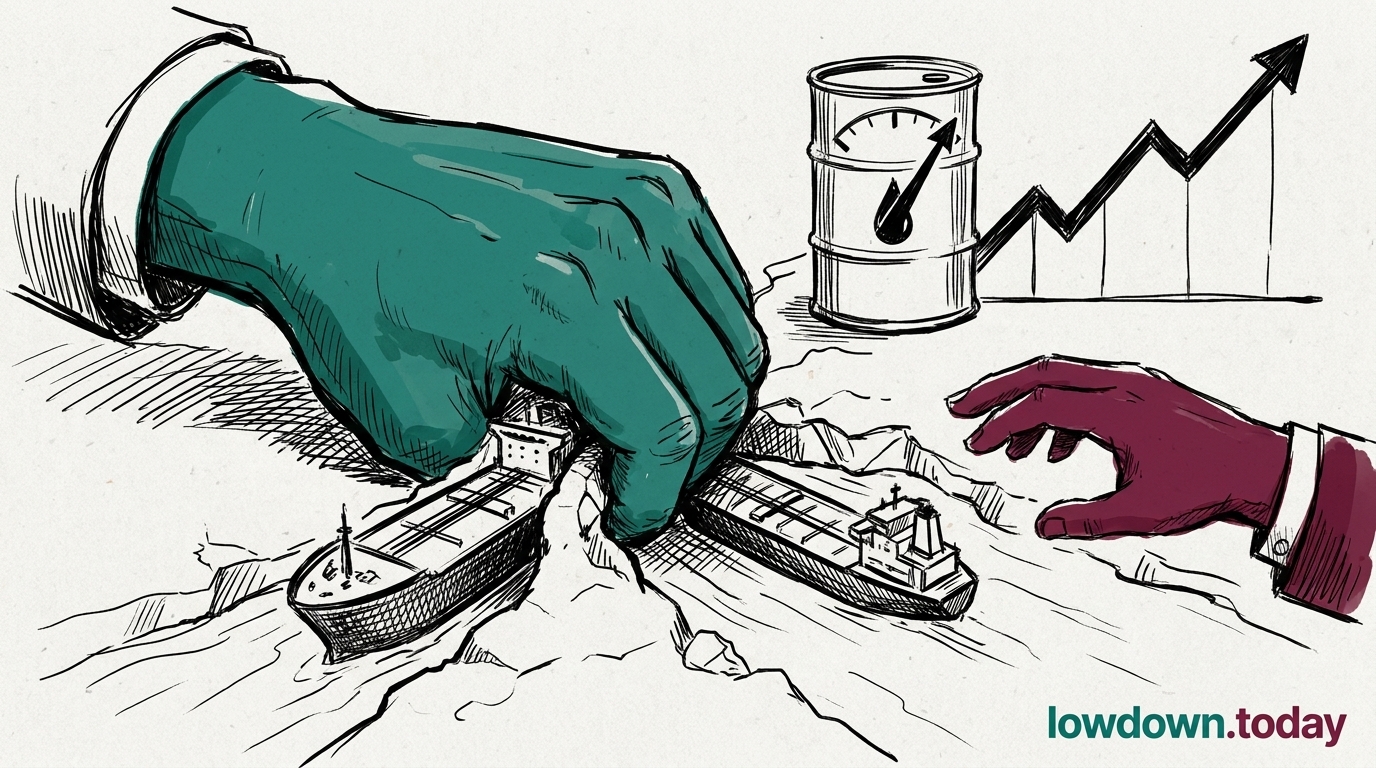
The US reimposed a naval blockade on Iranian ports on 14 July, reversing its own line that Hormuz stayed open, and ran a fourth night of strikes on the Abadan refinery and Gulf targets. Brent hit $87 as the first confirmed crew deaths and a fall to six transits a day showed the market repricing enforced closure over declared closure. Trump proposed then dropped a 20% Hormuz toll; OFAC named Mojtaba Khamenei's Dubai financier.

Key takeaway

Hormuz repriced only when Washington enforced closure by force, not when Iran declared it.

This briefing mapped
Loading map…
Military
Humanitarian
Economic
Regulatory

CENTCOM reimposed a naval blockade on Iranian ports at 20:00 GMT on 14 July, and Brent crude touched $87 a barrel as the market repriced an enforced closure over a declared one.

Sources profile:This story draws on centre-left-leaning sources from Qatar
Qatar

US Central Command (CENTCOM) enforced a naval blockade on Iranian ports at 8pm on 14 July. This reversed CENTCOM's own claim two days earlier that the strait of Hormuz stayed open.

Brent Crude jumped to $87 a barrel. Daily transits fell to about six ships. Two earlier closure declarations had failed to move markets until ships actually stopped sailing. 

Sources:Al Jazeera

CENTCOM ran a fourth consecutive night of strikes into 14 July, hitting Bandar Abbas, the Abadan refinery and Gulf islands, as Trump said Iran "shot first".

Sources profile:This story draws on centre-left-leaning sources from Qatar
Qatar
Sources:Al Jazeera

The IRGC disabled two supertankers in Omani waters on 14 July, killing one seafarer by UAE count and two by the International Maritime Agency's, the first crew deaths of the shipping war.

Sources profile:This story draws on centre-left-leaning sources from Qatar
Qatar

The Islamic Revolutionary Guard Corps (IRGC), Iran's paramilitary force, disabled two supertankers in Omani waters on 14 July. The strikes killed one or two seafarers, depending on the source.

These are the war's first confirmed tanker deaths. That threshold tends to harden insurer and flag-state positions long after any single incident fades. 

Sources:Al Jazeera

Trump proposed a 20% toll on Hormuz shipping around 13 July, then dropped it a day later for Gulf states to "invest in the United States" in exchange for naval protection.

Sources profile:This story draws on centre-left-leaning sources from Israel
Israel

President Trump floated a 20% toll on Hormuz shipping around 13 July. He dropped it a day later in favour of Gulf states investing billions in the US instead.

The toll ran into the same maritime-law objection Washington has used against Iran's own charges. The swap changes who gets paid, not the underlying legal problem. 

The US Treasury designated Dubai financier Ali Ansari on 10 July as "Linked To: KHAMENEI, Mojtaba", the first Treasury action naming Iran's Supreme Leader directly.

Sources profile:This story draws on neutral-leaning sources

Kuwait intercepted Iranian missiles and drones on 14 July while Bahrain sounded air-raid sirens, and Iran's strikes again reached Jordan after the blockade order.

Sources profile:This story draws on mixed-leaning sources from Qatar
Qatar
Closing comments

Escalating for now: CENTCOM's 14 July 2026 blockade reversal, the IRGC's first tanker deaths and Iran's Gulf-wide retaliation all point up, with Brent already at $87 intraday. But CENTCOM is the same command that called Hormuz open on 12 July 2026 only two days before reimposing the blockade, so the specific decision to watch is whether this week's order survives or gets reversed again the way the 12 July call was.

Different Perspectives
CENTCOM
CENTCOM
CENTCOM reversed its own 12 July position and reimposed the Hormuz blockade by force on 14 July, running a fourth consecutive night of strikes on Bandar Abbas, Abadan and four other sites while Trump dropped his shipping-toll proposal for direct Gulf-state investment instead.
IRGC
IRGC
The IRGC disabled two supertankers in Omani waters on 14 July, the war's first confirmed tanker crew deaths, and launched retaliation reaching Kuwait, Bahrain and Jordan the same day, answering CENTCOM's blockade with its broadest Gulf-wide response yet.
Oman
Oman
Oman absorbed the war's first tanker casualties in its own waters on 14 July, with two supertankers disabled and seafarers killed, putting the sultanate's shipping lanes directly in the path of the blockade fight for the first time.
Kuwait
Kuwait
Kuwait intercepted Iranian missiles and drones on 14 July as Tehran's blockade retaliation reached Gulf states beyond Iran's immediate shoreline, confirming Kuwaiti airspace now sits inside Iran's retaliatory envelope.
Bahrain
Bahrain
Bahrain sounded air-raid sirens on 14 July during Iran's Gulf-wide retaliation, the same day CENTCOM's blockade order and fourth night of strikes pushed the conflict's physical reach into the wider Gulf littoral.
Jordan
Jordan
Iranian strikes reached Jordan again on 14 July as part of the Gulf-wide retaliation for the Hormuz blockade, extending the conflict's geographic footprint to a state with no direct stake in the strait itself.
