Skip to content
You can now search across every topic, entity and event.What's new
Iran Conflict 2026
15JUL

Trump floats then drops Hormuz toll

2 min read
13:29UTC

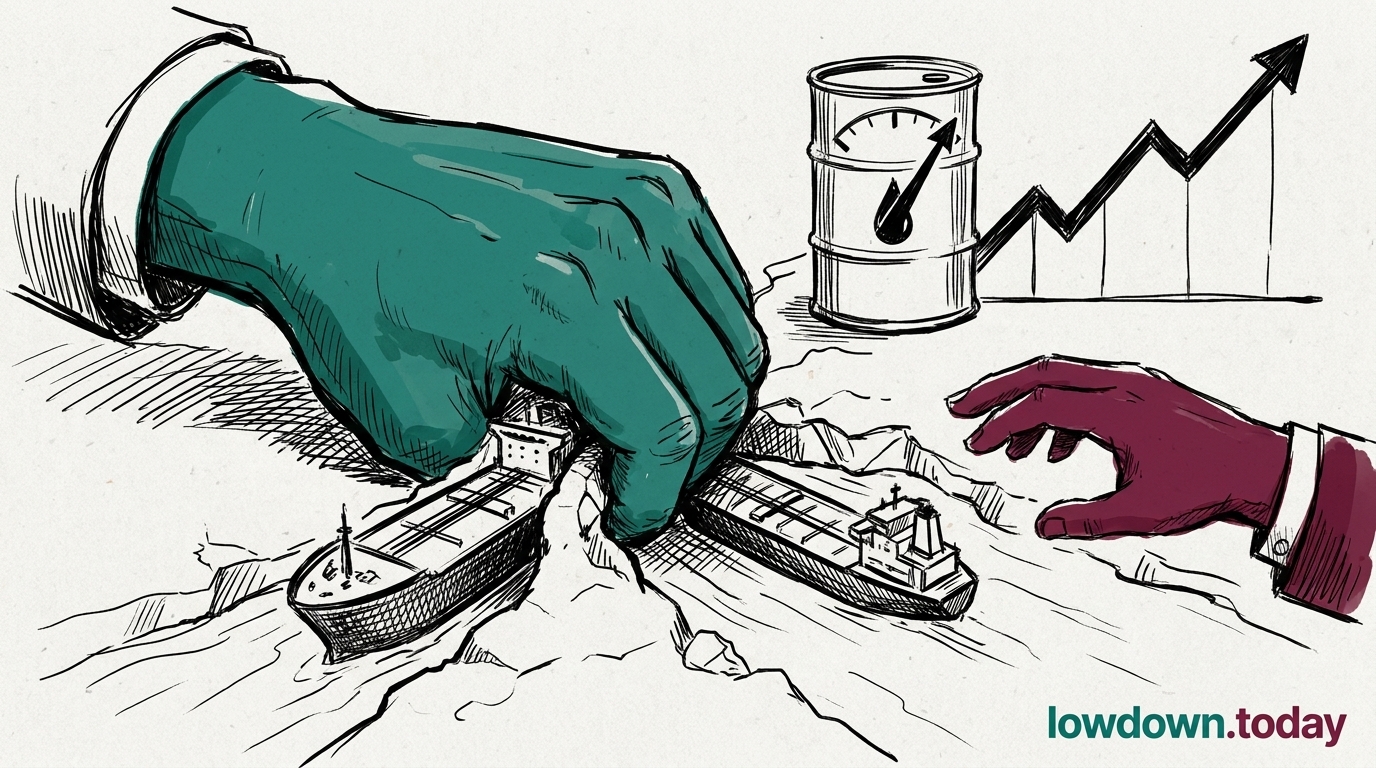
Trump proposed a 20% toll on Hormuz shipping around 13 July, then dropped it a day later for Gulf states to "invest in the United States" in exchange for naval protection.

ConflictAssessed
Key takeaway

Trump swapped an illegal transit toll for Gulf investment pledges, banking the same money without the legal objection.

Donald Trump proposed a 20% toll on Hormuz shipping around 13 July, then abandoned it a day later, saying "I don't think anybody should be able to charge a fee" 1. In its place he said Gulf leaders had offered to "invest in the United States with billions and billions of dollars" in exchange for naval protection 2.

Read alongside the enforced blockade, this is the second US reversal in a single day : militarise the strait in the morning, monetise the protection by evening. A per-vessel transit levy is the mechanism the European Union rejected on maritime-law grounds when Trump first raised a Hormuz toll, citing the transit-passage rights protected under the UN Convention on the Law of the Sea. The investment offer yields the same result, Gulf capital flowing to Washington against US naval cover, without the legal hook a toll hands its opponents.

Both moves point one way, towards Washington charging for a passage it has now taken upon itself to control.

Deep Analysis

In plain English

Charging ships to pass through an international strait runs into the same legal rulebook whoever tries it, so swapping a toll for 'Gulf states invest in America' changes how Washington gets paid, not the underlying legal problem that sank the toll in the first place.

Deep Analysis
Root Causes

The toll's collapse follows the same legal exposure the EU flagged in April: a blanket per-vessel charge on an international strait breaches the transit-passage guarantees in UNCLOS Article 38, a position Washington has itself used against Iran's rival toll claims since June.

A second driver is transactional: an investment pledge framed as billions of dollars into the US economy gives Trump a headline figure without the diplomatic cost of appearing to violate the same maritime law Washington invokes against Tehran.

What could happen next?
  • Precedent

    If the investment-pledge model becomes the template, Gulf capital commitments into the US could become a recurring bargaining chip in future Hormuz disputes, replacing toll proposals that keep running into the same maritime-law objection.

First Reported In

Update #154 · US enforces Hormuz closure with blockade

Times of Israel· 15 Jul 2026
Read original
Different Perspectives
Oil market and P&I insurers
Brent cleared $87 intraday only once CENTCOM's blockade became physical rather than declared, even though P&I Clubs had already excluded Hormuz war risk a week earlier on 7 July: capital hedged ahead of enforcement, but prices moved only after it.
UAE reporting
UAE reporting
UAE reporting placed the Omani tanker deaths at one seafarer against the International Maritime Agency's count of two, the first time in this war that a Gulf state's casualty figures have diverged from an international monitor's.
Jordan
Jordan
Iranian strikes reached Jordan again on 14 July as part of the Gulf-wide retaliation for the Hormuz blockade, extending the conflict's geographic footprint to a state with no direct stake in the strait itself.
Bahrain
Bahrain
Bahrain sounded air-raid sirens on 14 July during Iran's Gulf-wide retaliation, the same day CENTCOM's blockade order and fourth night of strikes pushed the conflict's physical reach into the wider Gulf littoral.
Kuwait
Kuwait
Kuwait intercepted Iranian missiles and drones on 14 July as Tehran's blockade retaliation reached Gulf states beyond Iran's immediate shoreline, confirming Kuwaiti airspace now sits inside Iran's retaliatory envelope.
Oman
Oman
Oman absorbed the war's first tanker casualties in its own waters on 14 July, with two supertankers disabled and seafarers killed, putting the sultanate's shipping lanes directly in the path of the blockade fight for the first time.