Skip to content
You can now search across every topic, entity and event.What's new
Iran Conflict 2026
13JUL

Iran builds an insurance toll for August

4 min read
10:50UTC

Iran's Persian Gulf Strait Authority made insurance compulsory on every Hormuz transit on 20 June, free for now, with fees reserved for after the MOU's 60-day window closes around 17 August.

ConflictDeveloping
Key takeaway

Iran rebuilt the banned Hormuz toll as a compulsory-insurance charge timed for mid-August.

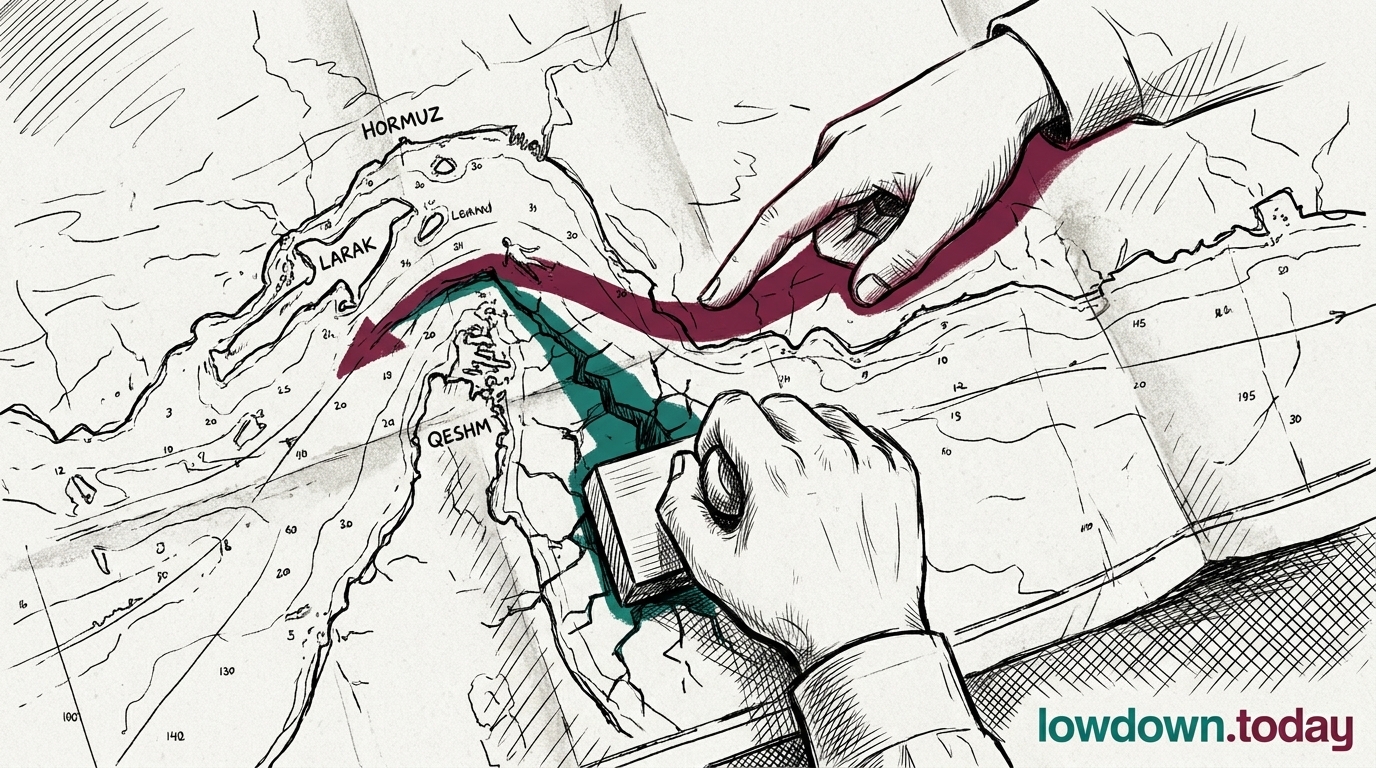
Iran's Persian Gulf Strait Authority (PGSA) made insurance compulsory for every Strait of Hormuz transit on Saturday 20 June, supplied free for now by Iranian-approved underwriters 1. The authority reserved the right to charge fees once the Islamabad Memorandum of Understanding (MoU) 60-day window closes, around 17 August. The PGSA is an Iranian maritime body operating under IRGC oversight; readers should hold one earlier fact in view, that Donald Trump ordered the strait reopened with no tolls when he declared the war over .

This charge is that banned toll rebuilt as a maritime-services fee. the MOU's own text reframed transit charges as United Nations Convention on the Law of the Sea (UNCLOS) Article 26(2) service fees rather than tolls , and that is the legal door the PGSA has now walked through. The distinction is not cosmetic: UNCLOS bars a coastal state from charging vessels for the right of transit passage, but permits fees for specific services rendered. Calling compulsory insurance a service lets Iran charge for the strait in a form Washington finds harder to object to than a dollar per barrel.

The mandate carries a sanctions trap. Office of Foreign Assets Control (OFAC) designations still cover the PGSA and its affiliated insurers , so a shipowner who buys Iranian-approved cover transacts with a sanctioned entity without a US licence. The two lanes split the bind. Ships on the Oman route sidestep the PGSA's jurisdiction but cannot obtain its cover; ships on the TSS lanes could buy the cover but would be paying a sanctioned body. Lloyd's List reported the mandate "defies UNCLOS" for vessels routing through Oman's waters 2.

The design borrows Washington's own enforcement logic. The US polices Russian crude through P&I insurance rather than customs, denying cover to force ships out of the trade. Iran has copied that architecture and pointed it back across the strait, with the fee landing on charterers as a premium that feeds through to freight rates rather than the oil price. The first real test arrives in mid-August, when the window closes and the PGSA can switch the fee on.

Deep Analysis

In plain English

Iran's maritime authority, the Persian Gulf Strait Authority, or PGSA, announced on 20 June that any ship transiting the Strait of Hormuz must carry insurance provided by Iranian-approved companies. The insurance is currently free, but the PGSA reserved the right to charge fees from August 2026. OFAC placed the PGSA on its sanctions blacklist under Executive Order 13224. Any shipping company that buys PGSA-approved insurance is transacting with a designated entity, which triggers US secondary-sanctions penalties. Most companies are using the alternative Omani route to avoid PGSA jurisdiction entirely. The August deadline is a countdown to a fee that Iran can only collect if ships return to the TSS lanes.

Deep Analysis
Root Causes

Iran never ratified UNCLOS. Its legal claim to Hormuz jurisdiction derives from domestic maritime law, updated in 2024, which asserts authority over 'hostile-linked vessels.' The PGSA mandate attempts to convert that contested domestic claim into a practical insurance obligation that shipowners must comply with to transit the main channel.

The secondary-sanctions trap deepens the structural conflict: any shipowner who buys PGSA-approved cover transacts with a sanctioned entity (the PGSA is OFAC-designated under Executive Order 13224), exposing themselves to US secondary-sanctions liability. Ships on the Oman route sidestep PGSA jurisdiction but remain uninsured by the main London P&I market, which has not lifted its Hormuz war-risk exclusion.

What could happen next?
  • Risk

    Any shipowner who purchases PGSA-approved insurance before OFAC issues a general licence is exposed to secondary-sanctions enforcement, creating legal risk that most European and Asian operators cannot accept.

    Immediate · Assessed
  • Consequence

    The 17 August fee-activation deadline gives Iran a concrete mechanism to pressure the nuclear negotiating track: no final agreement means fees start, which further suppresses Hormuz traffic.

    Short term · Reported
  • Precedent

    The PGSA mandate, if accepted by any flag state, would normalise a non-UNCLOS-party state levying maritime-services charges on an international strait, a precedent China has noted with interest for the South China Sea.

    Long term · Suggested
First Reported In

Update #134 · Hormuz shuts as Vance flies to Geneva

Lloyd's List· 21 Jun 2026
Read original
Different Perspectives
Oil market and P&I insurers
Brent cleared $87 intraday only once CENTCOM's blockade became physical rather than declared, even though P&I Clubs had already excluded Hormuz war risk a week earlier on 7 July: capital hedged ahead of enforcement, but prices moved only after it.
UAE reporting
UAE reporting
UAE reporting placed the Omani tanker deaths at one seafarer against the International Maritime Agency's count of two, the first time in this war that a Gulf state's casualty figures have diverged from an international monitor's.
Jordan
Jordan
Iranian strikes reached Jordan again on 14 July as part of the Gulf-wide retaliation for the Hormuz blockade, extending the conflict's geographic footprint to a state with no direct stake in the strait itself.
Bahrain
Bahrain
Bahrain sounded air-raid sirens on 14 July during Iran's Gulf-wide retaliation, the same day CENTCOM's blockade order and fourth night of strikes pushed the conflict's physical reach into the wider Gulf littoral.
Kuwait
Kuwait
Kuwait intercepted Iranian missiles and drones on 14 July as Tehran's blockade retaliation reached Gulf states beyond Iran's immediate shoreline, confirming Kuwaiti airspace now sits inside Iran's retaliatory envelope.
Oman
Oman
Oman absorbed the war's first tanker casualties in its own waters on 14 July, with two supertankers disabled and seafarers killed, putting the sultanate's shipping lanes directly in the path of the blockade fight for the first time.