Skip to content
You can now search across every topic, entity and event.What's new
Iran Conflict 2026
11JUL

Iran claims 100 nations, confirms two

2 min read
10:29UTC

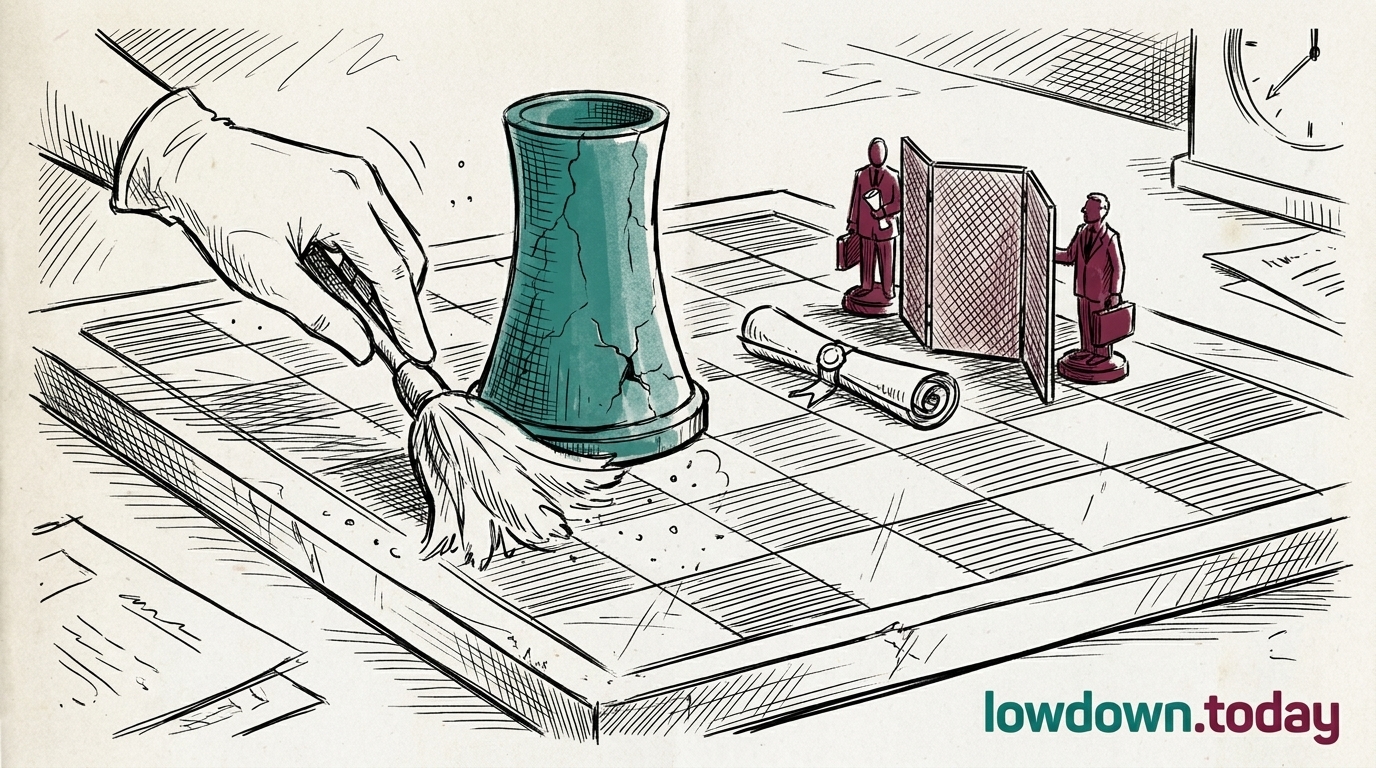
Iran's Foreign Ministry claimed guests from around 100 countries, yet its own Tasnim agency could name only two foreign heads of state as Khamenei's casket reached Tehran.

ConflictDeveloping
Key takeaway

Iran's claimed 100-country turnout collapses to two confirmed leaders, exposing its isolation.

Ali Khamenei's casket arrived at the Grand Mosalla in Tehran on 3 July, Iran's state agency IRNA reported, ahead of a deferred state funeral running 4 to 9 July. 1 Processions will run in Tehran, Qom and Mashhad and, for the first time, in Najaf and Karbala in Iraq, carrying the ceremony across the border into Shia Iraq. Al Jazeera reported that more than 20 million mourners are expected in Tehran. 2

Whether Mojtaba Khamenei, appointed Supreme Leader in March, will attend in person is unresolved. Funeral organiser Ali Akbar Pourjamshidia said the decision "lies entirely with the leader's office." 3 Mojtaba has not appeared publicly since 28 February, when the strike that killed his father also wounded him; Israel's defence minister Israel Katz called him a marked man on 1 July . Ali Abdollahi, commander of the IRGC's Khatam al-Anbiya headquarters, warned the United States and Israel against "any miscalculation" during the six days. 4

Foreign Ministry spokesman Esmail Baghaei said guests from "around 100 countries" were expected. Yet Iran's own semi-official Tasnim agency confirmed only two foreign heads of state by name: Pakistan's Shehbaz Sharif and Georgia's Mikheil Kavelashvili. 5 The 30-nation delegation list Tehran published on 1 July, which excluded every European government , has contracted in practice rather than grown towards the claim.

Deep Analysis

In plain English

Ali Khamenei, Iran's Supreme Leader for nearly four decades, was killed in an Israeli strike in February 2026. His son Mojtaba was appointed to succeed him weeks later, but the appointment was contested inside Iran's own clerical establishment because Mojtaba lacks the senior religious qualifications the role traditionally requires. Ali Khamenei's casket arrived at Tehran's Grand Mosalla, a huge outdoor prayer ground, ahead of a six-day state funeral. Iran's government says guests from around 100 countries are coming, but its own state news agency has only confirmed two foreign leaders by name: Pakistan's prime minister and Georgia's president. Funeral organiser Ali Akbar Pourjamshidia said the decision on whether Mojtaba appears in public rests entirely with the leader's office, with no confirmation either way as the funeral opened on 3 July.

Deep Analysis
Root Causes

Iran's constitution requires the Supreme Leader to hold marja status, senior religious scholarly authority, or an equivalent standing. Mojtaba Khamenei does not hold that rank, which is why eight of the Assembly of Experts members who confirmed him in an emergency online session on 7 March, held after Israeli strikes destroyed the Assembly's Qom headquarters, boycotted the vote and cited both the credentials gap and pressure from the IRGC.

That structural deficit, not simply factional politics, is why the funeral has become a vehicle for manufacturing visible recognition. Iran's foreign ministry had already excluded every European government from the funeral delegation list of more than thirty nations , which narrows the claimed 100-country turnout to non-Western recognition only, a signal aimed at the audience Tehran can still reliably assemble rather than the one it has lost.

What could happen next?
  • Risk

    If Mojtaba Khamenei does not appear at the funeral, the ambiguity over his authority deepens at the exact moment Iran needs a unified negotiating position for any Doha talks.

  • Precedent

    A funeral turnout skewed toward Russia, Pakistan and other non-Western states rather than a broad international bloc would confirm Iran's post-war diplomatic isolation extends into ceremonial as well as negotiating settings.

First Reported In

Update #144 · Syria, Lebanon join a US defence table

IRNA· 3 Jul 2026
Read original
Different Perspectives
Oil market and P&I insurers
Brent cleared $87 intraday only once CENTCOM's blockade became physical rather than declared, even though P&I Clubs had already excluded Hormuz war risk a week earlier on 7 July: capital hedged ahead of enforcement, but prices moved only after it.
UAE reporting
UAE reporting
UAE reporting placed the Omani tanker deaths at one seafarer against the International Maritime Agency's count of two, the first time in this war that a Gulf state's casualty figures have diverged from an international monitor's.
Jordan
Jordan
Iranian strikes reached Jordan again on 14 July as part of the Gulf-wide retaliation for the Hormuz blockade, extending the conflict's geographic footprint to a state with no direct stake in the strait itself.
Bahrain
Bahrain
Bahrain sounded air-raid sirens on 14 July during Iran's Gulf-wide retaliation, the same day CENTCOM's blockade order and fourth night of strikes pushed the conflict's physical reach into the wider Gulf littoral.
Kuwait
Kuwait
Kuwait intercepted Iranian missiles and drones on 14 July as Tehran's blockade retaliation reached Gulf states beyond Iran's immediate shoreline, confirming Kuwaiti airspace now sits inside Iran's retaliatory envelope.
Oman
Oman
Oman absorbed the war's first tanker casualties in its own waters on 14 July, with two supertankers disabled and seafarers killed, putting the sultanate's shipping lanes directly in the path of the blockade fight for the first time.