Najaf
Iraqi holy city revealed as site of covert Israeli special-forces base since late 2024.
Last refreshed: 3 July 2026 · Appears in 1 active topic
Why did Israel choose Najaf, a Shia holy city, for its covert Iraq base?
Timeline for Najaf
Iraq to host Khamenei funeral rites
Iran Conflict 2026Iran claims 100 nations, confirms two
Iran Conflict 2026Mentioned in: Israel ran covert bases in Iraq
Iran Conflict 2026Background
Najaf emerged as one of two locations in Iraq's western desert where Israel operated covert military bases from late 2024, according to reporting by The New York Times and Wall Street Journal on 18 May 2026. The base near Najaf and Karbala served as Israeli special-forces housing, an air-operations logistics hub, and search-and-rescue staging for downed pilots during the Iran conflict. Iraq's government publicly denied authorising any foreign military presence but had privately protested to Washington in late March 2026. Najaf returned to the story on 3 July 2026 when Iran extended Ali Khamenei's state funeral processions into Iraq for the first time, running through the city alongside the traditional Tehran, Qom and Mashhad routes over the 4-9 July funeral.
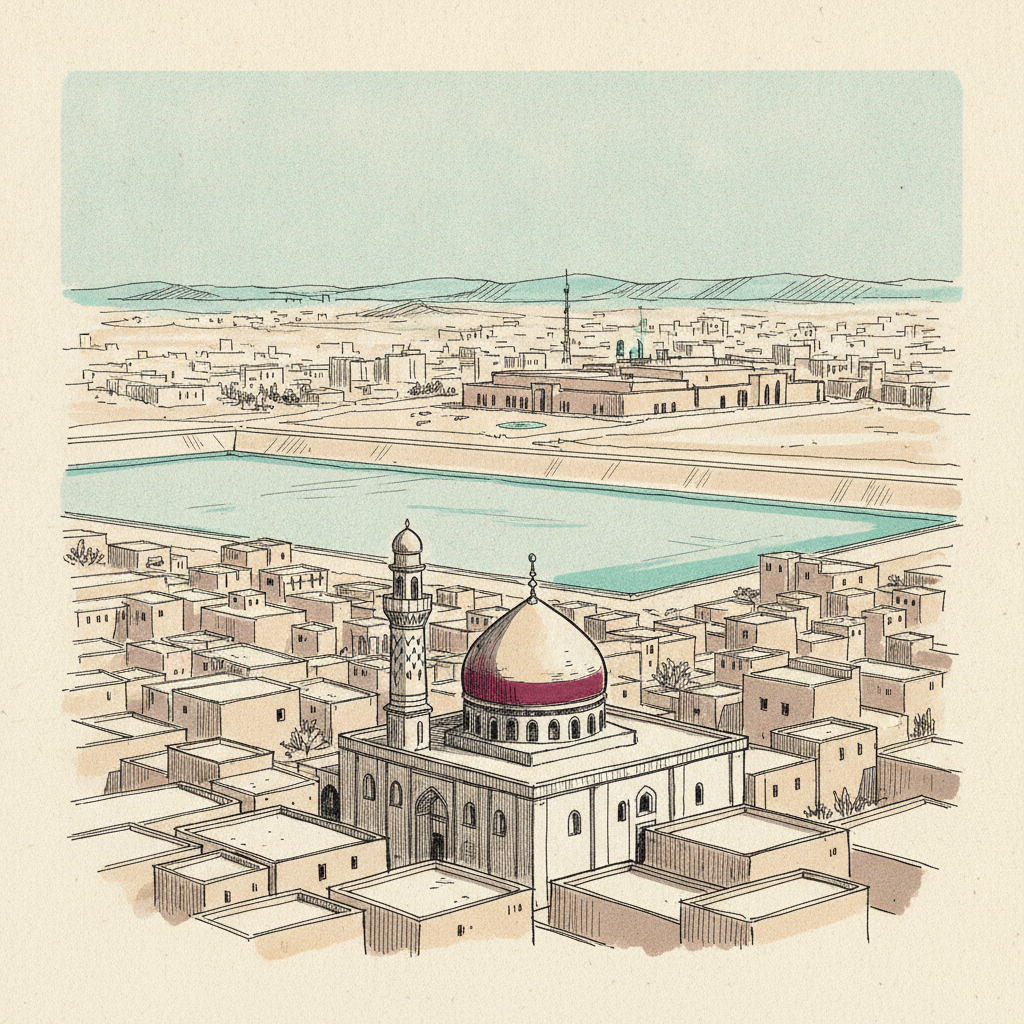
Najaf is one of Islam's holiest cities, home to the Imam Ali shrine, the largest mosque in the world by visitors. It sits roughly 160 kilometres south of Baghdad in Iraq's western desert and draws more than 20 million Shia pilgrims each year, making it the spiritual heartland of global Shia Islam. The city has a population of approximately 1.2 million. Its proximity to Karbala, site of Imam Hussein's martyrdom, makes the Najaf-Karbala corridor the central axis of Shia religious identity.
The disclosure that Israel used Najaf as a covert base carries acute symbolic weight. For Iran, which frames its regional posture partly as Protector of Shia holy sites, the presence of Israeli forces in one of Shia Islam's most sacred cities represents a direct provocation, and extending Khamenei's funeral procession across the border into Najaf for the first time serves the same purpose: projecting the Islamic Republic's Shia religious authority beyond its own territory even as the succession to Mojtaba Khamenei remains contested at home. For Iraq's government, already navigating Shia militia pressure, both episodes deepen the tension between its constitutional mandate to bar foreign troops and its strategic relationship with Washington.
Why did Israel build a secret base near Najaf in Iraq?
Where exactly is Najaf in Iraq?
How did Iraq respond to the Israeli covert base disclosure?
Why is Najaf significant to Shia Muslims?
Why is Khamenei's funeral procession going to Najaf?

