Skip to content
Welcome, thoughtbot's Giant Robots listeners!Start here
Iran Conflict 2026
25JUN

Brent hits $109.30 as summit dip fades

4 min read
14:30UTC

Brent crude closed Saturday 16 May at $109.30, $3.30 above the post-summit settle of $106.00 and $36.30 above Day 1 of the war; meanwhile the physical premium on Iranian crude collapsed to near-parity as the dark fleet absorbed the blockade.

ConflictAssessed
Key takeaway

Brent at $109.30 reversed the summit dip while the physical premium on Iranian crude collapsed to near-parity.

Brent Crude reached $109.30 on Saturday 16 May, up $3.30 from the post-summit close of $106.00 on Thursday 14 May and above the $107.77 ceiling registered on Tuesday 12 May⁠1. The benchmark has reversed every Trump-Xi summit-optimism correction since the verbal outputs of last week. UK forecourts now translate the wholesale move into roughly £1.75 to £1.85 per litre at the pump.

The White House presidential-actions index recorded zero Iran instruments through Day 78, and the War Powers Act timer Murkowski has cited stood at Day 78 of 60 in arrears. Aramco CEO Amin Nasser warned on Tuesday 12 May that global oil normalisation slips to 2027 if the blockade extends past mid-June. The IEA May report showed a 246-million-barrel inventory draw in eight weeks, the largest sustained drawdown since the 1979 oil crisis.

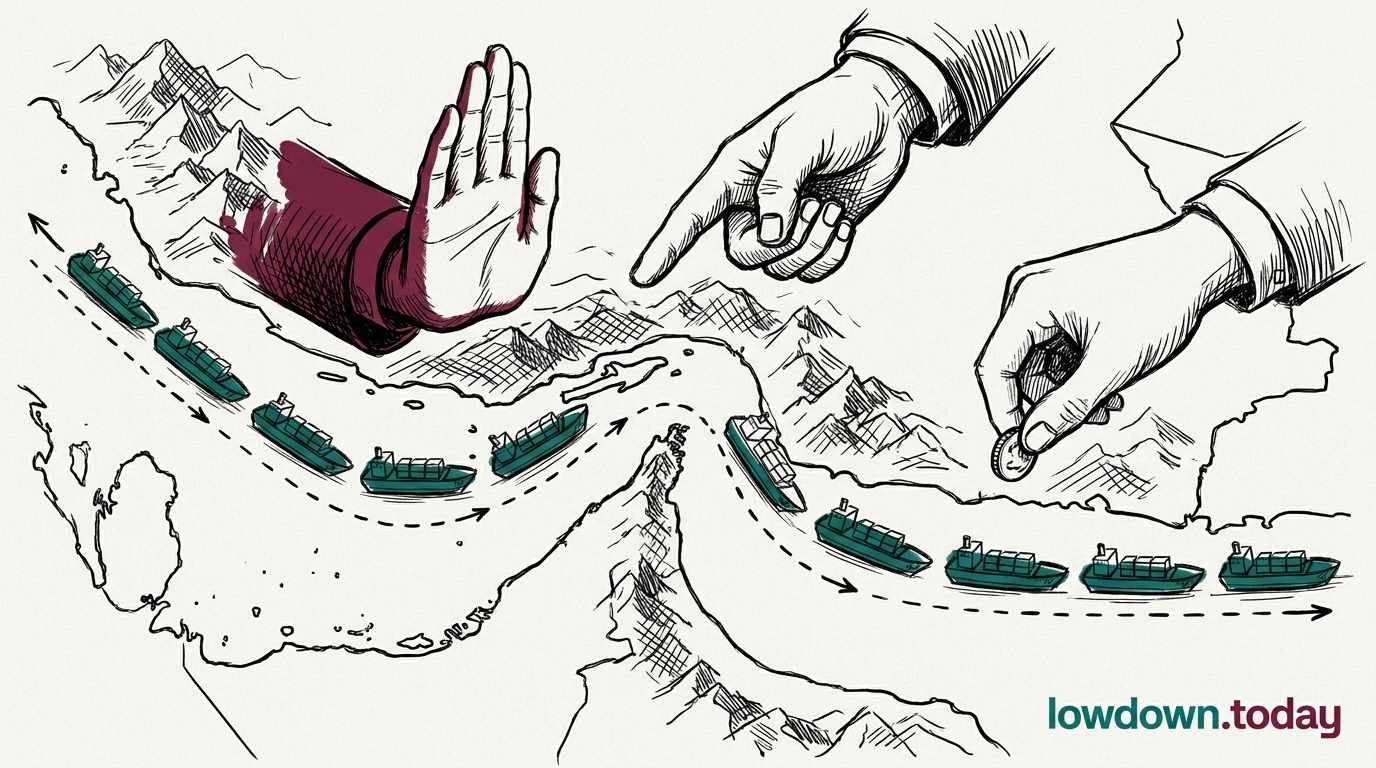
The physical Iranian crude premium collapsed from over $30 per barrel above Brent in early April to near-parity by mid-May⁠2, an effective $30 unwind in six weeks. Dark-fleet logistics absorbed Iranian supply faster than Western analysts modelled. Brent is now pricing residual escalation risk, not actual supply loss; the underlying barrels still reach refineries through the bilateral channel codified by Tehran.

Counter-perspective: a sustained Brent rally without a corresponding physical-market squeeze is the classic profile of a paper-market dislocation that mean-reverts when the next round of summit diplomacy delivers verbal de-escalation. The 1973 and 2008 precedents both show benchmark spreads above $20 sustained for under 90 days before retracing. The blockade itself reaches Day 78 on Saturday 16 May, making the next four weeks the empirical test of whether this episode breaks that pattern.

Deep Analysis

In plain English

Oil prices jumped back up to $109.30 on Saturday 16 May, undoing a brief dip that followed a US-China summit earlier in the week. The summit produced no concrete agreement on Iran, and markets concluded the war is no closer to ending. The odd part is that the price of actually buying Iranian oil has fallen dramatically. That is because a shadow fleet of tankers, mostly operating outside Western insurance and sanctions rules, has quietly been absorbing Iranian crude and getting it to buyers in Asia. Brent at $109.30 is pricing geopolitical risk. Iranian crude landing in Chinese and Indian refineries is pricing at near-parity to Brent because the dark fleet has normalised that supply chain. Each price reflects a different bet on how and when the conflict closes.

Deep Analysis
Root Causes

Brent at $109.30 reflects two disconnected pricing signals running in parallel. The benchmark prices the ongoing absence of any US executive instrument closing the war (The White House presidential-actions index records zero Iran instruments across 78 days) and the IEA's confirmed 246-million-barrel inventory draw. Neither of these resolves without a signed presidential instrument or a ceasefire architecture.

The physical premium collapse from $30 above Brent to near-parity reflects the dark fleet's absorption capacity. Iranian crude is reaching Chinese, Indian, and other Asian refiners via non-Western shipping and insurance, entirely outside the Lloyd's and Scandinavian P&I market. The consequence is that Iranian export revenues are closer to pre-war levels than the $109.30 benchmark implies, which reduces Tehran's economic incentive to accept ceasefire terms.

What could happen next?
  • Consequence

    Iran's near-parity physical crude premium reduces Tehran's economic pressure to accept ceasefire terms, since dark-fleet revenues are closer to pre-war levels than the Brent benchmark implies.

    Short term · 0.79
  • Risk

    Aramco's 2027 normalisation forecast means the Hormuz premium may persist in UK energy prices through at least 12-18 months of ceasefire and insurance-market recovery, even if fighting stops in June 2026.

    Medium term · 0.74
  • Meaning

    The benchmark-physical decoupling means standard Brent price signals are providing a misleading read of Iran's economic leverage and ceasefire incentive structure.

    Immediate · 0.83
First Reported In

Update #99 · Two Hormuz papers; Washington on neither

OilPrice.com· 16 May 2026
Read original →
Different Perspectives
Office for Budget Responsibility
The OBR's 28 October forecast assumed $82 oil for 2026 and 2027, from market prices for the ten working days to 19 August, and blamed dearer wholesale energy on the war without naming Iran. It expects CPI inflation close to 4% in early 2027 even at that price.
Hengaw, Kurdish rights group
Hengaw reported the 3 November hangings of Amirhossein Maleki and Amirhossein Ebrahimi in Isfahan, saying Ebrahimi was tortured into confessing and that nine of 12 people sentenced to death in the case have now been hanged. Iran's judiciary holds that the defendants killed members of the security forces.
FINTRAC, Canada's financial intelligence unit
FINTRAC worked with the US Treasury on the 6 November designation of eight money services businesses in British Columbia, Ontario and Quebec. Treasury says the businesses still operate, some under new names, so closing them falls to Ottawa.
Abdul Qadir al-Dakhil, Governor of Nineveh
Al-Dakhil cancelled three Mosul International Airport contracts on 7 November over alleged links to armed groups, after meeting Prime Minister Ali al-Zaidi in Baghdad. He named no group or company, and said the contracts will go to international companies.
Kuwait
Kuwait
Kuwait condemned the Houthi missile fired towards the Madinah region on 5 November and restated its support for Saudi Arabia, the Qatar News Agency reported. Its state tanker company, Kuwait Oil Tankers Company, is among the Gulf state fleets on Iran's expanded Hormuz list.
Scott Bessent, US Treasury Secretary
Treasury designated an alleged Chandigarh false-flag network on 4 November and eight Canadian exchangers on 6 November, while State sanctioned alleged MANPADS intermediaries. None of the actions touches an oil buyer; they target the paper, cash and procurement around Iran's trade.

Written with AI from Lowdown's published reporting. Not individually reviewed by an editor. Editorial standards.
