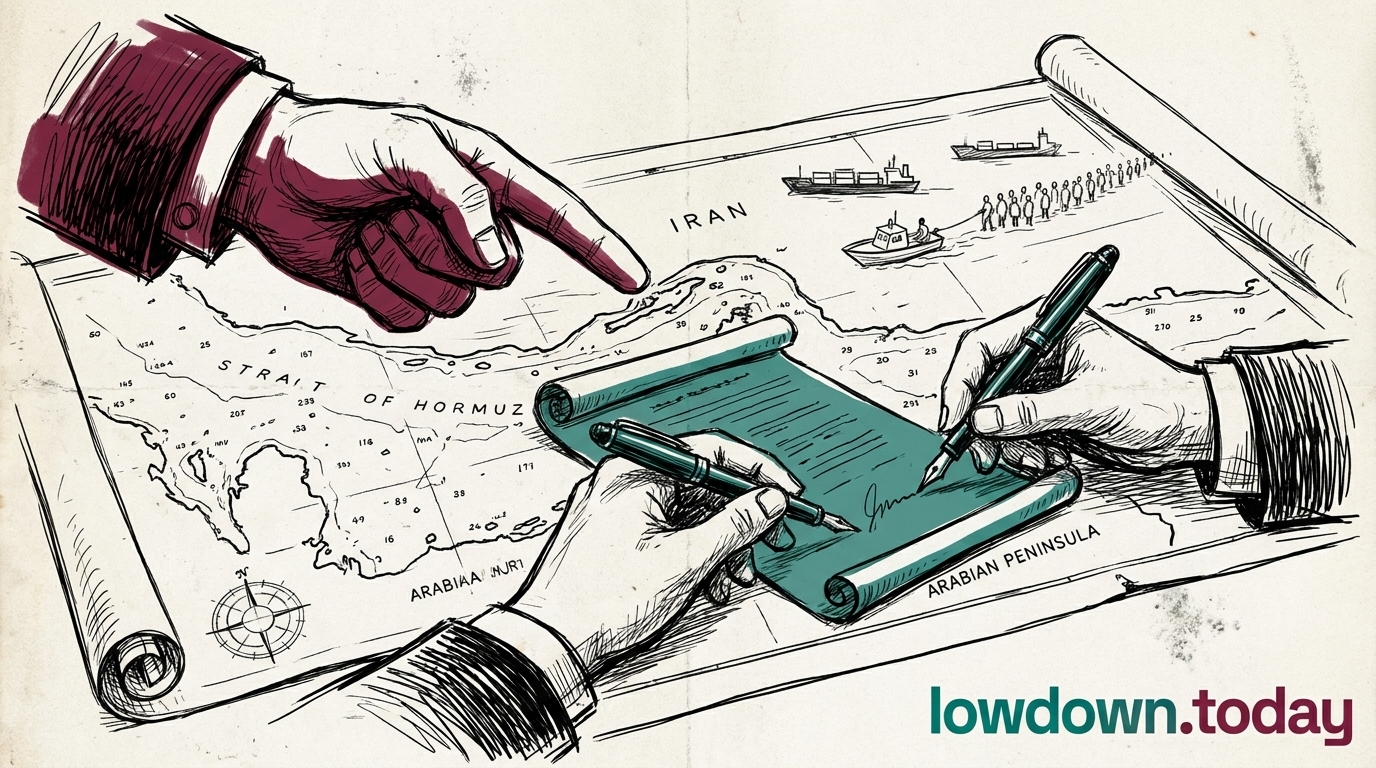
The IRGC issued a formal statement on Wednesday claiming Tuesday's drone strike on the US consulate in Dubai, stating the attack involved '20 drones and three missiles striking their intended targets.' The specificity — itemising munitions by type and number — breaks with Tehran's usual practice. When drones struck Oman's Duqm port for the second time, Iran denied responsibility through state media, a pattern consistent with its categorical denial of the 2019 Abqaiq-Khurais attacks, later overturned by UN weapons forensics. Here, the Guard is not denying. It is advertising.
The claim follows the IRGC's declaration on 2 March that it had 'begun efforts to destroy American political centres across the region,' formally designating US embassies and consulates as military targets. Two drones struck the US Embassy in Riyadh within hours. The Dubai consulate attack came next. Washington responded by closing its embassies in Riyadh and Kuwait City and issuing departure advisories for 16 countries — the widest such directive since the 2003 Iraq invasion. The IRGC's public ownership of the Dubai strike confirms the campaign against diplomatic facilities is not a one-off provocation but a declared and continuing operation.
Dubai held a particular status in the conflict's opening days. The initial strike on Tuesday hit the consulate's parking area; fire broke out but no injuries were reported. At the time, UAE-Iran commercial channels that had survived the June 2025 Twelve-Day War remained intact — a buffer that separated economic coexistence from military confrontation. The IRGC's decision to publicly claim the attack erases that distinction. Dubai is no longer a grey zone; it is a declared theatre.
The Vienna Convention on Diplomatic Relations (1961) obliges states to protect foreign diplomatic premises from attack. Iran's formal claim that it struck a US consulate with named munitions is an explicit admission of violating that obligation under international law. The practical consequence is already visible: Washington has withdrawn diplomatic staff from The Gulf rather than rely on host-nation protection. Tehran's calculation appears to be that the domestic cost of appearing restrained — while absorbing strikes across 131 cities in 24 provinces under a new supreme leader whose legitimacy depends on the IRGC — exceeds whatever international penalty comes with public ownership of an attack on a consulate.





