Skip to content
You can now search across every topic, entity and event.What's new
Iran Conflict 2026
19JUN

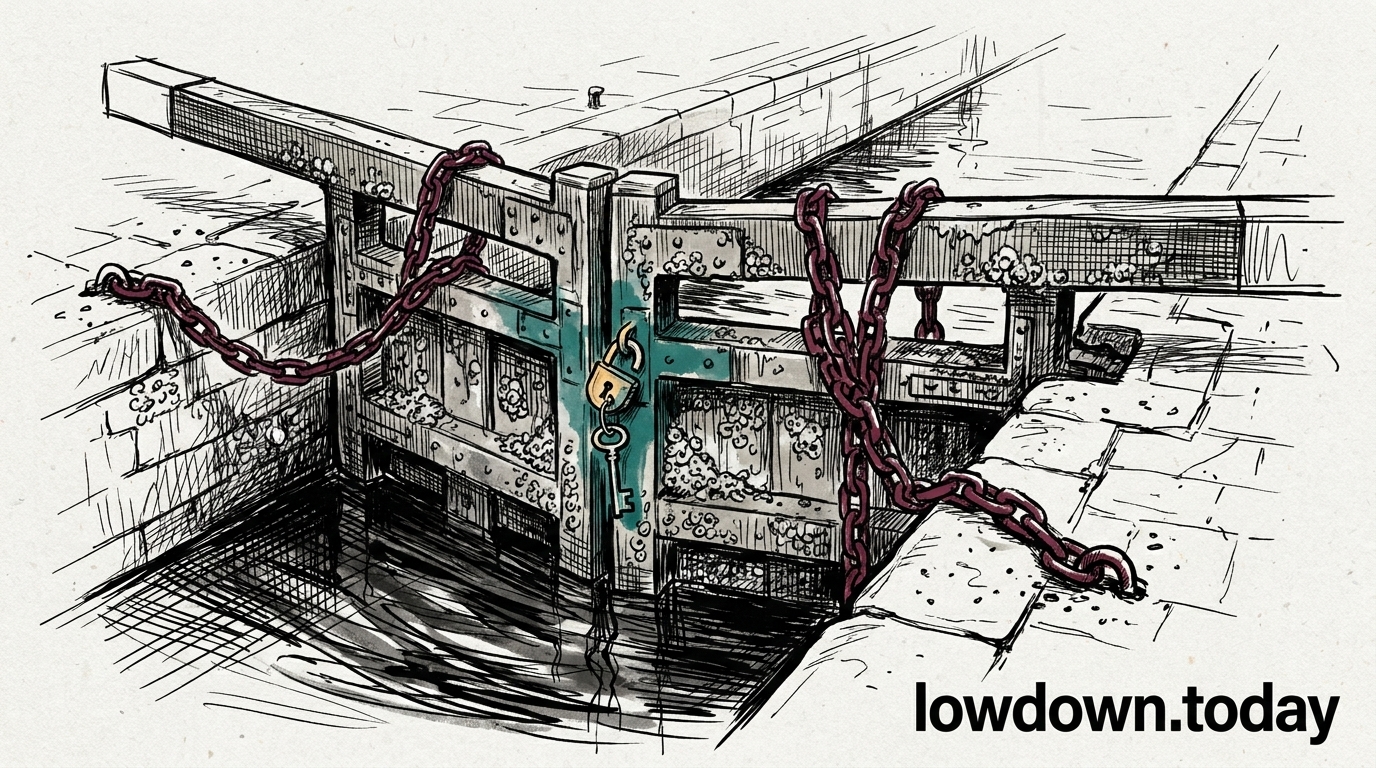
Day 112: Trump lifted the blockade, not the strait

3 min read
12:07UTC

CENTCOM ended its 66-day naval blockade of Iran on 18 June, a day early. The strait stayed shut: foreign-flag ships absent, war-risk cover gone, mines uncleared for weeks. Sanctions relief, weapons checks and reconstruction all stayed on paper. Trump opened the one lock that was free to open, and signed deferrals for everything that costs.

Key takeaway

Trump lifted the only lock the United States held free; the strait and the deal's substance remain shut.

This briefing mapped
Military
Economic
Domestic
Regulatory
Diplomatic
Humanitarian

US Central Command halted its naval blockade of Iran's ports on 18 June, a day ahead of its own wind-down, after 66 days of enforcement.

Sources profile:This story draws on neutral-leaning sources

US Central Command halted naval blockade enforcement of Iran's ports on 18 June, one day early. The blockade ran 66 days, from 13 April to 18 June. Two carrier strike groups remained on station with no drawdown order.

The early end cost Washington nothing: mines and London insurers already held Hormuz shut. CENTCOM ending enforcement looked like MoU compliance while every lever of pressure stayed in place. 

BIMCO's chief safety officer Jakob Larsen called Hormuz transits "still very risky" on 18 June as foreign-flag traffic stayed away and war-risk cover withheld.

Sources profile:This story draws on neutral-leaning sources from United States
United States

the strait of Hormuz stayed commercially shut on 18 June despite the blockade lift. Traffic ran at 5-10% of pre-conflict levels. London war-risk insurance had not returned, mines needed 40-50 days to sweep at minimum, and BIMCO's Jakob Larsen said transit was still very risky.

Mines and insurers hold the strait shut regardless of any diplomatic announcement. Nothing in the MOU unlocks either constraint. 

Mojtaba Khamenei endorsed the US-Iran MOU in his first written message on 18 June, then branded the enemy's demands excessive and handed the deal's outcome to President Pezeshkian.

Sources profile:This story draws on mixed-leaning sources from Russia
Russia

The US Treasury's sanctions office issued no Iran waiver, licence or delisting through 18 June; the MOU text ties full relief to a final agreement nobody has written.

Sources profile:This story draws on neutral-leaning sources from United States
United States

OFAC, the US Treasury sanctions bureau, issued no Iran waiver, general licence, or delisting through 18 June. Its only updates that day covered Cuba and counter-terrorism. Marco Rubio told Congress on 2 June the US had not offered Iran sanctions relief.

the MOU text explains the gap: full sanctions relief is tied to a future final deal, not the interim framework. Only oil-transaction waivers apply immediately. The $100 billion in frozen assets stays locked. 

The MOU commits Iran to destroy its enriched uranium stockpile under IAEA supervision; in the same 18 June message Khamenei called full inspector access an excessive demand.

Sources profile:This story draws on mixed-leaning sources from United States and Russia
United StatesRussia

the MOU commits Iran to destroying its 440.9 kg of 60% enriched uranium under IAEA supervision by a mechanism still to be agreed. IAEA Director General Rafael Grossi confirmed inspectors had been locked out for 97 days and could only assess the stockpile's location via satellite.

On the same day, Khamenei labelled full IAEA access and stockpile transfer 'excessive demands.' The document requires what the Supreme Leader just refused. Phase 2 opens with that contradiction on the record. 

A Hezbollah attack killed four Israeli soldiers on 19 June, the deadliest on the Lebanon front since the MOU was signed; National Security Minister Itamar Ben-Gvir answered "all of Lebanon must burn", defying his own government's deal.

Sources profile:This story draws on mixed-leaning sources from United Kingdom and Israel
IsraelUnited Kingdom

Iran's foreign ministry spokesman Esmail Baghaei threatened MoU annulment on 18 June if Israeli forces stayed in south Lebanon. On 19 June a Hezbollah attack killed four Israeli soldiers near the Litani, and Israeli National Security Minister Itamar Ben-Gvir publicly demanded 'all of Lebanon must burn.'

A sitting cabinet minister defying the MOU his own government signed is a qualitatively new stress. Israel and Iran are now pulling the Lebanon clause in opposite directions simultaneously. 

Brent crude held near $79.95 on 19 June, down about a tenth on the week, as traders priced a Hormuz reopening that no physical cargo has yet made real.

Sources profile:This story draws on centre-left-leaning sources from United States
United States

Brent Crude settled near $78.66 on 18 June, down roughly 10% on the week, as markets priced CENTCOM's blockade lift. By 19 June it edged to $79.95. The pre-conflict baseline was around $70, and no additional Gulf cargo had physically moved.

The UAE state oil company assessed stranded Hormuz barrels might not clear until 2027. Oil prices moved on the announcement; oil has not. 

Sources:CNBC

The remains of chief engineer Patnala Suresh reached Visakhapatnam on 19 June, completing the repatriation of three Indian crew killed by US fire, as Delhi summoned Washington's envoy twice without an apology.

Sources profile:This story draws on neutral-leaning sources from United States
United States
LeftRight

The remains of Patnala Suresh, 44, chief engineer of the MT Settebello, reached Visakhapatnam on 19 June, completing repatriation of all three Indian sailors killed when US forces struck the tanker on 10 June. India's Ministry of External Affairs summoned US Chargé d'Affaires Jason Meeks twice in a week.

Washington issued no apology, no investigation, and no signed instrument. Modi raised the deaths with Trump at the G7 on 17 June and received the same silence. 

Sources:ANI News·CNN

The USS Abraham Lincoln and USS George H.W. Bush held station in the Gulf on 18 June with no drawdown order, as the blockade they backed came down.

Sources profile:This story draws on neutral-leaning sources

The USS Abraham Lincoln and USS George H.W. Bush held station in The Gulf on 18 June with no CENTCOM drawdown order issued alongside the blockade wind-down.

Washington ended enforcement while keeping the military infrastructure to reimpose it intact. Two carriers on station are the most visible signal that US coercive leverage over Iran remains fully in place through Phase 2. 

Closing comments

Sideways. The MOU's 60-day window holds neither side free to escalate without formally repudiating a signed text, creating a holding pattern rather than a resolution. The mechanism that tips it upward: Baghaei's annulment clause activates if the IDF stays in south Lebanon and Hezbollah resumes fire; Iran's foreign ministry named that trigger explicitly on 18 June, and Israel killed 86 people in Lebanon on 18-19 June without withdrawing. The mechanism that tips it toward resolution: OFAC issuing a general licence or delisting, the first instrument-level proof that Washington is moving on sanctions, but Rubio's 2 June 2026 Senate testimony and the MOU's 'final agreement' conditionality make that unlikely before Phase 2 nuclear talks produce a text.

AI-assisted, human-edited under the editorial responsibility of Bannermedia Ltd. Reviewed by Ed Woodcock on 19 June 2026. Editorial standards.

Different Perspectives
US Trump administration
CENTCOM ended 66 days of naval enforcement on 18 June as the MOU required, while two carrier strike groups held station with no drawdown order and OFAC made no Iran move. Washington fulfilled its cheapest MOU obligation and left every costly one to a 'final agreement' it has not drafted.
Iranian civilian government
Khamenei endorsed the MOU on 18 June while branding IAEA access and any uranium transfer 'excessive demands' in the same message, delegating accountability to Pezeshkian. The civilian government secured blockade removal; it inherits a nuclear clause its own supreme leader has already declared unacceptable.
Israeli government
Israeli government
A Hezbollah attack on 19 June killed four Israeli soldiers on the Lebanon front, and National Security Minister Itamar Ben-Gvir demanded 'all of Lebanon must burn' in open defiance of the US-brokered MOU. Israeli state policy still holds that the Lebanon clause mandates no IDF withdrawal; Ben-Gvir's statement adds coalition pressure from inside the government to torch the deal entirely.
Lebanese government and Hezbollah
The Lebanese Armed Forces began deploying into pilot zones for a separate US-brokered track, with talks set for 22 June, but Hezbollah has not acknowledged the terms. Baghaei's annulment threat provides Iran's lever if the IDF does not move; Hezbollah's silence leaves the lever's trigger undefined.
India
India
India summoned the US Chargé d'Affaires twice in a week over the MT Settebello deaths and completed repatriation of all three sailors on 19 June. Washington gave no apology and no investigation; Modi raised the deaths with Trump at the G7 and received no instrument in return.
London shipping and P&I insurance market
War-risk premiums for a Hormuz crossing remained at 3 to 8 per cent of hull value on 18-19 June, against 0.25 per cent before the war; BIMCO's Jakob Larsen called transits 'still very risky'. Insurers have not returned cover and will not until minesweeping is complete, making the market the effective gatekeeper of any physical reopening.