Skip to content
Welcome, thoughtbot's Giant Robots listeners!Start here
Iran Conflict 2026
23JUN

CENTCOM blockade widens past Hormuz strait

4 min read
11:42UTC

CENTCOM redirected five tankers between Friday 25 and Monday 27 April, taking the cumulative count from 33 to 38; the LPG tanker SEVAN was seized in the Arabian Sea, the first interdiction outside the strait itself.

ConflictDeveloping
Key takeaway

The blockade is no longer a strait operation; it is an Arabian Sea campaign with the SEVAN as the precedent.

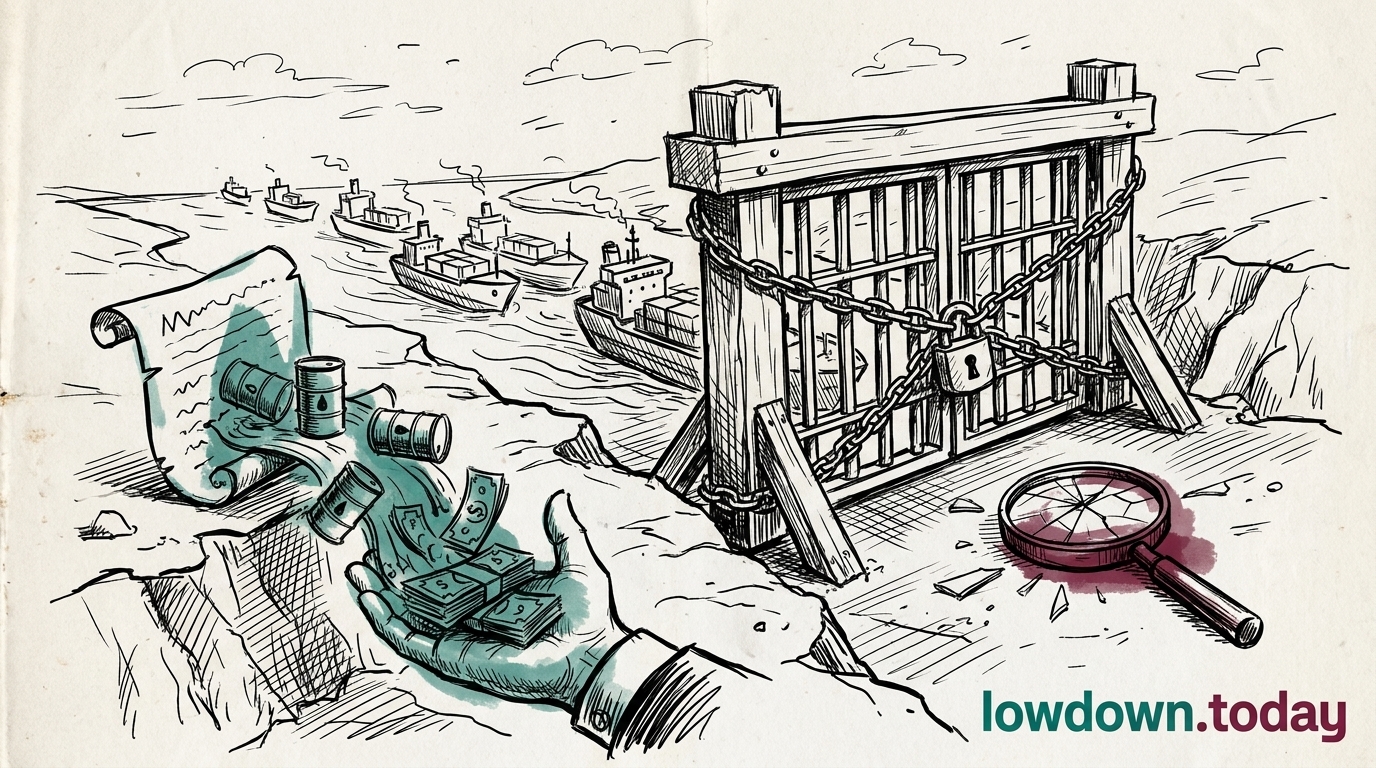
CENTCOM announced on Monday 27 April that US forces have now turned around or returned to port 38 vessels under the blockade⁠1. The cumulative count was 33 at Friday's close on 25 April, the second day held flat; the five interdictions logged between Friday 25 and Monday 27 April mark the fastest two-day escalation since the campaign began on 13 April. CENTCOM is the United States Central Command, the combatant command responsible for naval operations in The Gulf and Arabian Sea.

The 37th vessel, the LPG tanker SEVAN (IMO 9177806), was taken on Saturday 25 April in the Arabian Sea, not the strait⁠2. The seizure took US enforcement out of the Strait of Hormuz for the first time since the 13 April blockade began. Windward's maritime intelligence reporting placed the SEVAN well east of the chokepoint; ships routing wide of the 33-kilometre strait now no longer escape it. The state-linked Tasnim agency carried the IRGC (Islamic Revolutionary Guard Corps) line on 27 April: "Controlling the strait of Hormuz and maintaining the shadow of its deterrent effects over America is the definitive strategy of Islamic Iran."

The geographic widening matters because the legal architecture being drafted at Northwood by 30 European and Asian planners assumes a strait operation under UNCLOS transit-passage doctrine. The SEVAN seizure puts US enforcement outside that frame. Oman's territorial waters cover the strait's southern flank only; everything beyond is high seas, where the question of which flag-state's law applies becomes thornier. The IRGC's 24 April end-of-self-restraint declaration and the carrier concentration of three groups in theatre sit on either side of the same widening perimeter.

Deep Analysis

In plain English

The US Navy has been stopping ships from reaching or leaving Iranian ports since 13 April. Up to now, that enforcement happened inside the strait of Hormuz, the 33-kilometre passage between Iran and Oman that almost all Gulf oil must pass through. On 25 April, the US seized a tanker called the Sevan in the open Arabian Sea, well east of the strait itself. Ships had started routing around the strait to avoid the blockade. The Sevan seizure means that workaround no longer works: the blockade now applies wherever the US Navy chooses to enforce it. In practical terms, there is now no confirmed safe ocean route from The Gulf that avoids US interception.

Deep Analysis
Root Causes

The Arabian Sea extension has a specific operational cause. Ships routing wide of Hormuz to avoid interdiction were transiting via routes outside CENTCOM's declared enforcement geometry. The SEVAN's seizure closes that evasion. The structural driver is the mismatch between a destination-based written order and a geography-based blockade: destination-based orders must expand geographically to remain effective as operators find routing workarounds.

The five-vessel jump in 48 hours also reflects the IRGC's 24 April end-of-self-restraint declaration. With the IRGC signalling escalatory intent, CENTCOM accelerated its enforcement tempo, producing the fastest two-day interception pace of the blockade. Iranian escalation rhetoric followed by US enforcement acceleration has driven every major count jump since 13 April.

What could happen next?
  • Risk

    A flag state whose vessel is seized in international waters may invoke UNCLOS Article 110 provisions, which CENTCOM's open-ocean seizure arguably does not satisfy, triggering an international tribunal complaint that could delegitimise the wider blockade.

    Short term · 0.65
  • Consequence

    Lloyd's of London war-risk premiums for Arabian Sea routing will reprice upward following the SEVAN precedent, raising shipping costs for all Asian crude importers regardless of their Hormuz routing decisions.

    Immediate · 0.88
  • Precedent

    CENTCOM's destination-based written order has been operationalised as a geographic perimeter extending to the open Arabian Sea, a precedent that will be cited in any post-war renegotiation of maritime blockade law.

    Long term · 0.8
First Reported In

Update #81 · Iran writes Phase 3; Trump posts Phase 1

Windward· 27 Apr 2026
Read original →
Different Perspectives
Office for Budget Responsibility
The OBR's 28 October forecast assumed $82 oil for 2026 and 2027, from market prices for the ten working days to 19 August, and blamed dearer wholesale energy on the war without naming Iran. It expects CPI inflation close to 4% in early 2027 even at that price.
Hengaw, Kurdish rights group
Hengaw reported the 3 November hangings of Amirhossein Maleki and Amirhossein Ebrahimi in Isfahan, saying Ebrahimi was tortured into confessing and that nine of 12 people sentenced to death in the case have now been hanged. Iran's judiciary holds that the defendants killed members of the security forces.
FINTRAC, Canada's financial intelligence unit
FINTRAC worked with the US Treasury on the 6 November designation of eight money services businesses in British Columbia, Ontario and Quebec. Treasury says the businesses still operate, some under new names, so closing them falls to Ottawa.
Abdul Qadir al-Dakhil, Governor of Nineveh
Al-Dakhil cancelled three Mosul International Airport contracts on 7 November over alleged links to armed groups, after meeting Prime Minister Ali al-Zaidi in Baghdad. He named no group or company, and said the contracts will go to international companies.
Kuwait
Kuwait
Kuwait condemned the Houthi missile fired towards the Madinah region on 5 November and restated its support for Saudi Arabia, the Qatar News Agency reported. Its state tanker company, Kuwait Oil Tankers Company, is among the Gulf state fleets on Iran's expanded Hormuz list.
Scott Bessent, US Treasury Secretary
Treasury designated an alleged Chandigarh false-flag network on 4 November and eight Canadian exchangers on 6 November, while State sanctioned alleged MANPADS intermediaries. None of the actions touches an oil buyer; they target the paper, cash and procurement around Iran's trade.

Written with AI from Lowdown's published reporting. Not individually reviewed by an editor. Editorial standards.
