Skip to content
You can now search across every topic, entity and event.What's new
Iran Conflict 2026
21JUN

Med aframax freight doubles in a week

2 min read
17:51UTC

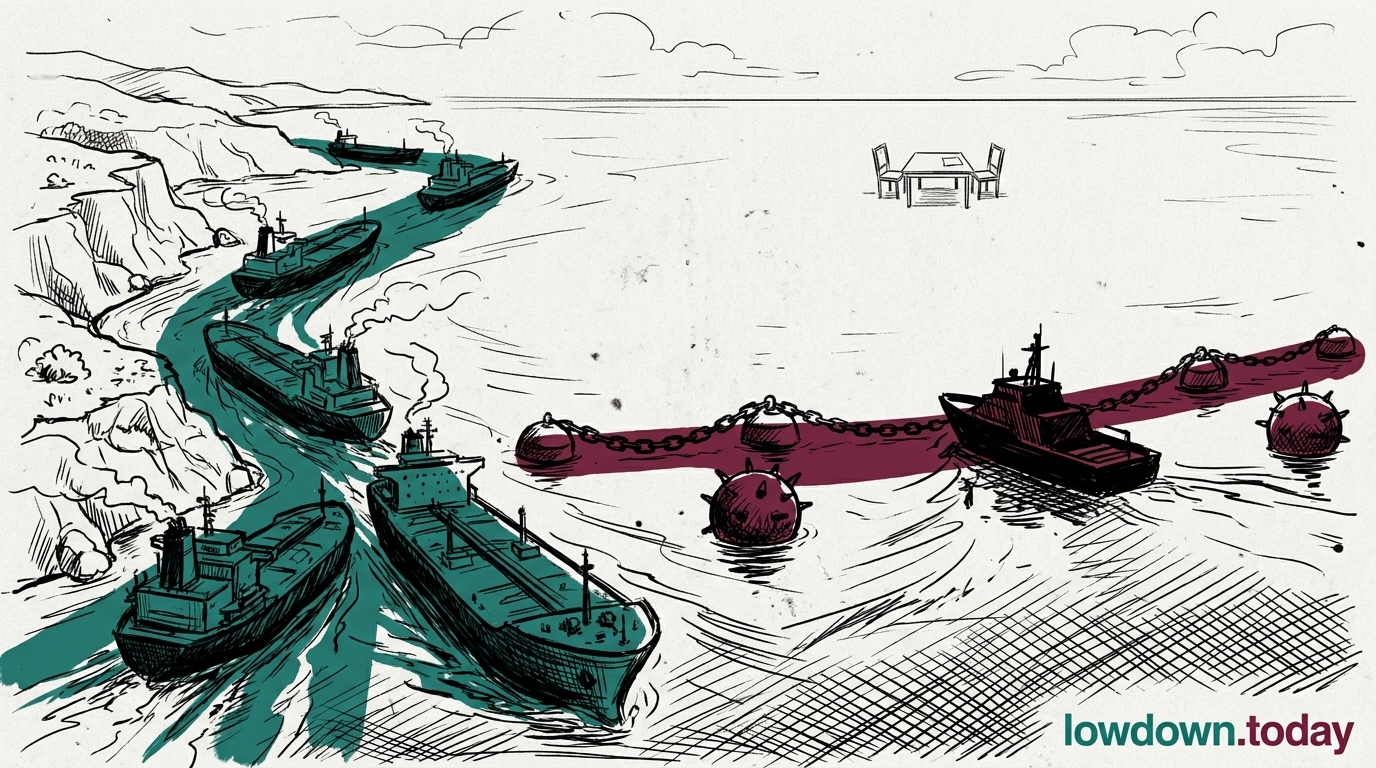
Cross-Mediterranean aframax freight doubled to $151,308 a day in the week to 20 July even as long-haul VLCC rates eased, the clearest sign a second chokepoint at Suez is now repricing the map.

ConflictDeveloping
Key takeaway

Trade the aframax-versus-VLCC spread, not Brent's move through $100.

Cross-Mediterranean Aframax freight doubled in the week to 20 July, rising 198% month-on-month to $151,308 a day, with suezmax rates up 41% to $149,781, on Baltic Exchange assessments relayed by Lloyd's List 1. Aframaxes and suezmaxes are the mid-size crude tankers that carry the shorter, Suez-dependent legs into the Mediterranean. Long-haul VLCC rates, the very large crude carriers that run the multi-week Gulf hauls, moved the other way: US Gulf-China fell 29% to $104,662 a day and West Africa-China dropped 41% to $103,246. The premium markets built around the Strait of Hormuz through mid-July is now fully priced, so the fresh bid migrated to the routes that clear the Suez Canal.

Caribbean-to-US Gulf Aframax also rose 78% to $60,143 over the same week, a route nowhere near the Red Sea, so part of the move is broad tightness rather than one chokepoint. Had every crude tanker been tightening, the long-haul supertankers would have climbed with the aframaxes; instead they eased, US Gulf-China VLCC down 29% on the week. The divergence follows the map, with Suez-routed rates rising while Hormuz-routed long-haul falls.

The prints predate the strikes that would confirm them. The assessment week closed on 20 July, three days before the first Houthi missile hit a tanker, so the tape moved on the blockade threat, not on a vessel actually lost. For a Mediterranean refiner at Sines or Trieste, a doubling of Aframax freight adds well over $1 a barrel to a delivered cargo before any crack has moved to pass it on.


Deep Analysis

In plain English

Oil tankers come in different sizes. Aframax and suezmax ships are mid-sized, roughly 80,000 to 160,000 tonnes, and carry crude on shorter regional routes such as the Mediterranean. VLCCs, very large crude carriers, are the biggest tankers, often hauling more than two million barrels on long ocean crossings between the Gulf and Asia. The Baltic Exchange, a London body whose daily freight assessments shipowners and traders rely on, found that renting a Mediterranean aframax tanker for a day roughly doubled in a single week. Renting a VLCC for the long Gulf-to-China run actually got cheaper over the same period. That split matters because it shows two separate danger zones are now pushing up oil shipping costs, not one. The Hormuz danger has already been priced into freight for weeks; this new spike shows a second squeeze building around the Suez Canal route that European refiners depend on.

Deep Analysis
Root Causes

Aframax and suezmax tonnage serves the short-haul Mediterranean, Black Sea and Baltic trade that transits Suez; VLCCs serve the long-haul Asia trade that transits Hormuz or rounds the Cape when diverted. The two classes rarely substitute for each other, since an 80,000-160,000 dwt aframax hull cannot economically carry a VLCC-scale cargo above two million barrels, so a threat concentrated at one chokepoint reprices only the class dependent on it.

The Houthi Bab el-Mandeb blockade compounds the Suez-dependent leg specifically. Aframax and suezmax owners serving Mediterranean refiners now stack two overlapping premiums, Suez transit risk and Red Sea approach risk, while VLCC owners rounding the Cape avoid both.

What could happen next?
  • Consequence

    Mediterranean refiners face higher landed freight costs before any move in crude benchmarks, since the aframax spike is a shipping-cost pass-through distinct from Brent or Suezmax pricing.

First Reported In

Update #19 · Second chokepoint doubles Med freight

Lloyd's List· 23 Jul 2026
Read original
Different Perspectives
Hengaw
Hengaw
The Norway-based monitoring group reported the Urmia executions of Omid Behzad and Pouria Safvat, the only source to do so, consistent with its documented pattern of recording far more executions than the Iranian state acknowledges. Iran's government has not confirmed either execution.
Shipping and insurance underwriters
War-risk premiums price the Houthi campaign because the group announces its targets in advance, but a reopening Trump has promised without a published text gives underwriters no benchmark to reprice Hormuz cover against. Insurers want a text before they move rates, not a promise.
Houthi movement
Houthi movement
Spokesman Yahya Saree claimed strikes on two tankers in the Red Sea and Gulf of Aden on 5 August, only one of which UKMTO could confirm. The group's campaign against shipping continues on its own schedule, independent of any Hormuz arrangement further north.
Oman
Oman
Muscat has brokered the coordinates both Tehran and Washington's wire sources now describe differently, but has published no account of its own. Oman's position depends on treating Hormuz as a shared route, which is not what Iran is currently describing.
United States Central Command
CENTCOM raised its interdiction tally from 35 to 44 redirected vessels and disclosed its first boardings on 3 August, the day before Trump promised a reopening. The command's own enforcement record does not yet reflect the release the President has described.
Iran's Foreign Ministry
Spokesman Esmaeil Baghaei described the agreed Hormuz coordinates as a wholly new corridor under Iranian management, not a split of the existing route, days after his own deputy rejected Oman's lane proposal. Tehran wants the arrangement read as a change of ownership, not a compromise on access.



