Skip to content
Welcome, thoughtbot's Giant Robots listeners!Start here
Iran Conflict 2026
21JUN

Saudi Red Sea diesel loadings collapse

3 min read
17:51UTC

Saudi Red Sea diesel loadings fell to roughly 100,000 tonnes since 27 July from about 600,000 the week before, and Turkey turned net importer of European diesel for the first time since November 2022.

ConflictDeveloping
Key takeaway

Saudi Red Sea loadings collapsed and Turkey turned importer, tightening Mediterranean feedstock and product on one corridor.

Saudi Red Sea diesel loadings fell to roughly 100,000 tonnes since 27 July, against about 600,000 tonnes the week before, and Turkey flipped to a net importer of European diesel for the first time since November 2022, per Argus Media⁠1. Turkey normally runs the other way, pushing surplus barrels from its Aegean and Mediterranean refineries into southern Europe. A country that supplies the basin turning round to draw from it removes the region's nearest replacement cargo at the moment it is needed.

Mediterranean refiners take 24% of their imported diesel through Saudi Red Sea ports, against 17% for Northwest Europe⁠2. That import share explains why the pricing separation shows up in the Med rather than at ARA, and it lands twice over: the same corridor carries the crude feedstock those refineries run and the finished cargoes they backfill with, so a disruption tightens both legs in the same week rather than in sequence.

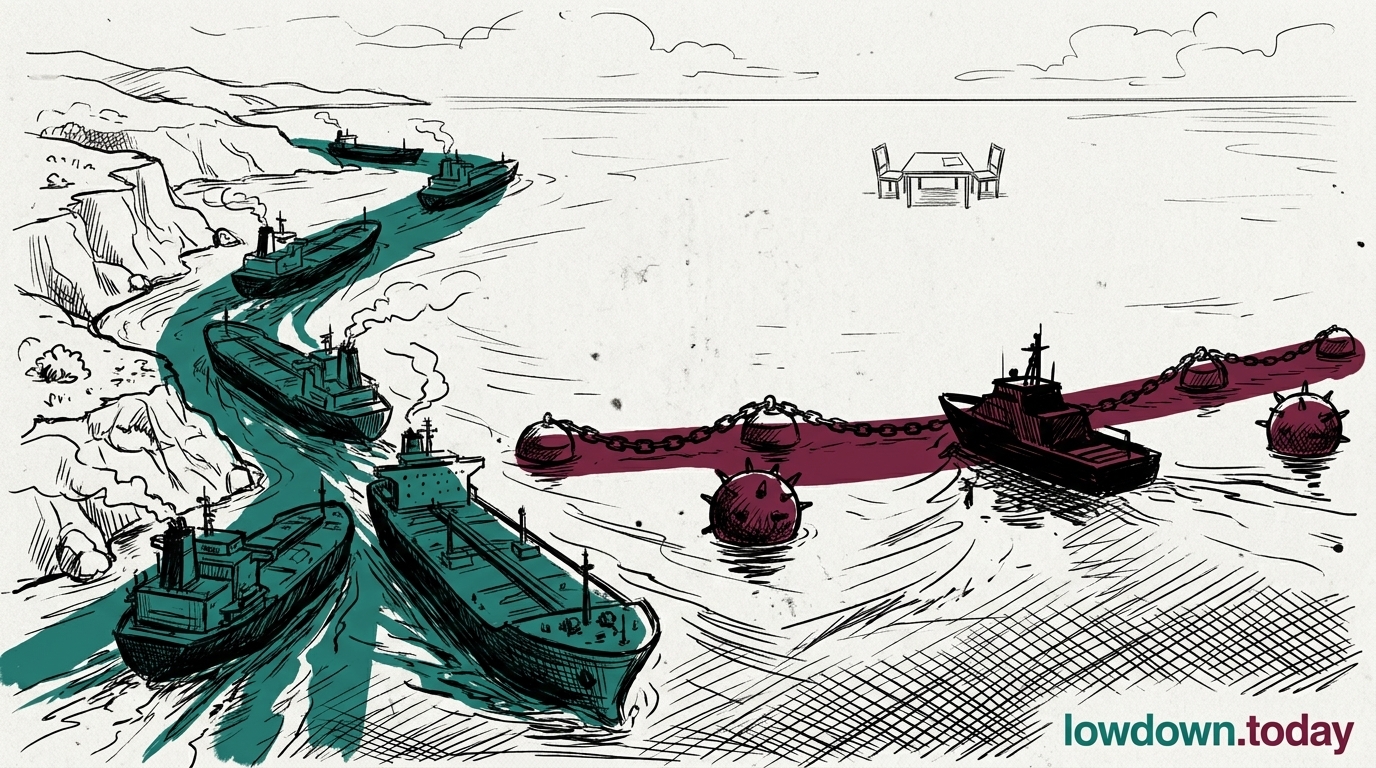
The corridor itself has a measured floor. Tanker transits through Bab el-Mandeb have settled near 7.5 a day for Saudi-linked hulls, down from about 12 in the days between the 20 July blockade declaration and the withdrawal of Lloyd's-market war-risk cover on 24 July, with total crossings down 22% to 37.2 a day⁠3. This desk logged that transit figure on 30 July, and 7.5 is a floor rather than a waypoint, set by the insurance mechanics rather than by the shooting.

War-risk cover and a war-risk rate are different instruments with different reversal speeds, which is why the floor holds. A rate priced at some percentage of hull value can be argued back down inside a week once the loss record cools. A withdrawal removes the contract for a defined class of vessel, and an underwriting committee has to re-accept that class before an owner will sail it, which is a process with a lead time no diplomatic headline shortens. Freight was tightening ahead of the exclusion rather than because of it: cross-Mediterranean aframax rates had already spiked 198% month-on-month to $151,308 a day. A charterer without an existing placement is now facing a capacity market rather than a price market.

Deep Analysis

In plain English

Saudi Arabia normally ships a lot of diesel to Europe through the Red Sea, but the tonnage it sent in the week after 27 July collapsed to a sixth of the previous week's level. At the same time, Turkey, a country that usually sells diesel to Europe, had to start buying it instead, for the first time since 2022. Both point the same way: fewer tankers are willing to use the Red Sea corridor right now, so cargoes that would normally flow through it are not moving, and countries that relied on that supply are having to look elsewhere.

Deep Analysis
Root Causes

Lloyd's market underwriting committees do not restore war-risk cover for a withdrawn hull class the moment a threat recedes; a class gets pulled after an incident, or a credible warning, and re-accepting it requires the committee to see a sustained calm period.

That restoration typically lags any de-escalation by weeks, not days, which is the mechanical reason a single called-off strike, as in this desk's earlier item, does not immediately restore Red Sea tanker flows even if the underlying threat has genuinely passed.

What could happen next?
  • Risk

    If Saudi Red Sea loadings do not recover within a few weeks, expect further Mediterranean refiners to follow Turkey in flipping from net exporter to net importer of diesel, deepening the regional supply gap.

First Reported In

Update #22 · The premium unwinds; the diesel crack does not

Argus Media· 3 Aug 2026
Read original →
Different Perspectives
Office for Budget Responsibility
The OBR's 28 October forecast assumed $82 oil for 2026 and 2027, from market prices for the ten working days to 19 August, and blamed dearer wholesale energy on the war without naming Iran. It expects CPI inflation close to 4% in early 2027 even at that price.
Hengaw, Kurdish rights group
Hengaw reported the 3 November hangings of Amirhossein Maleki and Amirhossein Ebrahimi in Isfahan, saying Ebrahimi was tortured into confessing and that nine of 12 people sentenced to death in the case have now been hanged. Iran's judiciary holds that the defendants killed members of the security forces.
FINTRAC, Canada's financial intelligence unit
FINTRAC worked with the US Treasury on the 6 November designation of eight money services businesses in British Columbia, Ontario and Quebec. Treasury says the businesses still operate, some under new names, so closing them falls to Ottawa.
Abdul Qadir al-Dakhil, Governor of Nineveh
Al-Dakhil cancelled three Mosul International Airport contracts on 7 November over alleged links to armed groups, after meeting Prime Minister Ali al-Zaidi in Baghdad. He named no group or company, and said the contracts will go to international companies.
Kuwait
Kuwait
Kuwait condemned the Houthi missile fired towards the Madinah region on 5 November and restated its support for Saudi Arabia, the Qatar News Agency reported. Its state tanker company, Kuwait Oil Tankers Company, is among the Gulf state fleets on Iran's expanded Hormuz list.
Scott Bessent, US Treasury Secretary
Treasury designated an alleged Chandigarh false-flag network on 4 November and eight Canadian exchangers on 6 November, while State sanctioned alleged MANPADS intermediaries. None of the actions touches an oil buyer; they target the paper, cash and procurement around Iran's trade.

Written with AI from Lowdown's published reporting. Not individually reviewed by an editor. Editorial standards.
