Skip to content
You can now search across every topic, entity and event.What's new
Iran Conflict 2026
17JUN

Iran lost track of its own minefield

2 min read
09:37UTC

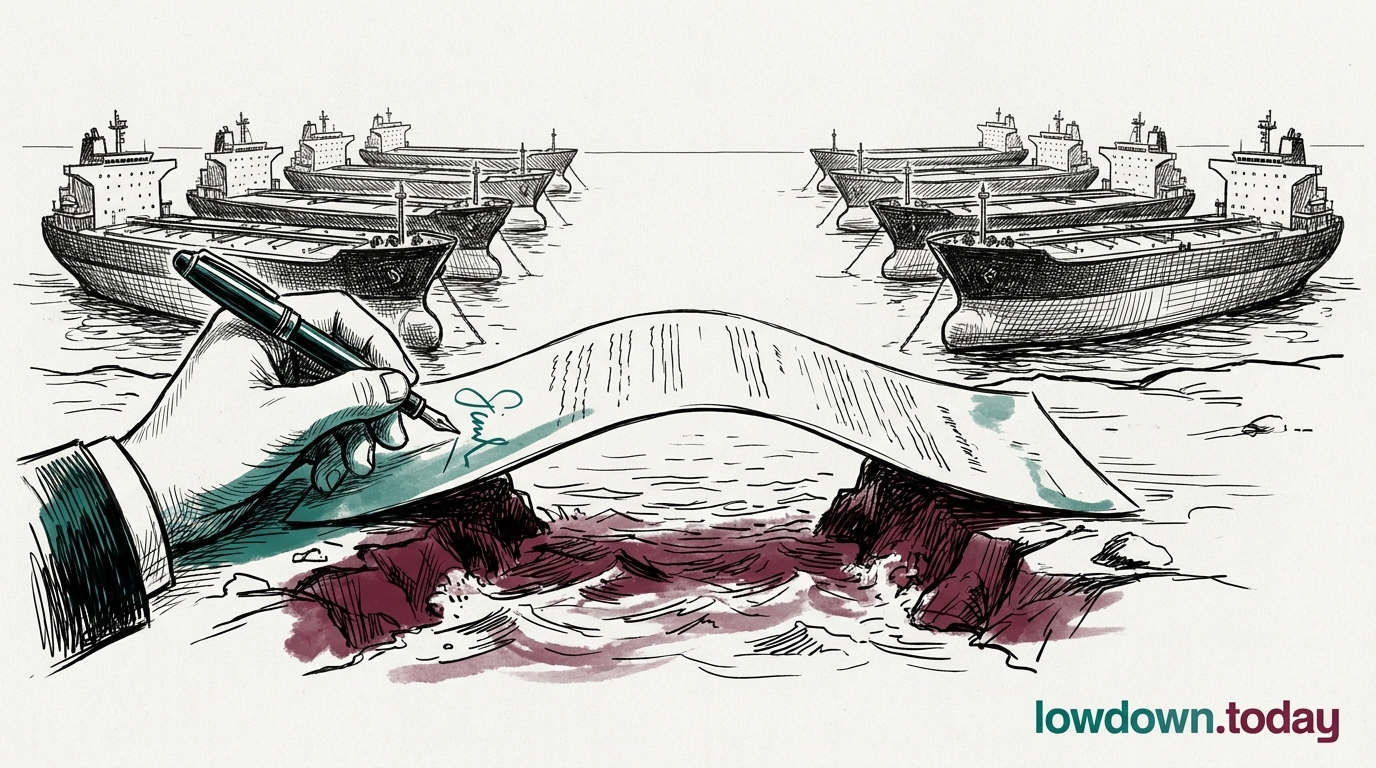
Tehran deployed at least a dozen mines in Hormuz and never mapped most of them. US intelligence officials told the New York Times and Wall Street Journal the minefield now sits beyond Iran's own reach.

ConflictDeveloping
Key takeaway

Iran cannot reopen Hormuz because it cannot find the mines it laid.

US intelligence officials told the New York Times and the Wall Street Journal this week that Iran deployed at least a dozen naval mines in the Strait of Hormuz during the opening weeks of the war and did not systematically track every placement 12. Some mines drifted from their original positions. Iranian authorities cannot reliably map, locate, or recover all of them, and Tehran lacks the capability to remove the mines once found. This is single-provenance US-intelligence reporting, relayed through two American papers; no non-American source has confirmed the assessment independently.

The two models identified are Maham-3, a moored mine with magnetic and acoustic sensors, and Maham-7, a seabed limpet-style device designed to evade sonar 3. US officials call Iran's mine-tracking failure "a key factor in Tehran's failure to meet demands from the Trump administration" to reopen the strait. The minefield has become an ungoverned obstacle Iran itself cannot clear.

The IRGC corridor charts Iran published on 9 April, directing traffic through channels near Larak Island , now read less as a coercive toll architecture than as a confession: Tehran does not know which channels are safe because it does not know where its own mines are. That confession reshapes the operational meaning of the toll regime that was producing 20 transits per day on 5 April . What looked like leverage on Monday looks like a trap on Friday.


Deep Analysis

In plain English

Iran laid sea mines — underwater bombs that detonate when a ship passes over or near them — in the Strait of Hormuz, the narrow waterway that most of the world's oil travels through. The problem is that Iran never properly recorded where each mine was placed, and some have since drifted from their original positions. That matters because the ceasefire deal requires Iran to reopen the strait. But Iran cannot safely reopen it if it does not know where its own mines are. Even if both sides want peace, the physical danger in the water does not go away because of a political agreement.

Deep Analysis
Root Causes

Iran's mine doctrine was designed for area denial, not for precision emplacement with recovery in mind. The IRGC's naval arm built the Maham series to be cheap, difficult to detect, and deniable — not to be retrievable. That doctrine made strategic sense as a deterrent against US carrier groups; it becomes a liability when the ceasefire demands Iran clear what it laid.

The second cause is institutional: the IRGC operates as a parallel naval command with limited integration with the regular Artesh navy, which has the only functional minesweeping vessels. Coordination between the two forces in active mine-laying operations was not systematically documented.

What could happen next?
  • Consequence

    Any ceasefire compliance demand that Iran 'open Hormuz' is physically unenforceable until a credible mine-clearance process is established by a third-party naval force.

    Immediate · 0.85
  • Risk

    An uncharted minefield increases the probability of an accidental detonation by a commercial vessel, which could trigger an insurance market withdrawal making the strait economically impassable even if politically agreed open.

    Short term · 0.75
  • Precedent

    If a multinational minesweeping mandate is eventually issued, the 1991 Gulf War precedent suggests clearance of an imprecisely-laid field in a deep-water strait could require six months or more even with full cooperation.

    Medium term · 0.7
First Reported In

Update #65 · Iran lost its own minefield

Daily Caller· 11 Apr 2026
Read original
Different Perspectives
Lloyd's Market Association
War-risk underwriters price the Houthis' Red Sea attacks because the group announces its targets in advance, but the unclaimed Damietta drone gives insurers a hit with no author to price against. An attack nobody claims costs shipping more than one that is claimed, since premiums are set against a known pattern, not raw damage.
US Central Command
US Central Command
CENTCOM has announced no strike on Iran since resuming bombing on 30 July within hours of an IRGC salvo on Jordan, and centcom.mil did not respond to requests to confirm any pause. The command has gone quiet before while a larger operation was being weighed, so silence alone proves nothing about what it has or has not done.
Hengaw
Hengaw
Hengaw recorded at least 67 executions in Iran during July, of which the state acknowledged only eight, and reported the 1 August execution of protest detainee Arvin Kheirkhahan at Shahrud with no advance notice to his family. A family's first notice of a death sentence is now usually the instruction to collect a body.
Egypt
Egypt
Egypt's government asked media on 2 August to report the Damietta attack accurately, named no author, and said no findings will be published before its own investigation concludes. Cairo holds the debris and jurisdiction over an attack on its own soil, and naming a culprit now would pull it into a dispute it has avoided for five months.
Iran's Foreign Ministry
Araghchi called the Hormuz talks with Oman final-stage on 2 August, four days after his own deputy rejected Oman's lane proposal, and denied the Damietta drone strike as an Israeli false flag while two Iranian officials privately claimed it for Tehran. Iran's public position now contradicts itself on both files at once.
Bahrain and Kuwait
Bahrain and Kuwait
Bahraini and Kuwaiti aircraft flew their own strikes on Iranian depots in July with Emirati air cover behind them, and Ynetnews reports some Gulf capitals wanted the 2 August strike to proceed rather than stop. States that have already taken fire see a closing window on Iranian weakness, not a reason to pause.



