Skip to content
Briefings are running a touch slower this week while we rebuild the foundations.See roadmap
Iran Conflict 2026
8JUN

Pakistan mediation live, unwritten and only partial

3 min read
09:58UTC

Esmail Baghaei confirmed on 20 May that Pakistan has relayed a fresh round of corrective points between Tehran and Washington; Tasnim's parallel oil-sanctions waiver claim has no US-side corroboration.

ConflictDeveloping
Key takeaway

Pakistan is relaying corrective points between Tehran and Washington, yet neither side has produced a signed counter-text.

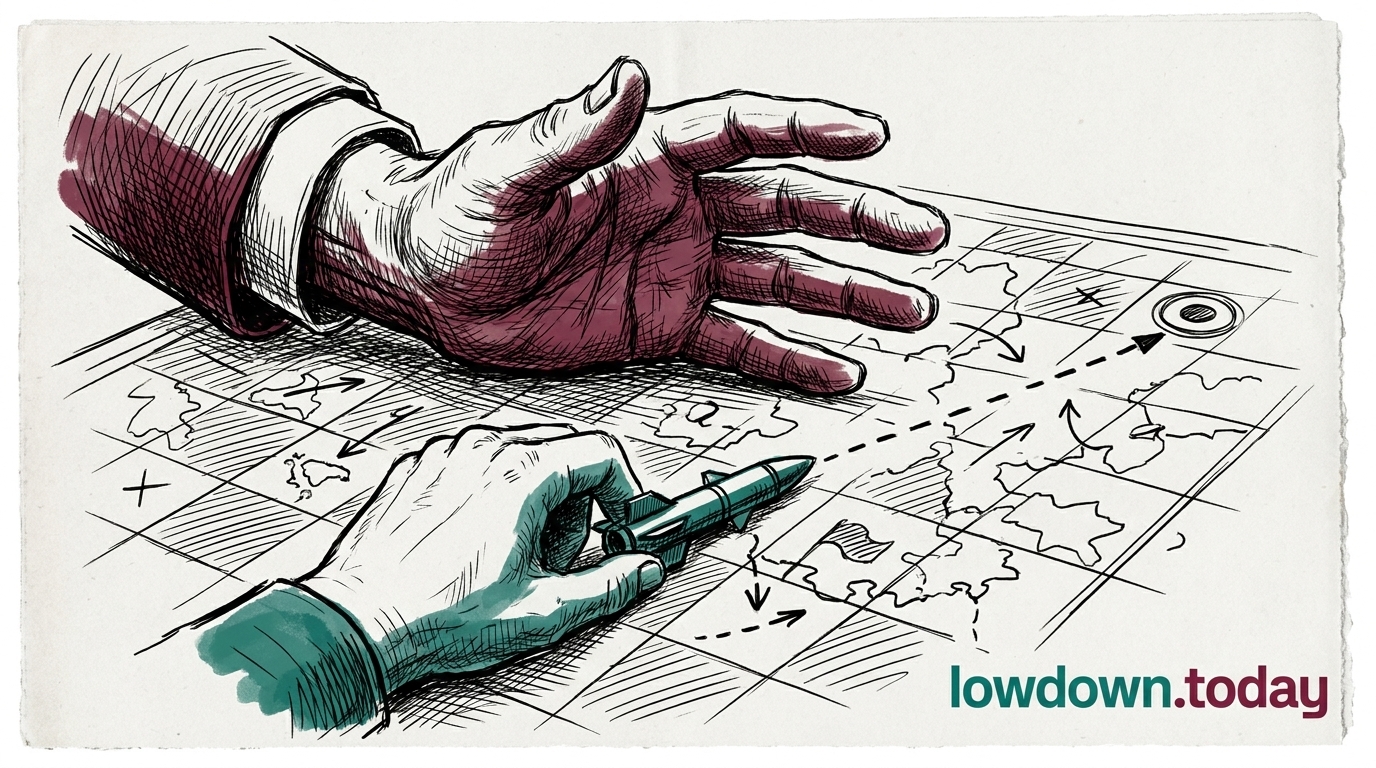
Esmail Baghaei, the Iranian Foreign Ministry spokesman, confirmed on 20 May 2026 that the Pakistan-mediated channel remains active 1. "We received a set of corrective points and considerations from the Pakistani mediator," Baghaei said. "Our points of view were presented to the American side in return. Therefore, the process continues through Pakistan."

Baghaei's confirmation marks the third documented exchange in the sub-cycle. Iran transmitted a 10-point counter-MOU on 10 May; Donald Trump rejected it on Truth Social as "totally unacceptable"; Pakistan has now relayed a fresh round of corrective points in return. Neither side is working from a shared text; both are annotating each other's positions.

Tasnim also reported on 18 May that the US had agreed in a new text to suspend oil sanctions during the negotiation period. The claim cites an anonymous source close to Iran's negotiating team and has no US-side corroboration: no executive order on 19-20 May, no OFAC general licence, no Federal Register entry, no White House action covered the zero-instrument count across 16-18 May; the 19-20 window extends the streak. The OFAC SDN round on 19 May targeted vessels and shells , not a sanction suspension. The Senate's procedural discharge of the Kaine resolution deadline opened the political vulnerability the verbal track has not yet answered with paper.

Deep Analysis

In plain English

Pakistan is acting as a go-between in the US-Iran negotiations. Iran talks to Pakistan, Pakistan tells the US, the US responds, Pakistan tells Iran. The two sides have never met face-to-face. On 20 May, Iran's Foreign Ministry spokesman confirmed this channel is still working: Pakistan has delivered a new set of suggested changes from the US side. Iran has sent its own response back. But neither side has yet agreed on a shared document they are both working towards. Iran's state news agency also claimed the US has agreed to pause oil sanctions during negotiations. As of 20 May, no US official has confirmed this and no document to that effect has appeared.

Deep Analysis
Root Causes

Pakistan mediates because it is one of the few states with simultaneous institutional credibility in Washington (military-to-military ties, CENTCOM interoperability) and Tehran (border relationship, Baloch population, energy imports from Iran). Field Marshal Munir's personal credibility with both IRGC leadership and the Trump administration's senior military figures gives him a contact network no career diplomat could replicate.

The channel's structural limitation is that Pakistan cannot bridge the gap between Iran's demand for domestic uranium stockpile dilution (rather than transfer) and the US demand for physical removal outside Iran. That is a technical nuclear-verification problem, not a diplomatic communication problem; no intermediary can resolve it without an IAEA inspection regime, which Iran's Majlis voted 221-0 to suspend.

What could happen next?
  • Risk

    The Tasnim oil-sanctions waiver claim, if false, sets Iranian domestic expectations that the US will not meet; a public US denial of the claim would damage the channel's credibility faster than any formal breakdown.

    Immediate · 0.7
  • Consequence

    Three sub-cycle exchanges since 10 May without converging on shared text means the gap is structural (document count, framework) rather than positional (terms within a shared document); a fourth exchange in the same format is unlikely to resolve it.

    Short term · 0.75
  • Opportunity

    Pakistan's Asim Munir secured Iran's in-principle nuclear-monitoring concession in April through informal assurances outside the written text. A similar informal side-agreement on sanctions modalities may be where the real settlement lies, with formal documents following later.

    Medium term · 0.55
First Reported In

Update #103 · Senate 50-47; UNSC at Barakah; no US paper

Tasnim News Agency / IRNA· 20 May 2026
Read original
Different Perspectives
Bahrain / Gulf partners
Bahrain's PAC-3 interceptor magazine sits at 87% depletion after absorbing IRGC salvos aimed at US bases; no resupply is scheduled before 2027, concentrating the intercept burden on US assets and Israeli Iron Dome and Arrow-3.
IAEA / Vienna process
IAEA officials cited proliferation concerns over 440.9 kg of HEU unaccounted for after 97 days without inspector access; the Board session that opened 8 June cannot retroactively close the evidentiary gap its own resolution documents.
China
China
China absorbed the Shanghai Qianye designation by OFAC and opposes censure at the IAEA Board, arguing the verification gap was created by strikes rather than Iranian non-compliance, a framing it shares with Russia to protect the non-Western bloc's Board votes.
Russia
Russia
Putin reaffirmed at SPIEF on 6 June his offer to hold Iran's uranium stockpile as custodian, a proposal the IAEA's 97-day verification gap now renders undeliverable: no one can transfer or confirm a stockpile that has not been inspected.
United States / Trump administration
Trump publicly asked Netanyahu not to retaliate and described a deal as 95% done; Rubio then acknowledged enrichment terms could take months. The 24-hour gap between the request and the Mahshahr strike removes the credible-restraint argument from US diplomatic leverage with Tehran.
Israel / Netanyahu government
Netanyahu struck the Mahshahr complex and missile sites inside Iran within 24 hours of Trump's public no-retaliation request, a second kinetic override of US counsel that confirms Israel will not allow Tehran to dictate the terms of the exchange.