Skip to content
Briefings are running a touch slower this week while we rebuild the foundations.See roadmap
Iran Conflict 2026
6JUN

Saudi intercepts 60 drones in one day

4 min read
12:17UTC

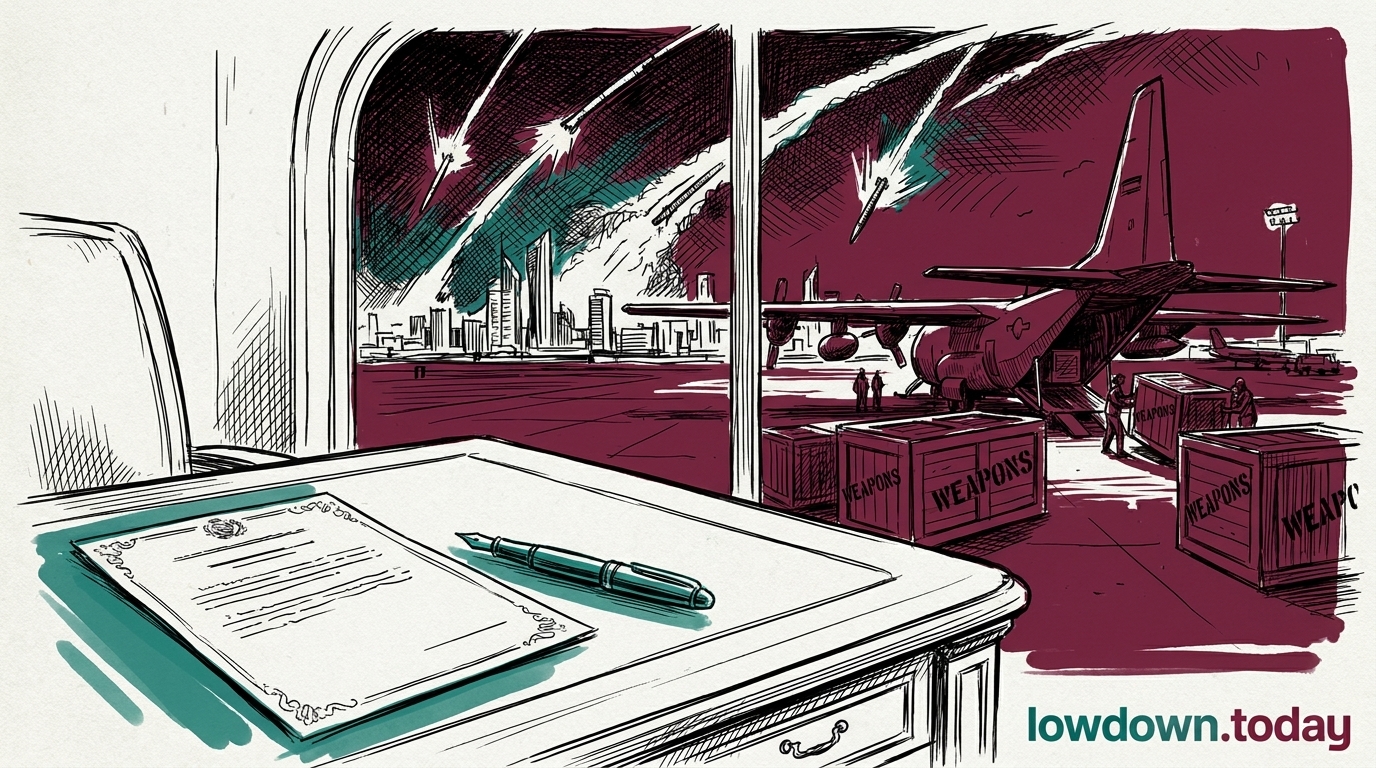
Saudi Arabia's air defences faced the war's heaviest single-day drone barrage on Monday, with the kingdom's oil infrastructure — the world's last spare production capacity — under daily attack.

ConflictDeveloping
Key takeaway

Saudi Arabia is absorbing an Abqaiq-scale attack every day — a tempo no existing oil market model has priced.

Saudi Arabia intercepted more than 60 drones on Monday across multiple waves — the highest single-day total since the war began, exceeding the 51 intercepted four days earlier . The attacks targeted The Kingdom's oil infrastructure, which includes the Ghawar field and the Abqaiq processing complex — the two installations on which the world's last meaningful spare production capacity depends.

The trajectory is measured in days. The war's opening phase brought single-digit drone attacks on Saudi territory. By 13 March, Iran was firing 51 in a day alongside strikes on Riyadh's Diplomatic Quarter . Monday's 60-plus continues the escalation. The IRGC's 48th declared wave of Operation True Promise 4 last week named Saudi Arabia explicitly as a target alongside Israel and Qatar , and the IRGC's claim that most munitions fired so far date from a decade ago, with newer weapons held in reserve 1, suggests production capacity to sustain — and increase — this tempo.

Saudi Arabia holds roughly 2 million barrels per day of spare capacity, the only rapid-response buffer left in a market where Gulf exports have fallen 60% and Brent has crossed $106 . The Kingdom's air defences have held so far, but the 2019 precedent weighs on every interception. In September of that year, fewer than 20 drones and cruise missiles — attributed to Iran — struck the Abqaiq processing facility and the Khurais oil field, taking 5.7 million barrels per day offline and briefly halving Saudi output. The attack exploited a blind spot in radar coverage that has since been addressed, but the operational lesson endures: a single successful strike on the right facility can remove more oil from the market in minutes than OPEC can add in months.

Saudi Arabia's primary air defence against drones relies on Patriot batteries and shorter-range interceptors. A Patriot PAC-3 missile costs approximately $4 million; Iran's Shahed-series drones cost between $20,000 and $50,000. At 60 intercepts per day, even partial reliance on Patriot rounds produces daily expenditure measured in tens of millions of dollars — against an adversary spending under $3 million on the same exchange. No air defence inventory is infinite. The 10,000 Merops AI interceptor drones the US shipped from the Ukraine supply pipeline at $14,000–15,000 each were designed to close exactly this cost gap, but whether they have reached Saudi batteries or remain deployed with US forces is undisclosed.


Deep Analysis

In plain English

Saudi Arabia is the world's only oil producer with enough spare capacity to compensate if another major producer is knocked offline — functioning as the global oil system's emergency reserve. Iran is attacking it every day with swarms of drones. Saudi Arabia is shooting them down, but each interceptor missile costs millions of pounds while each attacking drone costs thousands. Iran can sustain this campaign far more cheaply than Saudi Arabia can defend against it. Eventually, interceptor stocks run low, creating a window for a successful mass attack.

Deep Analysis
Synthesis

The 60+ drone figure on a single day, read against the UAE's 1,606 total drone interceptions over the entire war period (Event 19), suggests Iran has sharply escalated daily attack tempo against Saudi targets specifically. This may indicate deliberate strategic sequencing: establish baseline disruption against UAE logistics, then pivot to attacking Saudi production capacity — the variable that determines whether oil stays at $106 or breaks toward $150.

Root Causes

Saudi Arabia's oil infrastructure vulnerability is structural: Aramco's export capacity is concentrated at Abqaiq (processing approximately 7% of global supply) and Ras Tanura (the world's largest offshore loading terminal), both within a 200-kilometre coastal corridor. This concentration was built for efficiency; dispersing or hardening it would take years. Saudi Arabia invested heavily in air defence systems but comparatively little in underground storage or infrastructure redundancy.

Escalation

The cost-exchange asymmetry is the critical trajectory indicator. Patriot PAC-3 interceptors at $3-6 million each versus Shaheed-class drones at under $50,000 creates a 60-120:1 cost ratio that degrades defender sustainability over time. At 60+ interceptions per day, Saudi Arabia is spending an estimated $180-360 million daily on interception alone. US Patriot PAC-3 production capacity is approximately 500 units per year; at the current consumption rate, system-wide stockpiles across Saudi Arabia and UAE may be depleting faster than they can be replenished. This trajectory points toward a critical defence vulnerability window within weeks, not months.

What could happen next?
  • Risk

    Interceptor magazine depletion within weeks could allow a mass drone salvo to reach Abqaiq or Ras Tanura, triggering catastrophic production disruption.

    Short term · Suggested
  • Consequence

    Daily interception expenditure of $180-360 million is draining allied interceptor stockpiles faster than US manufacturing can replenish them.

    Short term · Suggested
  • Meaning

    Iran has opened a second front against global oil supply by escalating attack tempo against Saudi Arabia beyond its UAE campaign rate.

    Immediate · Assessed
  • Precedent

    Sustained high-volume drone warfare against the world's spare oil capacity invalidates all standard energy crisis pricing and contingency models.

    Medium term · Assessed
First Reported In

Update #38 · Israel enters Lebanon; Hormuz pact fails

Euronews Mojtaba· 17 Mar 2026
Read original
Causes and effects
This Event
Saudi intercepts 60 drones in one day
Saudi Arabia holds approximately 2 million barrels per day of spare oil production capacity, the only buffer available to a global market already short 60% of pre-war Gulf supply. Sustained drone attacks at this volume test whether Saudi interception rates can hold above the threshold at which infrastructure damage becomes inevitable.
Different Perspectives
IAEA (Board of Governors, Vienna)
Grossi's 4 June Board report invoked 'loss of continuity of knowledge' on Iran's 440.9 kg stockpile after 97 days without access, the IAEA's formal finding that the evidentiary break cannot be retroactively closed. A Board censure resolution before 12 June would harden Iran's refusal to restore access.
Russia (Kremlin / SPIEF)
Putin reaffirmed Russia's offer to hold Iran's uranium at the St Petersburg Economic Forum on 6 June, positioning Moscow as the preferred custodian even after Trump vetoed the arrangement on 27 May. The offer allows Russia to present itself as a constructive actor while the IAEA verification gap renders any custodian arrangement unworkable.
Bahrain (Government and US Fifth Fleet host)
Bahrain's PAC-3 magazine reached 87% depletion after the 5 June IRGC salvo, with its resupply last in a Camden queue behind Qatar and Saudi Arabia. Manama hosts the US Fifth Fleet with terminal air defences that the supply chain cannot replenish before 2027.
China (Ministry of Commerce)
Washington designated Shanghai Qianye Energy on 5 June, the first mainland Chinese firm under Iran energy sanctions this war, the same week Beijing was pitched as a uranium custodian. China has not yet invoked its Blocking Statute; whether it absorbs the designation as a calibrated cost or retaliates is unresolved.
Iran (IRGC and Expediency Council)
The IRGC fired seven ballistic missiles at US bases in Kuwait and Bahrain on 5 June and Rezaei doubled the asset precondition to $24bn on 6 June, blocking both military and diplomatic de-escalation simultaneously. Tehran's hardliners are setting terms the civilian Foreign Ministry cannot override.
Trump administration (White House)
Trump claimed the uranium was 'entombed' and the deal '95% done' on 4 June, while signing no Iran executive instrument across Days 99-100. The gap between presidential assertion and signed executive action is now 100 days wide and structurally unchanged.



