Skip to content
Briefings are running a touch slower this week while we rebuild the foundations.See roadmap
Iran Conflict 2026
3JUN

Iran's Majlis ratifies 12-article Hormuz sovereignty law

3 min read
09:04UTC

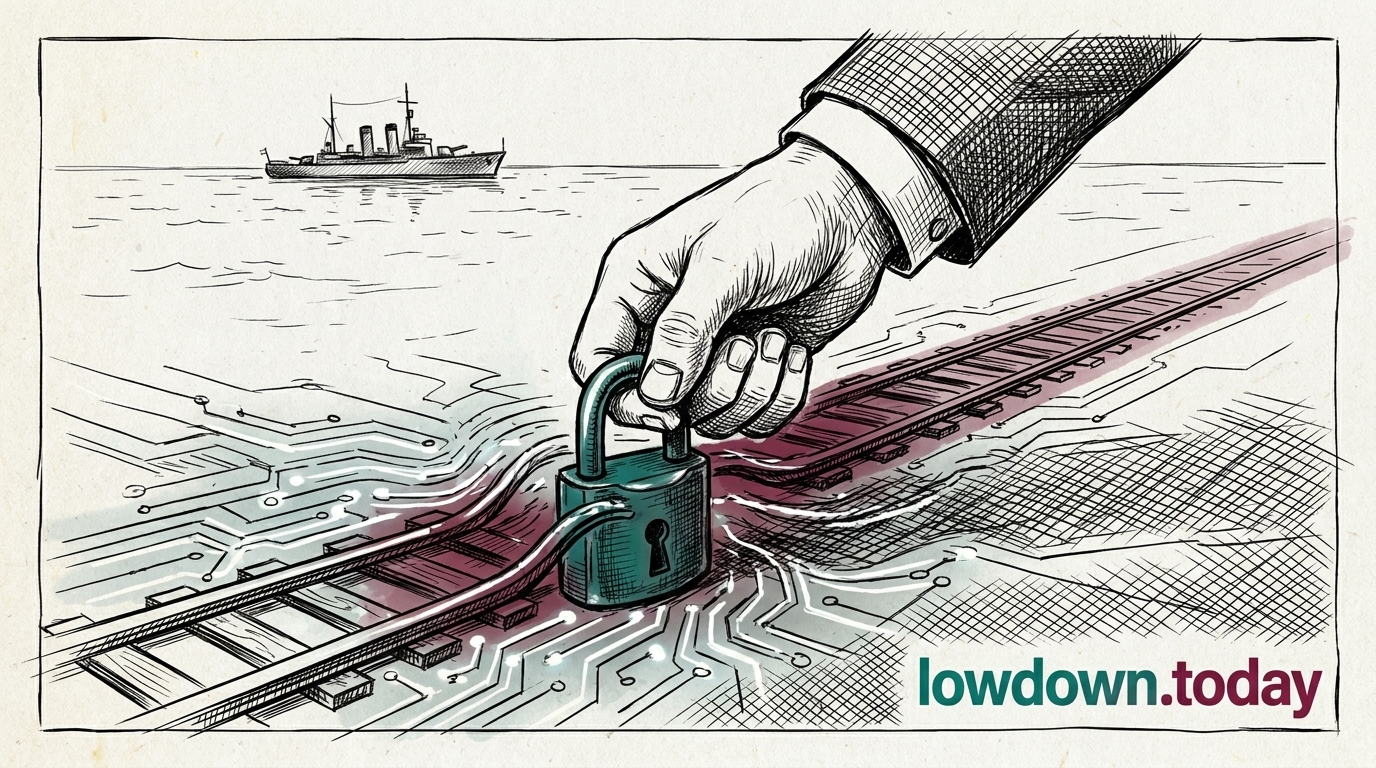
The National Security Committee of Iran's parliament cleared a 12-article statute on 2 May that permanently bars Israeli vessels and demands war reparations from 'hostile' states before transit; a full chamber vote is pending.

ConflictDeveloping
Key takeaway

Tehran has converted a wartime posture into peacetime statute; any ceasefire now has more architecture to unwind.

The National Security Committee of Iran's Majlis ratified a 12-article 'Law on Establishing Iran's Sovereignty over the strait of Hormuz' on Saturday 2 May; the full 290-seat chamber vote is pending and expected within days 1. Article 1 permanently bars Israeli vessels. Ships from countries Tehran designates as 'hostile' must pay 'war reparations' before receiving a transit permit. Non-hostile vessels would pay tolls labelled as 'environmental and security services'. The Majlis is Iran's elected legislature; the National Security Committee is the body that moves defence and foreign-policy bills before the floor takes them.

Supreme Leader Mojtaba Khamenei issued a written statement on 30 April announcing 'new management' of the strait ; the bill is the legislative half of that framing, closing the gap between operational practice and legal claim. Where the IRGC has been collecting transit demands informally for weeks, the new law arms the Guard with domestic legal cover for whatever escalation comes next. Iranian state-wire reporting does not pin a date for the chamber vote, but committee passage in this configuration typically clears the floor without amendment.

Washington's parallel posture sits in sharp contrast. The State Department launched the Maritime Freedom Construct with CENTCOM on 30 April; on Day 65, it still has no named member countries . The UK-France Northwood coalition, run from the Permanent Joint Headquarters in northwest London, has 50-plus nations in operational planning. Tehran has just legislated against an American posture that has yet to find members and a European posture that has yet to draft engagement rules. UNCLOS, the United Nations Convention on the Law of the Sea, prohibits transit-passage tolls in principle, and the European Union cited that doctrine in rejecting Trump's earlier toll joint venture. In practice, enforcement happens at the gun, not at The Hague. The Majlis vote gives the IRGC a domestic statute to point to when the next vessel is stopped.

Deep Analysis

In plain English

Iran's parliament passed a law on 2 May declaring that Iran controls the Strait of Hormuz and can charge ships for passing through it. The law permanently bans Israeli ships from the strait and says that ships from countries Iran considers hostile must pay war compensation before they can pass. International maritime law says Iran cannot do this, but Iran never signed that international law. The full 290-member parliament still has to vote to make the law final. In practice, whether the law works depends on whether Iranian naval forces choose to enforce it, not on what lawyers say about it.

Deep Analysis
Root Causes

Iran never ratified UNCLOS, the 1982 UN Convention on the Law of the Sea, precisely because Article 38 codifies transit-passage rights through international straits that would prevent exactly the toll mechanism the 2 May law attempts. Tehran's 2024 updates to domestic maritime law created the 'hostile-linked vessel' category the Hormuz law builds on.

The Israeli-vessel permanent bar in Article 1 reflects a different structural driver: Mojtaba Khamenei's political legitimacy rests partly on opposing normalisation with Israel. Codifying the Israeli ban in statute anchors it against any future Iranian government that might negotiate a different posture, making it constitutionally durable rather than policy-reversible.

What could happen next?
  • Precedent

    A 290-seat Majlis vote passing the Hormuz sovereignty law would give it constitutional standing in Iran's domestic legal order, making it harder for any post-war Iranian government to abandon the toll framework without appearing to repudiate parliamentary authority.

    Medium term · 0.75
  • Risk

    The Israeli vessel ban in Article 1 creates a permanent legal obstacle to any normalisation between Israel and Iran that includes Hormuz transit, linking the law's lifetime to the broader Israel-Iran conflict resolution rather than to this war alone.

    Long term · 0.8
  • Consequence

    The Maritime Freedom Construct (ID:2948), with still no named member countries on Day 65, gains a specific legal adversary it can point to: a named statute rather than an informal toll mechanism, which may accelerate coalition-building around a named counter-framework.

    Short term · 0.6
First Reported In

Update #87 · China blocks OFAC; Iran writes; Trump tweets

Iran International· 3 May 2026
Read original
Different Perspectives
Lloyd's of London underwriters
Lloyd's held its Hormuz war-risk rate at $10-14 million per voyage; underwriters need a UN Security Council resolution or formal PGSA de-listing before repricing, not a Senate testimony. The PGSA remains on the SDN list under EO 13224, so any vessel transiting a nominally reopened strait still deals with a sanctioned counterparty.
Saudi Arabia and Gulf states
Brent crude at $95-97 on 2-3 June reflects Gulf producers benefiting from the conflict premium; a genuine Hormuz deal would likely cut that premium by $10-15 per barrel. Riyadh's $87 per barrel budget breakeven means the current price is comfortable, reducing the Gulf's urgency to push for a rapid settlement.
China
China
OFAC's Nobitex designation leaves China's informal bilateral currency-swap lines with Iran as the CBI's remaining rial-defence mechanism; Chinese financial institutions face secondary-sanctions risk if they interact with successor wallets. Beijing's MOFCOM Blocking Rules protect mainland refineries from direct designation but do not shield informal swap-line counterparties.
Lebanon / Hezbollah
Lebanon / Hezbollah
Lebanon's Washington delegation demanded full Israeli withdrawal and the return of 1.2 million displaced; Hezbollah deployed an FPV drone that killed an Israeli soldier at Yohmor while talks ran, demonstrating it can impose costs even at Israel's deepest penetration point. Lebanon's government cannot deliver the Hezbollah disarmament guarantee Israel demands.
Israel / Benjamin Netanyahu
Israeli forces seized Beaufort Castle above the Litani on 1-2 June and advanced to within 10 km of the Zaharani river while ceasefire delegations sat in Washington; the advance ran entirely outside the Beirut-only truce Netanyahu accepted on 1 June. Each kilometre taken raises Israel's withdrawal price before any permanent text is signed.
Iran: Foreign Ministry and domestic population
Araghchi rang six capitals in 48 hours to reopen talks the SNSC had suspended, calling the IRGC line 'speculation'; at home, 37 political prisoners were executed since 19 March while students marched in Tehran, Mashhad and Hamadan. The diplomatic thaw has not eased the state's wartime repression tempo.