Skip to content
Briefings are running a touch slower this week while we rebuild the foundations.See roadmap
Iran Conflict 2026
26MAY

Iran meets Qatari mediators in Doha

3 min read
08:44UTC

Iranian negotiators sat with Qatari mediators in Doha on Monday 25 May as Tehran's foreign ministry told reporters a deal was 'not imminent', the two messages arriving the same morning.

ConflictDeveloping
Key takeaway

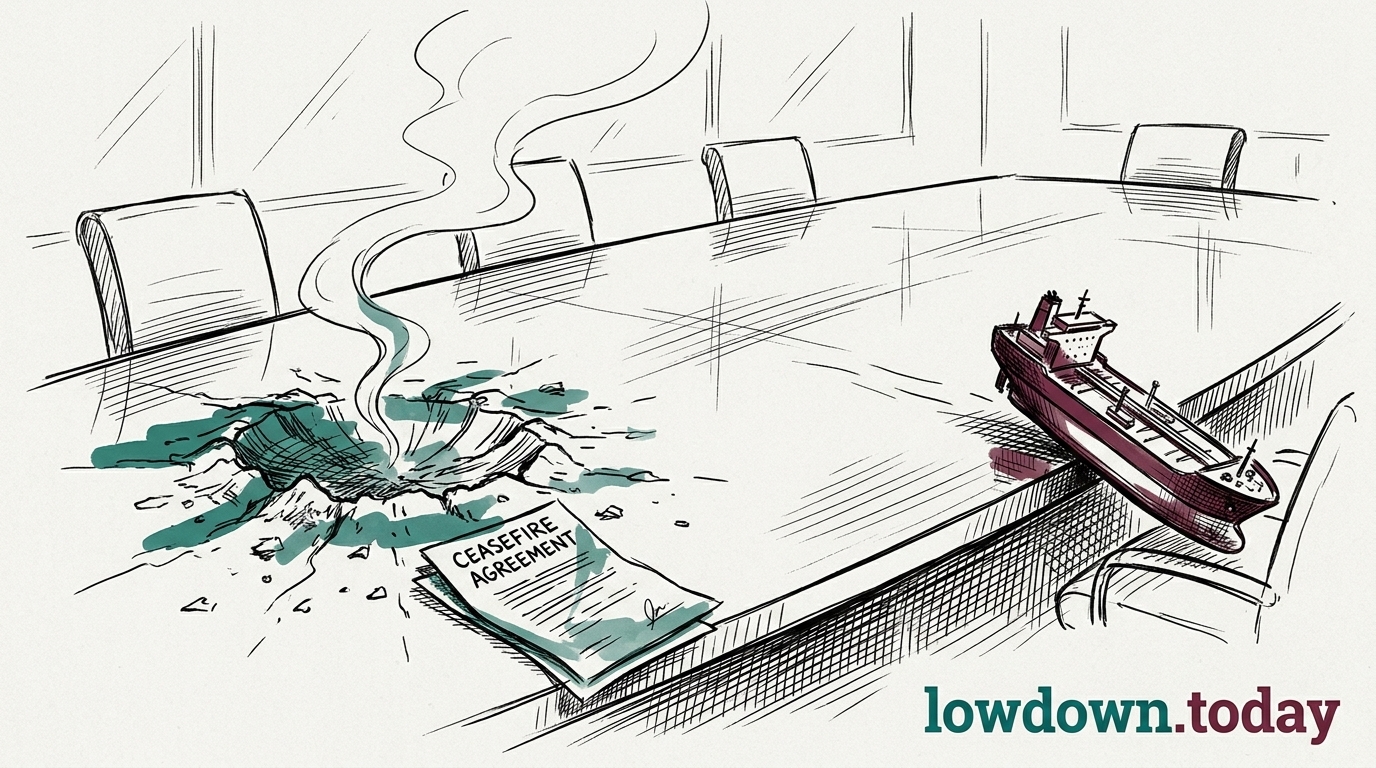
Tehran negotiated in Doha while denying any deal was close, separating the talks from the public message.

Iranian negotiators met Qatari mediators in Doha on Monday 25 May, the same morning Iran's foreign ministry spokesman Esmail Baghaei told reporters the deal was "not imminent" 1. Qatar, a Gulf peninsula state that hosts CENTCOM's forward headquarters at Al Udeid Air Base and shares its largest gas field with Iran, has carried the indirect channel between Washington and Tehran since the war's early weeks.

The timeline tells its own story. US Secretary of State Marco Rubio had promised "good news in hours"; by 25 May that pledge had slipped to "a couple of days" 2. Trump's Saturday declaration that the accord was "largely negotiated" sat awkwardly beside his own negotiators' caution and Baghaei's flat denial that anything was close. Both capitals were managing two audiences at once: the counterparty across the table, and a domestic public that reads optimism as concession.

Tehran has run this split before. When Trump posted a strike stand-down at Gulf leaders' request on 18 May , the same gap opened between what was announced and what was operationally true. Sending working-level envoys to Doha rather than the foreign minister keeps the channel deniable: Iran can talk without committing, and walk back without losing face. The mediation continues precisely because no one has signed anything that would force a public position to harden.

Qatar's role carries its own strain. It mediates the talks while holding billions in frozen Iranian assets and, separately, rejecting Iran's Hormuz transit claims. The mediator Tehran relies on is not a neutral party so much as a state with stakes on every side of the dispute it is being asked to bridge.

Deep Analysis

In plain English

On 25 May, Iran's government was doing two contradictory things at once. Its foreign ministry spokesman told journalists publicly that a deal with the United States was "not imminent", meaning not about to happen. At the very same time, Iranian negotiators were sitting in meetings in Doha, Qatar, with Qatari diplomats trying to broker exactly that deal. This sounds confusing, but it is a deliberate strategy. The public denial is for Iranian audiences at home, where agreeing a deal on the same day US forces bombed an Iranian naval base would look humiliating. The private talks continuing show that Iran wants the deal, just not to look like it is rushing into one. Qatar is in the middle because it hosts a massive US military base, holds $12 billion of Iranian money that Iran wants back, and is trying to keep both sides talking. It even signed an international letter criticising Iran's Hormuz toll system, while still sitting at the table as Iran's go-between.

Deep Analysis
Root Causes

Qatar's position as simultaneous mediator, frozen-asset holder, and IMO letter signatory against Iran's PGSA (displayed in event-03) is the structural condition that makes Doha the only venue where both tracks can operate in parallel.

Qatar holds approximately $12 billion in frozen Iranian assets and hosts CENTCOM's Al Udeid Air Base with roughly 10,000 US personnel. Doha cannot afford for talks to fail publicly because asset release, which Iran demands as a precondition, would become impossible in a post-collapse political environment.

Iran's second structural constraint runs through its divided chain of command. The Supreme Council's authority (held ultimately by Mojtaba Khamenei, not the civilian government) runs through the IRGC chain, while the foreign ministry runs through President Pezeshkian's office. Baghaei speaks for Pezeshkian, not for the body that controls whether IRGC mine-laying boats are in the water.

What could happen next?
  • Risk

    If IRGC command responds to the Bandar Abbas strike with a retaliatory action within 48 hours, the Doha channel closes and Baghaei's "not imminent" statement becomes a retrospective truth rather than political cover.

  • Consequence

    Qatar's dual role as mediator and asset-holder gives Doha structural leverage to keep talks alive even after military incidents, but that leverage erodes if Iran's domestic political cost of continuing rises above the cost of walking out.

First Reported In

Update #108 · US strikes Bandar Abbas as deal talk stalls

CBS News· 26 May 2026
Read original
Different Perspectives
Global shipping and insurance markets
Lloyd's Joint Hull Committee held Hormuz war-risk at $10-14 million per voyage on 26 May, requiring a signed government instrument or UNSC resolution before acting. Futures traders repriced Brent 1.63% on the Bandar Abbas strike; insurers did not move because no qualifying document has been produced in 87 days.
Pakistan
Pakistan
Pakistan's army-chief channel relayed the draft MOU to Tehran and backs Iran's framing that the ball is in Washington's court. Islamabad's general-officer corps now holds structural authority over the deal's critical text, having extracted the only substantive nuclear-monitoring concession of the war; legitimising this channel is itself a strategic choice Washington has not publicly affirmed.
China
China
Chinese DPI hardware arrived in Iran for a tiered censorship system, while China's NFRA ordered state banks to halt new lending to five sanctioned refiners after GL V expired. Beijing is simultaneously exporting surveillance infrastructure to Tehran and adjusting sanctions exposure to US pressure.
Saudi Arabia
Saudi Arabia
Riyadh signed the IMO letter rejecting Iran's Hormuz toll system and requested Trump stand down the 19 May strike alongside the Qatari Emir and UAE President. Saudi Aramco has already warned that Hormuz normalcy is delayed to 2027; at $87 per barrel as Riyadh's budget breakeven, every month of war-risk insurance premium erodes the fiscal cushion the crown prince requires.
Qatar
Qatar
Doha hosted Iranian negotiators, holds $12 billion in frozen Iranian assets Tehran has named as a Hormuz precondition, and signed the five-Gulf-state IMO letter rejecting Iran's PGSA transit route on the same week. Qatar cannot release the assets without a Washington order and cannot credibly claim neutrality after the IMO signature; it is covering both outcomes rather than bridging them.
Israel
Israel
Prime Minister Netanyahu called Trump on 24 May to object that the Lebanon war-end clause inside the draft MOU would force Israel to wind down its campaign against Hezbollah. His objection gives Jerusalem an effective veto over text Washington and Tehran had otherwise largely settled, without Israel being a party to the deal.