Skip to content
You can now search across every topic, entity and event.What's new
European Tech Sovereignty
7MAY

Iran will negotiate only with JD Vance

4 min read
10:13UTC

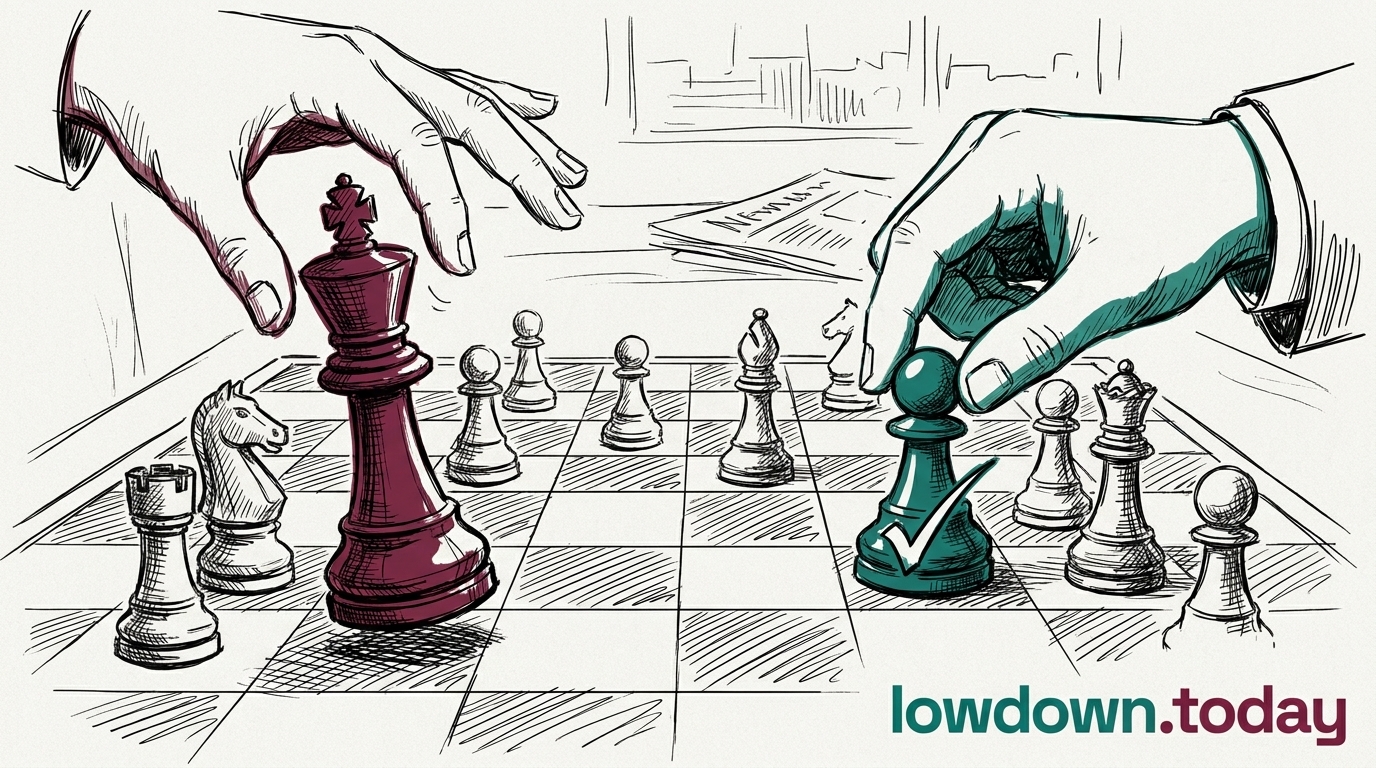
Tehran rejected Witkoff and Kushner, demanding Vice President Vance lead any talks — an attempt to exploit known policy divisions while officially denying negotiations exist.

TechnologyDeveloping
Key takeaway

Iran's Vance demand is a face-saving mechanism for IRGC hardliners, not a diplomatic concession.

Iran told Washington on Monday it will negotiate only with Vice President JD Vance, rejecting both Special Envoy Steve Witkoff and Jared Kushner. The Daily Beast, citing Iranian sources, reported the reasoning: "If the negotiations are going to have any outcome, JD Vance should join. With Witkoff and Kushner, nothing will come out of it" 1. Tehran views Vance as more acceptable because of his pre-war scepticism toward Middle Eastern military commitments — including public statements during the 2024 campaign questioning the strategic value of extended US operations in the region. Trump subsequently told reporters that Vance, Secretary of State Rubio, Kushner, and Witkoff are all "in negotiations" — a formulation that neither grants nor refuses the demand.

The request exposes a contradiction at the centre of Iran's diplomatic posture. Parliamentary speaker Ghalibaf — whom Axios identified as the Iranian interlocutor — categorically denied negotiations the previous day, accusing Trump of market manipulation . Yet specifying which American official should sit across the table is itself an act of negotiation. A senior foreign ministry official had already told CBS News that points received through mediators "are being reviewed" 2. Iran is simultaneously denying the process and shaping its terms.

The tactic has precedent. During the negotiations that produced the 2015 JCPOA, Tehran engaged preferentially with Secretary of State John Kerry and Energy Secretary Ernest Moniz — both perceived as institutionally invested in a deal — while resisting channels it considered hostile. The calculus is consistent: identify the interlocutor whose domestic political incentives most align with a negotiated outcome. Vance's public questioning of Middle Eastern military commitments makes him the obvious candidate by that measure. The demand also carries a secondary function: any visible role for Vance in talks would deepen the fracture within the MAGA coalition, where Heritage Foundation president Kevin Roberts has already warned the war risks "stagflation before midterms" and Representative Boebert has declared herself "a no on any war supplementals" 3.

Whether Iran's negotiator demand is a genuine precondition or a stalling tactic remains the central question. The five-day postponement of the power plant strike ultimatum and the emerging 15-point framework — covering IAEA access to all nuclear facilities, handover of enriched uranium, and full sanctions lifting — suggest the administration is sustaining the diplomatic track. Pakistan, Egypt, Oman, and Turkey are confirmed as intermediaries, with an Israeli official telling NPR that planning is under way for talks in Islamabad "later this week" 4. But the 82nd Airborne's deployment orders and active Kharg Island seizure planning arrived on the same day as Iran's negotiator demand. The gap between what the diplomatic track offers and what the military track prepares for grows wider by the day.

Deep Analysis

In plain English

Iran has essentially said it will only talk to the second-most powerful person in the US government, and not to the two envoys Trump sent. This sounds like obstruction — but there is strategic logic. Vance has publicly questioned whether the US should be fighting wars in the Middle East. By insisting on him, Iran signals to its own population that it is negotiating with an American leader not fully committed to the war, which is easier to justify domestically than surrendering to the hawks who launched it. Trump's response — claiming all four officials are 'in negotiations' — appears designed to avoid the optics of conceding to Iranian demands while potentially accepting them in substance.

Deep Analysis
Synthesis

The Vance demand and Trump's equivocal response create a deliberate diplomatic ambiguity that serves both sides simultaneously. Tehran can claim it is negotiating with a sceptic of Middle Eastern wars; Washington can claim all four officials are involved without conceding the Iranian veto.

This ambiguity may be a feature rather than a bug — enabling talks to proceed without either side publicly accepting the other's framing, a structural characteristic of Iranian-American back-channel engagement since 1981.

Root Causes

The rejection of Kushner specifically reflects Israeli business and family ties that make him unacceptable to any Iranian faction as a credible neutral. Witkoff's Gaza mediation record — perceived in Tehran as tilted toward Israeli positions — compounds this.

Vance's acceptability is not personal but structural: his restraint posture signals willingness to accept a deal preserving Iranian face, whereas Kushner and Witkoff are associated with Israeli-aligned maximalist positions.

Escalation

Iran's continued missile barrages during the same period it made the Vance demand confirms this is 'resistance diplomacy' — maintaining military pressure as a negotiating posture rather than a genuine de-escalatory signal. The demand itself escalates diplomatic stakes by publicly humiliating Trump's envoys and testing whether Washington will accept Iranian-set terms.

What could happen next?
  • Meaning

    Iran's willingness to negotiate at all — even conditionally — signals the 90% reduction in missile launch capacity has imposed sufficient military cost to force reassessment at the IRGC level.

    Immediate · Assessed
  • Risk

    Trump's claim that all four officials are 'in negotiations' may be read by Tehran as rejecting the Vance-only condition, risking collapse of the diplomatic track before substantive talks begin.

    Immediate · Suggested
  • Precedent

    If Iran's interlocutor veto is accepted in practice, it establishes that adversaries can constrain US negotiating team composition as a precondition, with implications for future diplomatic engagements.

    Long term · Suggested
  • Opportunity

    Vance's scepticism of Middle Eastern military commitments could make him willing to accept a deal preserving Iranian civilian nuclear capacity — Tehran's core non-negotiable red line.

    Short term · Suggested
First Reported In

Update #47 · 82nd Airborne to Gulf; Trump claims victory

Daily Mail· 25 Mar 2026
Read original
Causes and effects
This Event
Iran will negotiate only with JD Vance
Iran's insistence on Vance reveals substantive engagement with the diplomatic framework even as Tehran publicly denies it. The demand applies a tested Iranian tactic — selecting the least hawkish available interlocutor — but also functions as a delay mechanism while the military balance continues to shift.
Different Perspectives
United States (Google/Alphabet)
Alphabet lost its final Android appeal on 2 July with no further court to hear it, a result its Computer and Communications Industry Association allies frame as precedent, not deterrence, since the €4.1bn fine changed nothing about Google's Play Store terms across eight years of litigation.
UK Department for Science, Innovation and Technology
DSIT opened its £96m second Sovereign AI wave on 3 July, switching from April's equity stakes to fixed-price contracts because Britain has no domestic hyperscaler or Bpifrance-style lender to fund capacity another way. It is betting on buying outcomes it controls alone rather than joining an EU-wide framework.
German federal government
Berlin backed both German deliverables this week, Infineon's fab and Aleph Alpha's merger, but is finding one far harder to close than the other. It wants enforceable protective rights inside Cohere's cap table before the merger closes, a legal instrument the Bundeskartellamt has no filing to review yet.
European Commission
European Commission
The Commission banked a clean CJEU win on the eight-year Android case on 2 July, removing Google's last comparator argument before President von der Leyen rules on the far larger DMA self-preferencing fine due 27 July. Brussels treats Infineon's early Dresden delivery as proof the Chips Act mechanism works, at the node Europe already led.
Bruegel (EU industry sceptics)
Bruegel economist Mario Mariniello argued the EU sovereignty package mimics US and Chinese strategy while EU cloud providers hold roughly 15% of their home market; using nationality as a proxy for security without fixing the underlying capital and energy gaps that drive the dependency creates €86bn of migration cost without the security benefit it is sold as delivering.
France
France
France published a joint sovereignty definition with Germany at VivaTech and mobilised €13bn under Tibi Phase 3, placing SAP's partnership with Mistral as the working proof that a German enterprise-software giant running a French sovereign model inside public administration is what digital sovereignty looks like in practice.
