Skip to content
You can now search across every topic, entity and event.What's new
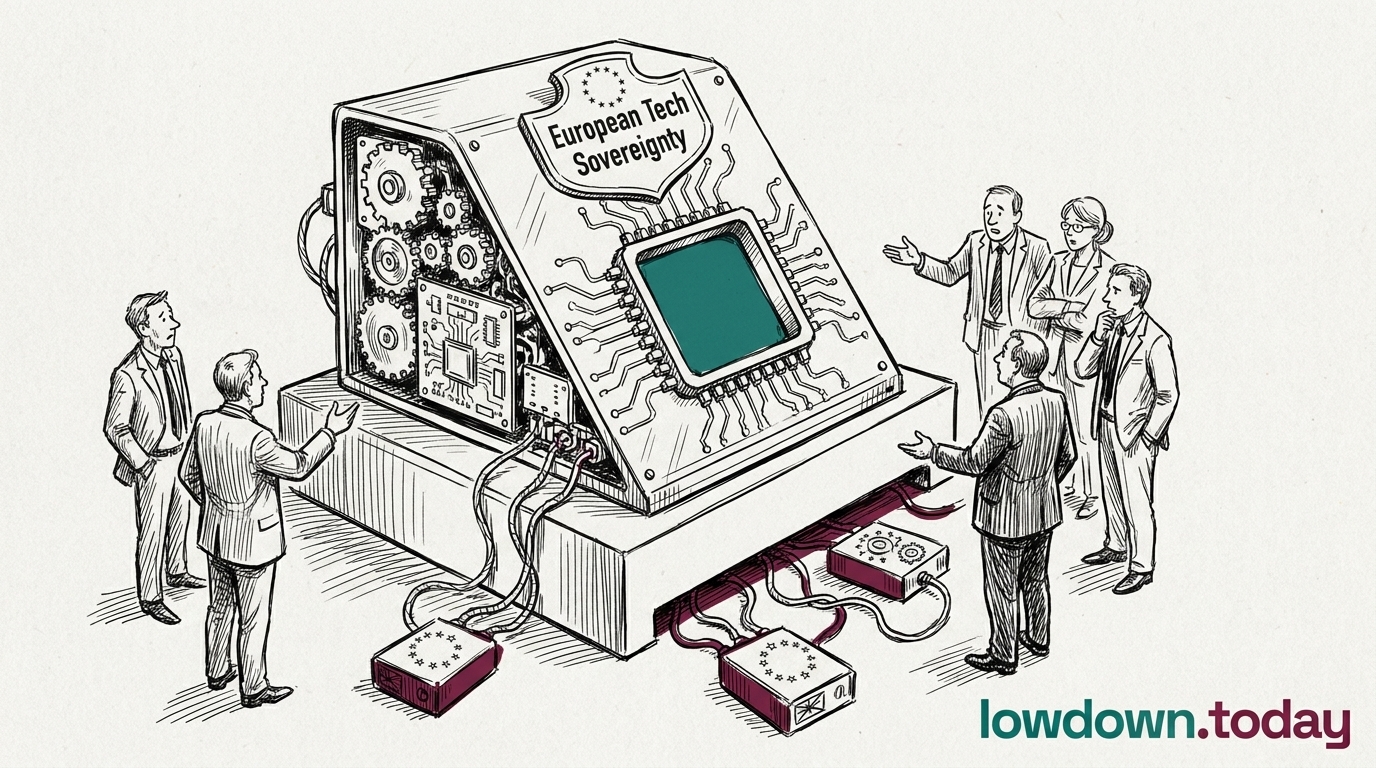
European Tech Sovereignty
23APR

US threatens Oman, its oldest Iran link

4 min read
09:21UTC

Scott Bessent warned Oman on 28 May the US would target any actor facilitating Hormuz tolls, and Muscat backed down within the day, leaving Pakistan as the sole active mediator.

TechnologyDeveloping
Key takeaway

Washington threatened the Oman channel it has used to reach Tehran since 1981, leaving Pakistan to broker alone.

US Treasury Secretary Scott Bessent warned Oman on 28 May that Washington would "aggressively target any actors involved, directly or indirectly, in facilitating tolls for the strait". 1 Trump reportedly threatened to "blow them up" after Iranian state media said Tehran and Muscat would jointly manage Strait of Hormuz traffic. 2 Oman is the Gulf sultanate that brokered the secret Muscat channel behind the 2015 nuclear deal and has carried messages between Washington and Tehran since the 1981 hostage settlement. Muscat brokers; it does not threaten US interests.

Oman backed down within the day, its ambassador assuring Washington there was no toll plan. The threat still landed on the architecture any deal depends on. Tehran has demanded the release of roughly $12bn in Qatar-held frozen assets before any Hormuz sequence , and Rubio had already called the tolls a "deal-killer" . Threatening the neutral broker over the same tolls leaves Pakistan, whose foreign minister Ishaq Dar met US Secretary of State Marco Rubio in Washington on 29 May, as the sole active mediator. 3

The Muscat channel does not regenerate on demand. Oman's value was precisely its neutrality: it carried messages no formal channel could, and the quiet talks it hosted between 2013 and 2015 enabled a nuclear agreement Western formal diplomacy could not reach directly. A private toll warning may be leverage rather than rupture, and Oman's quick denial proves it worked. The cost is that the maximum-pressure logic now treats a 45-year backchannel as a sanctions target, and Pakistan, a broker with its own regional stakes, inherits a role Oman performed without them.

Deep Analysis

In plain English

Oman is a small Gulf country that has quietly acted as a go-between for the US and Iran since the 1980s. Both sides trust Oman because it talks to everyone and picks no sides publicly. Iranian state media reported on 27-28 May that Iran and Oman might jointly run traffic through the Strait of Hormuz, where one-fifth of the world's oil travels. US Treasury Secretary Scott Bessent warned Oman on 28 May that America would punish anyone helping Iran collect tolls on ships passing through the Strait. Trump reportedly also threatened to 'blow up' Oman. Oman immediately denied any toll plan. By losing Oman's trust, Washington pushed the role of intermediary onto Pakistan, which has less financial infrastructure to handle the kind of deal that requires a trusted bank channel.

Deep Analysis
Root Causes

Oman's exposure on 28 May was structural rather than diplomatic carelessness. Iranian state media's broadcast of a joint Tehran-Muscat Hormuz management plan forced the sultanate into a publicly visible position it had likely maintained privately since IRNA first reported a draft bilateral transit protocol with Oman in April 2026.

The underlying driver is geographic: Oman's territorial waters cover the southern half of the 33-kilometre strait under UNCLOS, meaning any Iranian toll scheme that routes through Omani waters sits partially outside CENTCOM's enforcement geometry.

Bessent's threat reflects a specific Washington anxiety: that Oman's UNCLOS position could be used to legitimise Iranian toll collection as a joint sovereign act rather than a unilateral Iranian imposition, which would complicate the legal basis for CENTCOM interdictions. The threat was aimed at collapsing that legal architecture before it could be formalized.

What could happen next?
  • Risk

    Pakistan lacks the banking infrastructure and UNCLOS territorial position that made Oman useful for frozen-asset routing; sole-mediator elevation increases Islamabad's exposure to Iranian demands it cannot operationally satisfy.

  • Consequence

    Oman's public denial of the joint-management plan removes the one legal framework that could have grounded Iranian toll collection in a bilateral sovereign act rather than a unilateral Iranian imposition.

First Reported In

Update #112 · Treasury opens a second Iran sanctions front

Al Jazeera· 30 May 2026
Read original
Different Perspectives
United States (Google/Alphabet)
Alphabet lost its final Android appeal on 2 July with no further court to hear it, a result its Computer and Communications Industry Association allies frame as precedent, not deterrence, since the €4.1bn fine changed nothing about Google's Play Store terms across eight years of litigation.
UK Department for Science, Innovation and Technology
DSIT opened its £96m second Sovereign AI wave on 3 July, switching from April's equity stakes to fixed-price contracts because Britain has no domestic hyperscaler or Bpifrance-style lender to fund capacity another way. It is betting on buying outcomes it controls alone rather than joining an EU-wide framework.
German federal government
Berlin backed both German deliverables this week, Infineon's fab and Aleph Alpha's merger, but is finding one far harder to close than the other. It wants enforceable protective rights inside Cohere's cap table before the merger closes, a legal instrument the Bundeskartellamt has no filing to review yet.
European Commission
European Commission
The Commission banked a clean CJEU win on the eight-year Android case on 2 July, removing Google's last comparator argument before President von der Leyen rules on the far larger DMA self-preferencing fine due 27 July. Brussels treats Infineon's early Dresden delivery as proof the Chips Act mechanism works, at the node Europe already led.
Bruegel (EU industry sceptics)
Bruegel economist Mario Mariniello argued the EU sovereignty package mimics US and Chinese strategy while EU cloud providers hold roughly 15% of their home market; using nationality as a proxy for security without fixing the underlying capital and energy gaps that drive the dependency creates €86bn of migration cost without the security benefit it is sold as delivering.
France
France
France published a joint sovereignty definition with Germany at VivaTech and mobilised €13bn under Tibi Phase 3, placing SAP's partnership with Mistral as the working proof that a German enterprise-software giant running a French sovereign model inside public administration is what digital sovereignty looks like in practice.
