Skip to content
You can now search across every topic, entity and event.What's new
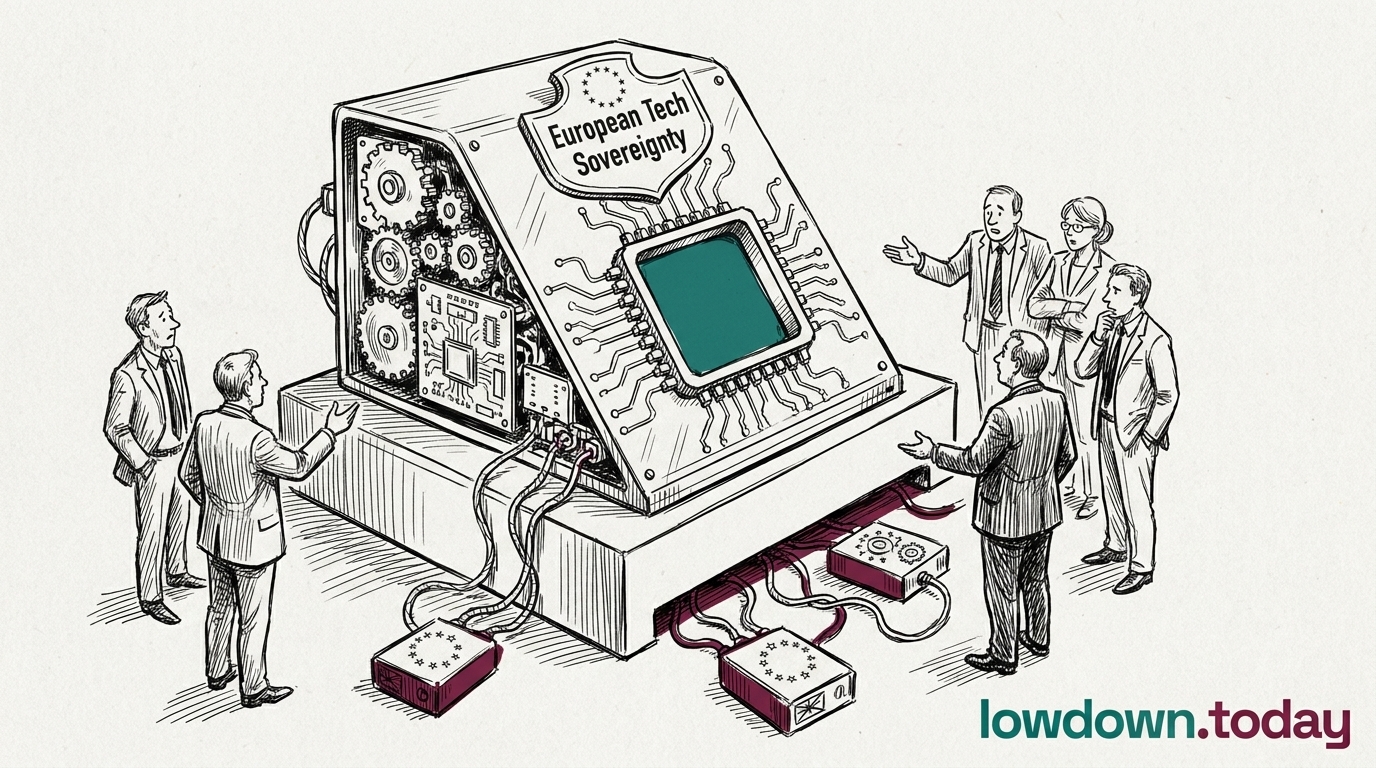
European Tech Sovereignty
23APR

Lebanon's deadliest day froze the deal

3 min read
09:21UTC

Israel struck roughly 80 Hezbollah sites on 19 June, killing 47 Lebanese and four Israel Defense Forces soldiers; a US- and Qatar-brokered ceasefire renewed at 4pm with the IDF still inside the southern buffer.

TechnologyDeveloping
Key takeaway

Israel killed 47 Lebanese and four IDF soldiers in 80 strikes; the ceasefire renewed with no withdrawal.

Israel struck roughly 80 Hezbollah sites across South Lebanon and Beirut on Friday 19 June, killing at least 47 Lebanese and four Israel Defense Forces (IDF) soldiers, the Lebanese Health Ministry said in an end-of-day count 1. It was the deadliest day on the Lebanon front since the Islamabad Memorandum of Understanding (MoU), the US-Iran framework, was signed on 18 June. The IDF is Israel's military; Hezbollah is the Iran-aligned Lebanese militia it has fought across the southern border throughout the war.

A ceasefire brokered by the United States and Qatar renewed at 4pm local time, with Washington working the Israeli side and Doha working Hezbollah 2. The truce holds the IDF inside the southern buffer zone with no withdrawal agreed, and Hezbollah gave no formal commitment beyond a stated intention to avoid further conflict. The group had killed IDF reservist Filin near the Litani River the day before , and Tehran had already threatened to annul the deal over the Israeli presence in Lebanon .

The Lebanon clause sits on a front the deal's signatories cannot bind. Israel never signed the MOU, and Defence Minister Israel Katz ruled the south Lebanon deployment unlimited days before the digital signing . National Security Minister Itamar Ben-Gvir demanded further escalation after the strikes. A renewed ceasefire that leaves an unbound IDF in place, against a militia that killed four of its soldiers and promised nothing, extends the asymmetry the annulment threat was built to pressure.

Deep Analysis

In plain English

Since a ceasefire deal was signed between the US and Iran in June 2026, Israel and Hezbollah, the Iranian-backed Lebanese armed group, have been clashing in southern Lebanon. The deal was meant to wind down these hostilities, but Israel never formally signed it, and some of its ministers demanded further military action. On 19 June, Israel struck around 80 Hezbollah positions. Hezbollah killed four Israeli soldiers in response. Lebanese health officials counted 47 civilians dead by day's end. Qatar and the US stepped in to broker a new ceasefire before the evening. The problem is that nothing has been resolved: Israel's troops remain in south Lebanon, Hezbollah has not formally promised to stop fighting, and the violence handed Iran a reason to refuse to send its diplomats to talks scheduled in Switzerland.

Deep Analysis
Root Causes

Israel's military command decided before the Islamabad MOU was signed that its south Lebanon deployment served security objectives independent of any deal. Defence Minister Israel Katz declared the deployment unlimited as a precondition, which Iran and Hezbollah could not accept as consistent with the MOU's Lebanon clause.

Hezbollah's military structure incentivises continued low-level action: Hezbollah killed IDF reservist Alexander Filin near the Litani River on 18 June , the first IDF combat death post-signing, which triggered the Israeli retaliation that produced the 47 civilian deaths. Without a verified withdrawal timeline, each Hezbollah operation produces an IDF response that Iran can use as evidence of non-compliance, cycling the pressure without formally breaking the deal.

The US brokerage architecture compounds this: Washington works the Israeli side and Doha works Hezbollah, meaning the two channels are not synchronised. A ceasefire Doha secures from Hezbollah can be undone within hours by an IDF strike Washington did not block.

What could happen next?
  • Risk

    Sustained IDF strikes in Lebanon provide Iran with a recurring, low-cost instrument to delay MOU technical implementation without formally invoking the annulment clause.

    Short term · Assessed
  • Consequence

    The 22 June Washington talks confirm some diplomatic continuity, but without an IDF withdrawal signal before then, Baghaei's Lebanon-compliance condition for resumed Switzerland talks remains in place.

    Immediate · Reported
  • Risk

    Itamar Ben-Gvir's public demand for further escalation after the strikes signals continued internal Israeli coalition pressure that could override ceasefire compliance regardless of US brokerage.

    Short term · Suggested
First Reported In

Update #133 · Lebanon froze the Iran deal

Al Jazeera· 20 Jun 2026
Read original
Different Perspectives
United States (Google/Alphabet)
Alphabet lost its final Android appeal on 2 July with no further court to hear it, a result its Computer and Communications Industry Association allies frame as precedent, not deterrence, since the €4.1bn fine changed nothing about Google's Play Store terms across eight years of litigation.
UK Department for Science, Innovation and Technology
DSIT opened its £96m second Sovereign AI wave on 3 July, switching from April's equity stakes to fixed-price contracts because Britain has no domestic hyperscaler or Bpifrance-style lender to fund capacity another way. It is betting on buying outcomes it controls alone rather than joining an EU-wide framework.
German federal government
Berlin backed both German deliverables this week, Infineon's fab and Aleph Alpha's merger, but is finding one far harder to close than the other. It wants enforceable protective rights inside Cohere's cap table before the merger closes, a legal instrument the Bundeskartellamt has no filing to review yet.
European Commission
European Commission
The Commission banked a clean CJEU win on the eight-year Android case on 2 July, removing Google's last comparator argument before President von der Leyen rules on the far larger DMA self-preferencing fine due 27 July. Brussels treats Infineon's early Dresden delivery as proof the Chips Act mechanism works, at the node Europe already led.
Bruegel (EU industry sceptics)
Bruegel economist Mario Mariniello argued the EU sovereignty package mimics US and Chinese strategy while EU cloud providers hold roughly 15% of their home market; using nationality as a proxy for security without fixing the underlying capital and energy gaps that drive the dependency creates €86bn of migration cost without the security benefit it is sold as delivering.
France
France
France published a joint sovereignty definition with Germany at VivaTech and mobilised €13bn under Tibi Phase 3, placing SAP's partnership with Mistral as the working proof that a German enterprise-software giant running a French sovereign model inside public administration is what digital sovereignty looks like in practice.
