Skip to content
You can now search across every topic, entity and event.What's new
European Oil Markets
18JUN

Israel strikes Tehran's Shahran refinery

3 min read
12:45UTC

Israeli bombs hit the Shahran oil refinery and storage sites across Tehran overnight — the first strikes on either combatant's energy infrastructure, breaking a tacit restraint observed in Middle East conflicts for decades.

EconomicDeveloping
Key takeaway

Crossing to domestic refinery targets simultaneously transforms the conflict into a war of economic attrition and removes the tacit mutual restraint that historically constrained Gulf belligerents.

Israeli forces struck the Shahran oil refinery and oil storage sites across Tehran and Alborz provinces overnight. Video showed fires across the capital skyline. Every prior Israeli strike in this conflict had targeted military infrastructure — IRGC bases, missile launchers, naval vessels, air defences, the IRGC's primary military academy , Iran's space command . The escalation pattern had moved from military targets to diplomatic sites to the Shaybah oilfield on the Arabian side of the Gulf . Overnight, it reached the combatants' own refineries.

The distinction matters because of what refineries are. Military targets can be rebuilt or substituted through doctrinal adaptation — Iran's Mosaic Defence Doctrine demonstrated exactly this when decentralised provincial units sustained offensive operations after central command infrastructure was destroyed . Refineries cannot be substituted. Iran's remaining refining capacity produces the petrol, diesel, and kerosene its population of 88 million depends on for transport, heating, and agriculture. Destroy enough of it, and Iran cannot manufacture domestic fuel even if the war ends tomorrow. Reconstruction of a modern refinery takes three to five years under optimal conditions — no sanctions, no war, full access to foreign engineering expertise. Iran has none of these.

Middle East conflicts have historically avoided Energy infrastructure through tacit mutual restraint. During the Iran-Iraq War's "Tanker War" phase of 1984–88, both sides attacked each other's oil exports but largely spared domestic refining capacity. The logic was self-preservation: what one side does to the other's refineries, the other can do in return. NPR's Friday analysis noted that nine days into this conflict, that restraint is finished.

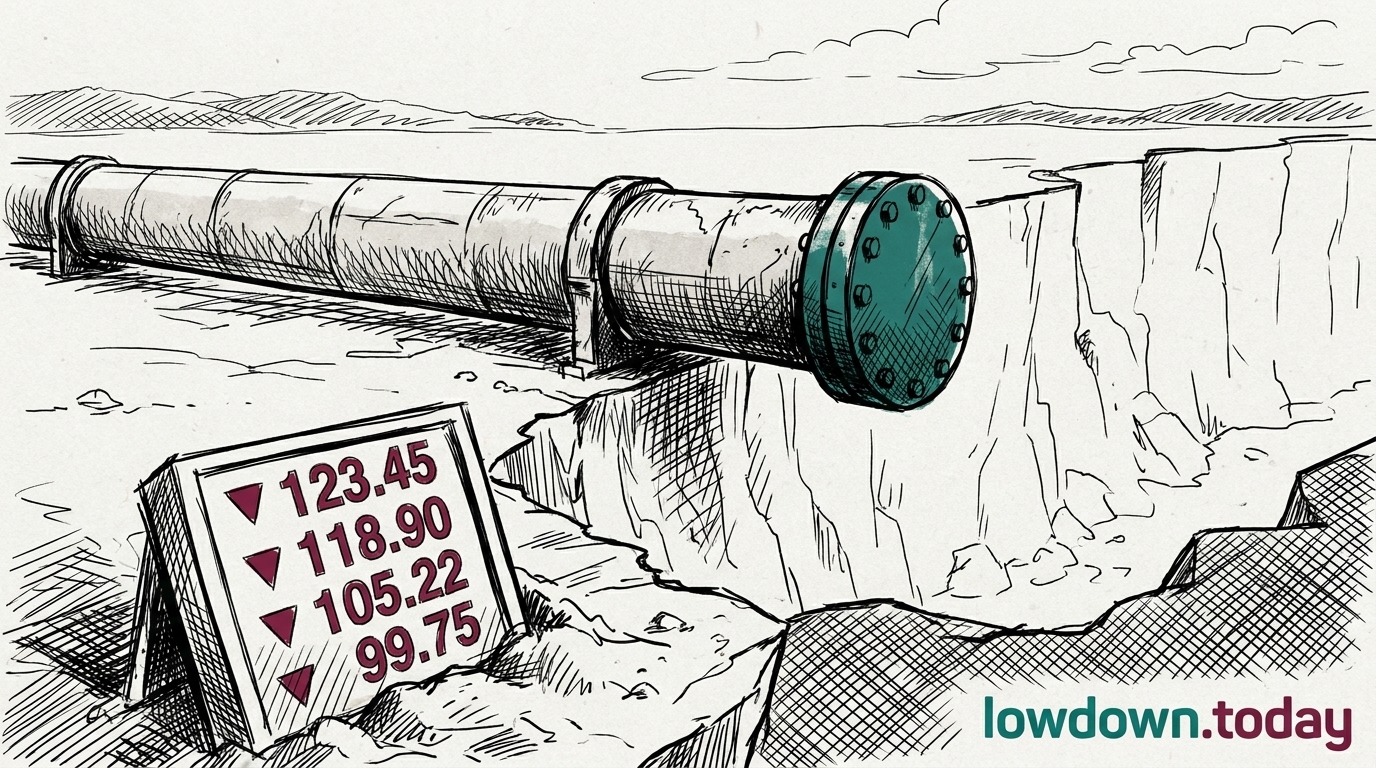
The strike compounds an energy crisis already without modern precedent. Brent Crude posted a 35.63% weekly gain — the largest since US crude futures began trading in 1983 . Qatar's energy minister warned of $150 per barrel if the Strait of Hormuz remains closed . With commercial shipping insurance withdrawn, major container lines suspended , and refining infrastructure now under direct attack, the disruption has moved from restricting oil flows to destroying the capacity to process them.


Deep Analysis

In plain English

An oil refinery turns crude oil into usable fuels — petrol, diesel, aviation fuel, heating oil. Destroying a refinery means a country cannot use its own oil even if production continues. Israel has just struck the facilities that convert Iran's crude into fuel its population uses daily; Iran responded in kind at Israel's main refinery. This differs categorically from striking a military base: the damage to civilian energy supply is immediate and long-lasting, and rebuilding refinery capacity takes years, not months.

Deep Analysis
Synthesis

Both sides crossed the refinery threshold within hours of each other rather than through gradual escalation — indicating neither conducted a deliberate cost-benefit assessment before acting; each was reacting to the other's move. This reactive simultaneity removed the pause that historically allowed mutual restraint to reassert itself, and it is qualitatively different from sequential escalation with decision intervals.

Root Causes

Israel's strategic incentive to strike refineries extends beyond immediate economic damage: degrading Iran's domestic fuel supply strains the logistics of IRGC proxy networks across the region, which depend on Iranian-subsidised fuel. A refinery campaign is simultaneously an economic warfare and a proxy-disruption strategy.

Escalation

The body traces the escalation sequence but does not assess structural vulnerability asymmetry. Iran operates roughly ten refineries with combined capacity ~2.3–2.5 million bpd; Israel has two. Israel's smaller, more concentrated refining base makes it structurally more vulnerable to attrition — sustained accurate Iranian strikes would push Israel to critical fuel shortage far sooner than equivalent Israeli strikes would produce the same effect in Iran.

What could happen next?
  • Precedent

    Domestic oil refining facilities are now established as legitimate targets in this conflict; both sides will treat this threshold as crossed and plan future strikes against refining networks without the restraint that governed earlier phases.

    Immediate · Assessed
  • Risk

    Fuel rationing in Iran, if refinery damage is sustained, could accelerate domestic unrest — but the Iran-Iraq War precedent suggests populations under external attack often consolidate behind the state rather than against it, at least in the short term.

    Short term · Suggested
  • Consequence

    Global re-insurance underwriters will impose blanket war-risk exclusions on Gulf energy infrastructure, raising operating costs for all regional oil exporters regardless of their direct involvement in the conflict.

    Short term · Assessed
  • Risk

    Israel's more concentrated refining base — two facilities versus Iran's ten — means it reaches critical domestic fuel shortage sooner than Iran under equivalent attrition, creating a structural disadvantage in a sustained energy-infrastructure campaign.

    Short term · Assessed
First Reported In

Update #28 · Iran and Israel swap refinery strikes

Al Jazeera· 8 Mar 2026
Read original
Different Perspectives
Gulf oil producer
Gulf oil producer
Secured OPEC's confirmed 188,000 b/d September increment with the next meeting set for 6 September, but the Secretariat's own 2 August release says nothing about the fourth quarter. Output guidance beyond September remains undisclosed even as delegate sourcing keeps filling that gap.
Money manager positioned in WTI
Added 21,402 lots to a 108,307 net long in NYMEX WTI in the week to 28 July, against just 1,485 added to Brent's 15,740, a roughly fourteen-to-one split. Conviction sits in the American benchmark even as the European diesel story sets the record.
Indian refiner buying Urals
Bought Russian crude at a discount that narrowed to $1-2 a barrel in the week to 29 July from over $10, as Hormuz risk pushed it toward Urals. If that risk eases with the strike now called off, the discount it is currently enjoying could re-widen just as fast.
Russian diesel exporter
Novak tied any lifting of the diesel export ban, due to lapse 31 July, to an unspecified market recovery with no date, and pushed the gasoline ban to end-2026. An open-ended constraint suits an exporter benefiting from the record European crack it feeds.
War-risk underwriter
Withdrew war-risk cover for Saudi-linked hulls on 24 July and has not reinstated it, holding Bab el-Mandeb tanker transits near 7.5 a day. A cancelled strike does not by itself trigger the committee review needed to re-accept the class.
Northwest European refiner
Sources only 17% of diesel imports from Saudi Red Sea ports against the Mediterranean's 24%, so the ARA crack at $85.86 trails the Med print by $5.81. Lower Red Sea exposure is cushioning it against the rerouting cost, not eliminating it.



