Skip to content
You can now search across every topic, entity and event.What's new
European Oil Markets
15JUN

US crude posts 35.6% weekly gain, record

4 min read
11:33UTC

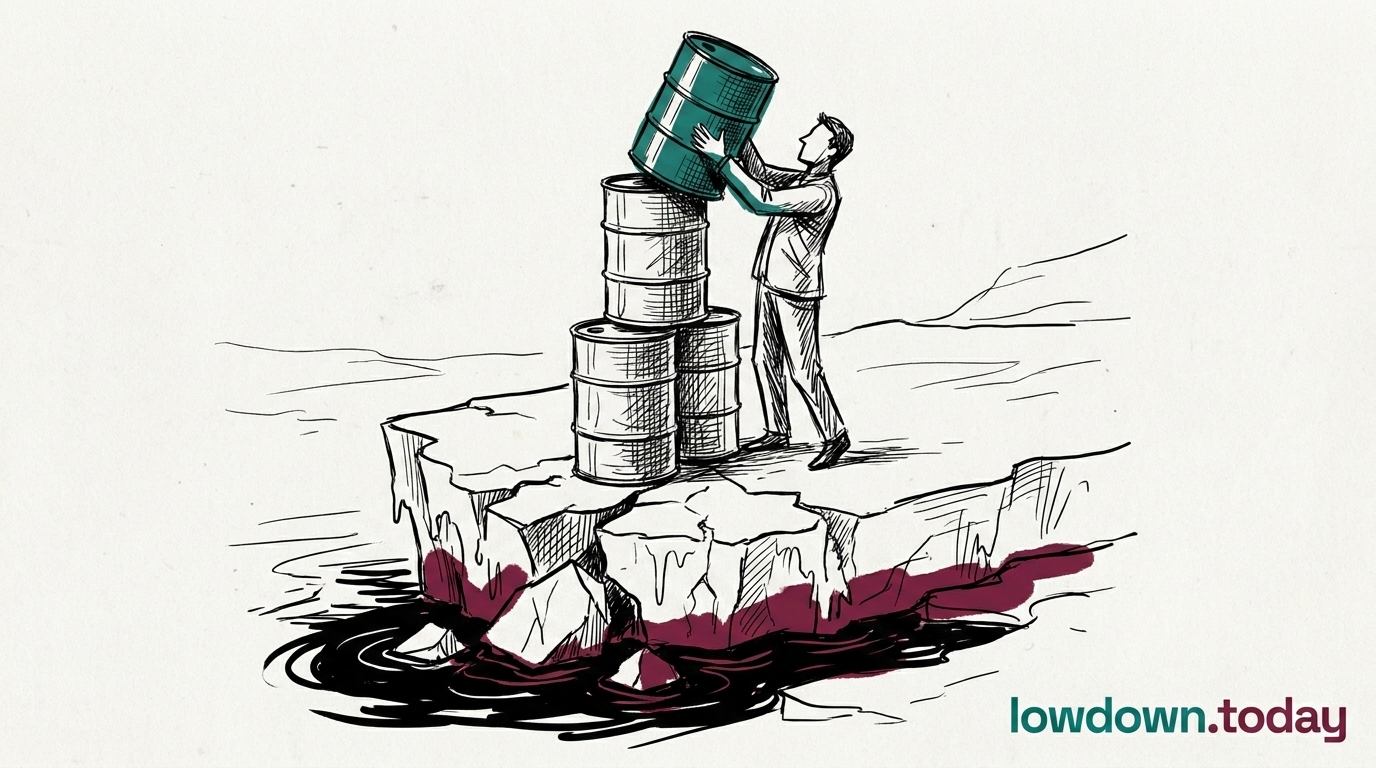
US crude futures gained 35.63% in a single week — the biggest move in the contract's 43-year history — while an insurance collapse beneath commercial shipping created a disruption floor that no ceasefire can quickly reverse.

EconomicDeveloping
Key takeaway

The 35.63% weekly gain reflects markets pricing a genuine physical supply disruption rather than merely a geopolitical risk premium, because no production buffer large enough to substitute for Hormuz transit at scale exists.

US crude futures posted a 35.63% weekly gain — the largest in the history of the contract, which dates to 1983. No single week during the 1990 Iraqi invasion of Kuwait, the 2008 run to $147, or the 2020 pandemic collapse and recovery produced a comparable move. Brent reached $92.69 on Friday, briefly touching $94, having risen approximately 27% since strikes began on 28 February . Qatar's energy minister warned of $150 per barrel if the Strait of Hormuz remains closed . Morgan Stanley raised its 2026 Brent forecast to $80 from $62.50 — a revision already $12 below spot prices at the time of publication, a measure of the speed at which the market has outrun institutional forecasting.

VLCC freight rates hit an all-time high of $423,736 per day — a 94% increase from the prior Friday close. In stable markets, VLCC day rates typically range between $30,000 and $50,000. At current rates, shipping costs alone add approximately $3–4 per barrel before crude reaches a refinery — a surcharge borne by every oil-importing economy whether or not it is party to the conflict. Physical supply has also been hit directly: Iran struck the Shaybah oilfield, targeting approximately one million barrels per day of Saudi production capacity , and Bahrain's BAPCO Sitra refinery, which processes 267,000–380,000 barrels per day, shut two crude processing units for safety inspection after Thursday's missile strike . But the supply destruction is secondary to the structural problem beneath it.

Every major Protection & Indemnity club's War risk coverage for the Persian Gulf expired at midnight on 5 March . More than 150 vessels sit at anchor in The Gulf of Oman and Arabian Sea. Trump's Development Finance Corporation insurance programme and promised Navy convoy escorts remain non-operational; the US Navy has not launched a single escorted commercial passage. The energy disruption now operates on two separate and independent timelines. The military timeline could theoretically end with a ceasefire tomorrow. The insurance timeline cannot. P&I reassessments require weeks of underwriting review, loss modelling, and reinsurance negotiation regardless of what happens on the battlefield. Commercial shipping through Hormuz is effectively suspended even if hostilities cease today. Goldman Sachs's revised Q2 forecast of $76 per barrel is arithmetically consistent with restored Hormuz flow before June — an assumption that requires the insurance market to move faster than its institutional structure has ever permitted. For oil-importing economies — the eurozone, Japan, South Korea, India — the question is no longer what the war does to prices but how long the insurance gap persists after the war ends. The answer, based on prior P&I reassessment cycles, is measured in weeks to months, not days.


Deep Analysis

In plain English

Oil prices jumped nearly 36% in a single week — the largest weekly rise since oil futures trading began in 1983. Oil is the base cost for almost everything: petrol, heating fuel, plastics, fertiliser, and the fuel powering ships and planes that carry other goods. A rise of this size means higher prices across most categories of consumer spending, typically with a 4–8 week delay as the cost works through supply chains from refineries to petrol stations to supermarket shelves.

Deep Analysis
Synthesis

The simultaneous movement of spot prices and freight rates to historic extremes signals that the market is no longer pricing a temporary geopolitical risk premium but re-rating the structural cost of Gulf supply. Risk premia dissipate with ceasefires; structural re-ratings persist until new infrastructure or alternative supply routes are established — a distinction with direct implications for how long consumer price effects will outlast any military resolution.

Root Causes

The Hormuz chokepoint carries 17–20 million barrels per day — approximately 20% of global daily oil demand — with no alternative maritime routing at comparable scale. Overland pipeline alternatives (Saudi Petroline at roughly 5 million bpd; UAE's Habshan-Fujairah pipeline at roughly 1.5 million bpd) cannot compensate for even a partial Hormuz closure. This geographic concentration was a known structural vulnerability that markets consistently under-priced in peacetime because simultaneous US-Iran-Israel conflict was treated as tail risk rather than a base-case scenario requiring premium.

What could happen next?
  • Consequence

    A sustained $90+ oil price will add 0.5–0.8 percentage points to CPI in major economies, complicating central bank rate decisions in economies already navigating post-pandemic inflation legacies.

    Short term · Assessed
  • Risk

    Asian strategic petroleum reserve drawdowns can sustain normal refinery throughput for 90–150 days; beyond that window, physical rationing becomes a live policy option in energy-import-dependent economies.

    Medium term · Suggested
  • Consequence

    Petro-state sovereign wealth funds face a paradox: higher oil revenue from surviving production, but regional equity and real-estate assets under pressure from conflict risk — a split that complicates their portfolio management and fiscal planning simultaneously.

    Short term · Suggested
First Reported In

Update #26 · President orders halt; IRGC ignores him

CNBC· 7 Mar 2026
Read original
Causes and effects
This Event
US crude posts 35.6% weekly gain, record
The energy disruption now operates on two independent timelines: a military timeline that could end with a ceasefire and an insurance timeline that cannot, because every major P&I club's war risk coverage expired on 5 March and reassessments take weeks regardless of battlefield developments, creating a structural price floor independent of whether fighting stops.
Different Perspectives
Sanctions compliance officer reviewing a Lukoil International GmbH bid
OFAC's amended FAQ 1224 gives a compliance desk its first published standard: full severance from Lukoil and a US-jurisdiction blocked account for sale proceeds. The conditions name neither ISAB nor Italy, so a Priolo Gargallo-linked bid answers a different question than a Neftochim Burgas or Petrotel Ploiesti one.
Managed-money funds on Brent Last Day
CFTC data for the week to 21 July showed managed money flipping 74,400 contracts to a net long of 15,665 against 1,410 short on the Brent Last Day contract, code 06765T. A fund that held that short through July has now covered it, and the spent short base raises the bar for the next leg higher.
Saudi crude exporters
Saudi-linked tanker transits through Bab el-Mandeb fell to about 7.5 a day after the 24 July underwriting withdrawal, pushing more barrels onto the longer route round the Cape or through the Yanbu terminal. Every diverted barrel ties up a ship for longer, and a fleet that turns slower charges more.
Tanker owners on the Bab el-Mandeb route
Lloyd's-market syndicates withdrew war-risk cover from Saudi-linked hulls on 24 July, leaving owners of that class of vessel to sail Bab el-Mandeb uninsured or not at all. Tanker transits on the route fell to roughly 7.5 a day, and cover, once withdrawn, does not return on a shipowner's timetable.
Eni
Eni
Eni's board approved second-quarter results on 29 July, swinging refining EBIT to a EUR0.08bn profit from a year-earlier loss even as group profit doubled, and named Red Sea freight cost as a cap on that improvement. A refiner absorbing higher shipping costs on Saudi-linked crude while its numbers improve treats the freight line as a drag, not a crisis.
Asian buyers (India, Japan, China, South Korea)
Asian refiners are absorbing 62% of Yanbu's 3.75m b/d flow, the bulk of Saudi Arabia's rerouted crude now clearing east rather than into the Atlantic basin. That destination split leaves Asian buyers more exposed to any single Yanbu-specific disruption than under the kingdom's normal multi-terminal export pattern.



