Skip to content
You can now search across every topic, entity and event.What's new
European Oil Markets
31JUL

Trump touts a deal he cannot sign

3 min read
09:33UTC

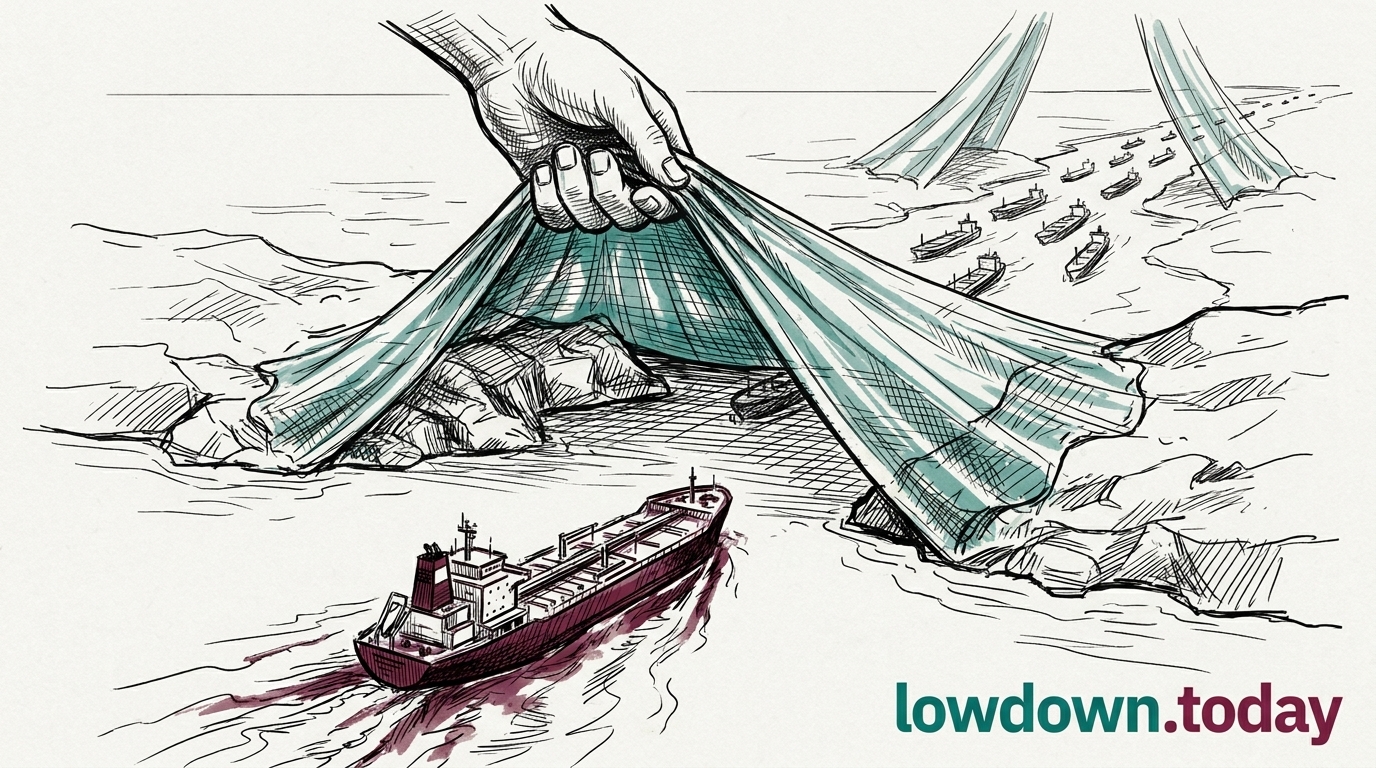
Donald Trump said on 9 June that an Iran deal was in 'the final throes' and could be signed 'in two or three days', and credited the US naval blockade as 'much stronger than bombing'. Neither claim rests on a signed instrument.

EconomicDeveloping
Key takeaway

Trump promised a deal in days and praised an unsigned blockade, neither backed by a signature.

Donald Trump said on Tuesday 9 June that an Iran deal was in "the final throes", that the Strait of Hormuz would reopen "immediately upon signing, which could be in two or three days", and that the US naval blockade had "turned out to be much stronger than bombing" 1. the strait of Hormuz is the Persian Gulf chokepoint through which roughly a fifth of the world's seaborne oil passes.

The line about the blockade matters more than the timeline. CENTCOM (US Central Command, the Pentagon's Middle East command) runs that blockade on a written military order, not a presidential instrument, and it has redirected 127 vessels and disabled six without an executive signature behind it . On Tuesday Trump elevated that unsigned mechanism above kinetic force in public for the first time, even as the one ally executing kinetic force ignored him.

Trump has floated near-term deals before, telling reporters on 4 June a deal could close "this weekend" before his own Secretary of State, Marco Rubio, said on 7-8 June that enrichment matters could take months . For 102 days his words pointed at Tehran. This week the harder words pointed at Israel instead, while the deal stayed a promise rather than a document.

Tehran negotiates through written positions and general-officer shuttles, channels that respond to signed paper, not to interview cadence. A blockade Trump now calls war-winning and a deal he says is days away both rest on the same absence: no signature that would force the War Powers clock or bind either side to terms.


Deep Analysis

In plain English

Since late February, the US Navy has been blocking the Strait of Hormuz, the 33-kilometre chokepoint through which most Gulf oil exports pass. Trump is now publicly saying this blockade has worked better than the earlier bombing campaign, and that an agreement with Iran could be signed within days. The problem is that Iran's government communicates with Washington only through written messages that take three to five days to travel through middlemen. So when Trump says a deal is nearly done, he may be talking about a conversation where the last message from the other side arrived days ago. Financial markets have already priced in 'nearly done' twice this year and reversed both times when nothing was signed.

Deep Analysis
Root Causes

Trump's 'final throes' claim reflects a structural asymmetry in the negotiation: Iran communicates only in writing through intermediaries with a 3-to-5-day courier lag (confirmed by Rubio on 2 June), meaning Trump receives no real-time feedback on whether Tehran accepts the terms he publicly endorses. In that information vacuum, his public statements function as aspirational pressure rather than confirmed progress.

The blockade's effectiveness claim is grounded in real data , CENTCOM reached 127 redirected vessels with six disabled by 2 June , but Trump's framing elides the fact that the blockade operates without a signed presidential instrument, which means it exists in a legal grey zone that any future administration could end by executive order. Crediting it as the decisive weapon before a deal is signed risks creating a removal cost that constrains whatever agreement follows.

What could happen next?
  • Risk

    A third 'deal within days' claim that produces no signature will accelerate market scepticism of any future announcement, potentially delaying the economic relief a genuine deal would provide.

  • Consequence

    Iran's negotiators will read Trump's public credit to the blockade as confirmation that Washington values it as an end-state rather than a transition instrument , which hardens Tehran's demand for full sanctions relief before any reopening.

First Reported In

Update #122 · Trump warns Bibi as Israel strikes anyway

Al Jazeera· 9 Jun 2026
Read original
Causes and effects
This Event
Trump touts a deal he cannot sign
Trump elevated an unsigned military blockade above kinetic force in public for the first time, even as the deal he promised carried no presidential signature.
Different Perspectives
Sanctions compliance officer reviewing a Lukoil International GmbH bid
OFAC's amended FAQ 1224 gives a compliance desk its first published standard: full severance from Lukoil and a US-jurisdiction blocked account for sale proceeds. The conditions name neither ISAB nor Italy, so a Priolo Gargallo-linked bid answers a different question than a Neftochim Burgas or Petrotel Ploiesti one.
Managed-money funds on Brent Last Day
CFTC data for the week to 21 July showed managed money flipping 74,400 contracts to a net long of 15,665 against 1,410 short on the Brent Last Day contract, code 06765T. A fund that held that short through July has now covered it, and the spent short base raises the bar for the next leg higher.
Saudi crude exporters
Saudi-linked tanker transits through Bab el-Mandeb fell to about 7.5 a day after the 24 July underwriting withdrawal, pushing more barrels onto the longer route round the Cape or through the Yanbu terminal. Every diverted barrel ties up a ship for longer, and a fleet that turns slower charges more.
Tanker owners on the Bab el-Mandeb route
Lloyd's-market syndicates withdrew war-risk cover from Saudi-linked hulls on 24 July, leaving owners of that class of vessel to sail Bab el-Mandeb uninsured or not at all. Tanker transits on the route fell to roughly 7.5 a day, and cover, once withdrawn, does not return on a shipowner's timetable.
Eni
Eni
Eni's board approved second-quarter results on 29 July, swinging refining EBIT to a EUR0.08bn profit from a year-earlier loss even as group profit doubled, and named Red Sea freight cost as a cap on that improvement. A refiner absorbing higher shipping costs on Saudi-linked crude while its numbers improve treats the freight line as a drag, not a crisis.
Asian buyers (India, Japan, China, South Korea)
Asian refiners are absorbing 62% of Yanbu's 3.75m b/d flow, the bulk of Saudi Arabia's rerouted crude now clearing east rather than into the Atlantic basin. That destination split leaves Asian buyers more exposed to any single Yanbu-specific disruption than under the kingdom's normal multi-terminal export pattern.



