Skip to content
You can now search across every topic, entity and event.What's new
European Oil Markets
16JUL

Iraq ramps Ceyhan pipeline toward 770kbd

3 min read
09:39UTC

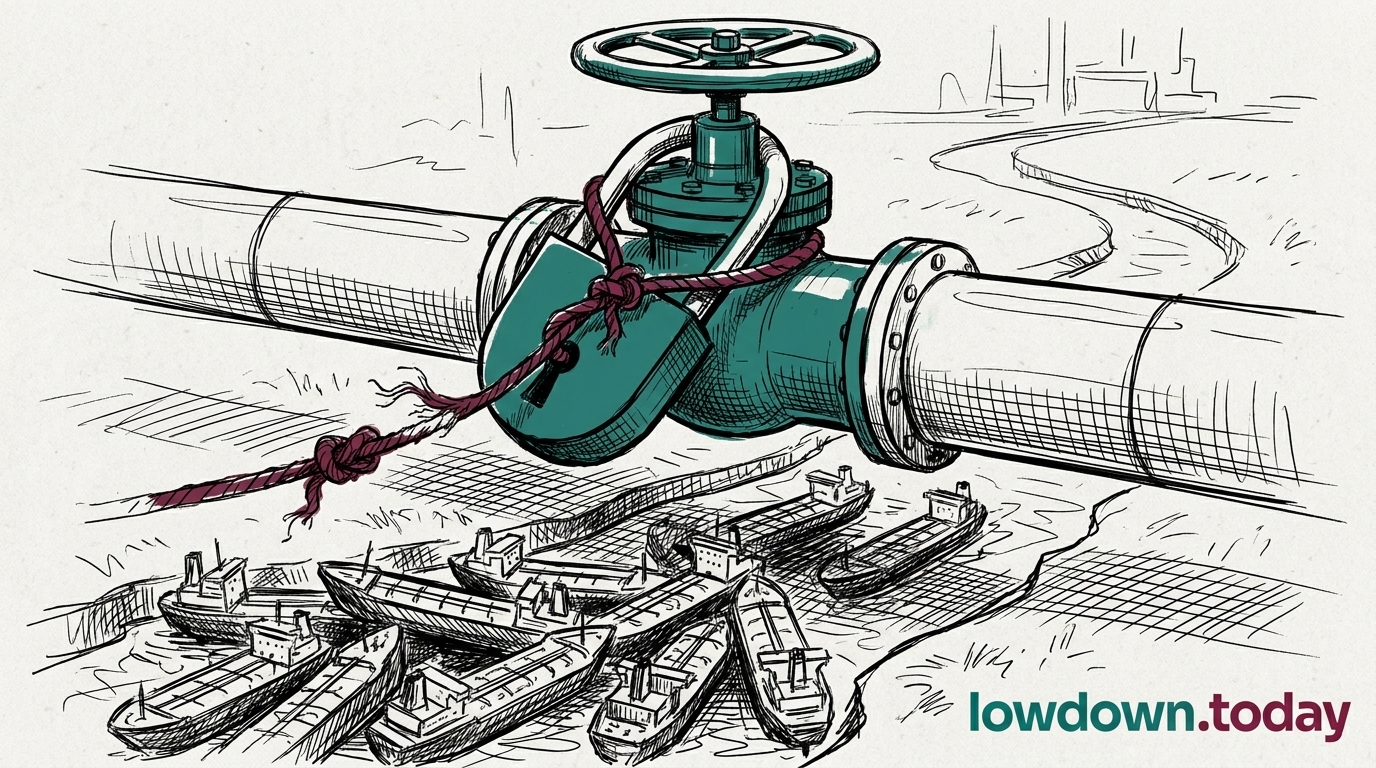
Iraq is raising Kirkuk-Ceyhan pipeline throughput from 220kbd toward a 770kbd target over roughly two and a half months, the first new European-accessible crude route since the conflict began.

EconomicDeveloping
Key takeaway

Ceyhan is the first real new supply lever, and its medium sour grade is what makes it count.

Iraq is ramping the Kirkuk-Ceyhan pipeline from 220kbd (thousand barrels per day) toward a 770kbd target over roughly two and a half months 1. The line carries crude from the Kirkuk fields to Ceyhan, Turkey's Mediterranean export terminal, delivering oil to European refiners without touching the Gulf. The push comes as Iraq's southern output fell 70% to 1.3mbd and its seaborne exports dropped 97% in May, so the northern pipeline is replacing collapsed southern volume.

Oil funds about 90% of Iraqi state revenue, which makes the ramp a fiscal necessity rather than an opportunistic grab for market share. With the south choked, Baghdad has to push crude through the only export artery still open to it.

Kirkuk's medium sour barrels map directly onto the feedstock Mediterranean refiners lost when Russian Urals and Iraqi Basra supply tightened, so the addition matters by grade as much as by volume. That substitution, rather than the headline barrel count, is why a full ramp to 770kbd would rank as the largest European-accessible crude addition of the conflict so far. Where early-May freight priced a Hormuz-wide closure with the VLCC TD3C route near WS458 , Ceyhan reframes the question from how to avoid the Gulf to whether the Mediterranean can be loaded fast enough to refill it.


Deep Analysis

In plain English

Iraq has two main ways to get its oil to buyers. The first is southern ports in the Gulf, which use supertankers, but those tankers cannot easily pass through the Strait of Hormuz blockade right now. The second is a long pipeline running north through Iraq and Turkey to the Mediterranean coast at Ceyhan. Iraq is now trying to push as much oil as possible through that northern pipeline, ramping it from its current 220,000 barrels a day up to a target of 770,000. That oil would reach European refineries much more easily than Gulf oil right now. The problem is that this pipeline has had political disputes for years over who controls the oil fields and who gets paid what, so getting it to full capacity is not straightforward.

Deep Analysis
Root Causes

Iraq's southern seaborne exports collapsing 97% to 1.3mbd reflects the Hormuz closure's direct impact on a country that routes most of its southern production through Basra Oil Terminal and Al-Faw, both of which require VLCC tankers that cannot safely transit a blockaded strait. Unlike Kuwait, which also has southern port dependency, Iraq has the Kirkuk-Ceyhan alternative.

Activating that alternative at scale requires resolving three overlapping constraints simultaneously: the Erbil-Baghdad lifting rights dispute, pipeline integrity maintenance deferred during the years of low utilisation (220kbd for most of 2024-25), and Turkey's transit tariff demands which EPDK has historically leveraged as a fiscal policy instrument.

What could happen next?
  • Opportunity

    A fully ramped Kirkuk-Ceyhan at 770kbd would add roughly one-third of Libya's total export programme to Mediterranean supply, providing a partial offset for the Gulf closure that European refiners have not had since April.

  • Risk

    The KRG-Baghdad fiscal dispute and Turkey's transit leverage mean the ramp could stall or reverse if payment terms collapse, as they did during the 2022-2023 shutdown.

First Reported In

Update #6 · OPEC's quota is fiction at a 37-year low

OilPrice.com· 8 Jun 2026
Read original
Causes and effects
This Event
Iraq ramps Ceyhan pipeline toward 770kbd
Kirkuk's medium sour slate substitutes for the Basra and Urals feedstock Mediterranean refiners lost, so a 550kbd addition could soften Med sour differentials on grade match alone, independent of where the flat price sits.
Different Perspectives
Indian refiners
Indian refiners
Indian refiners kept lifting discounted Urals as the India/Baltic price split widened past $9-10 a barrel, a gap that only grows as GL X1's Iranian wind-down cuts an alternative discounted grade off the market by 17 July. Cheaper Russian feedstock is being locked in while it lasts.
Chinese refiners
Chinese refiners
Chinese refiners gain leverage as the Urals-Brent discount widens, since Beijing's state buyers already source discounted Russian barrels near the fiscal floor unaffected by Western insurance costs. A wider discount, if it holds past 23 July, lets them lock in cheaper term contracts regardless of the cap's outcome.
US money managers (CFTC-tracked)
Managed money trimmed WTI net length into the rally, positioning that reflects doubt the Hormuz premium survives without freight or war-risk confirmation. The Brent-WTI spread widening almost entirely on the Brent leg supports that scepticism about a broad-based repricing.
OPEC+ (Saudi-led subgroup)
Saudi Arabia is defending market share through a fourth straight 188kbd August hike even as OPEC's own July MOMR cut 2026 demand growth for the fourth consecutive month. At a $108-111 fiscal breakeven, every added barrel costs Riyadh revenue it cannot recoup, so the hike reads as a positioning signal, not a demand bet.
Greek shipping registries
Greece, backed by Cyprus and Malta, is pushing a three-month cap-freeze compromise against the Commission's freeze to January 2027 ahead of the 23 July vote. Athens' and Valletta's combined tanker registrations mean a shorter review gives their insurers more frequent chances to reprice risk on Russian cargoes.
Russia (Deputy PM Alexander Novak)
Novak extended the diesel export restriction to producers on 8 July, the first producer-binding curb of the war, protecting the domestic pump price ahead of any refinery repair timeline. Urals still trades below Russia's $59 budget floor even as Brent gained, so the ban trades export revenue for fiscal stability at home.