Skip to content
You can now search across every topic, entity and event.What's new
European Oil Markets
16JUL

GL 134C lapsed clean, no successor

3 min read
09:39UTC

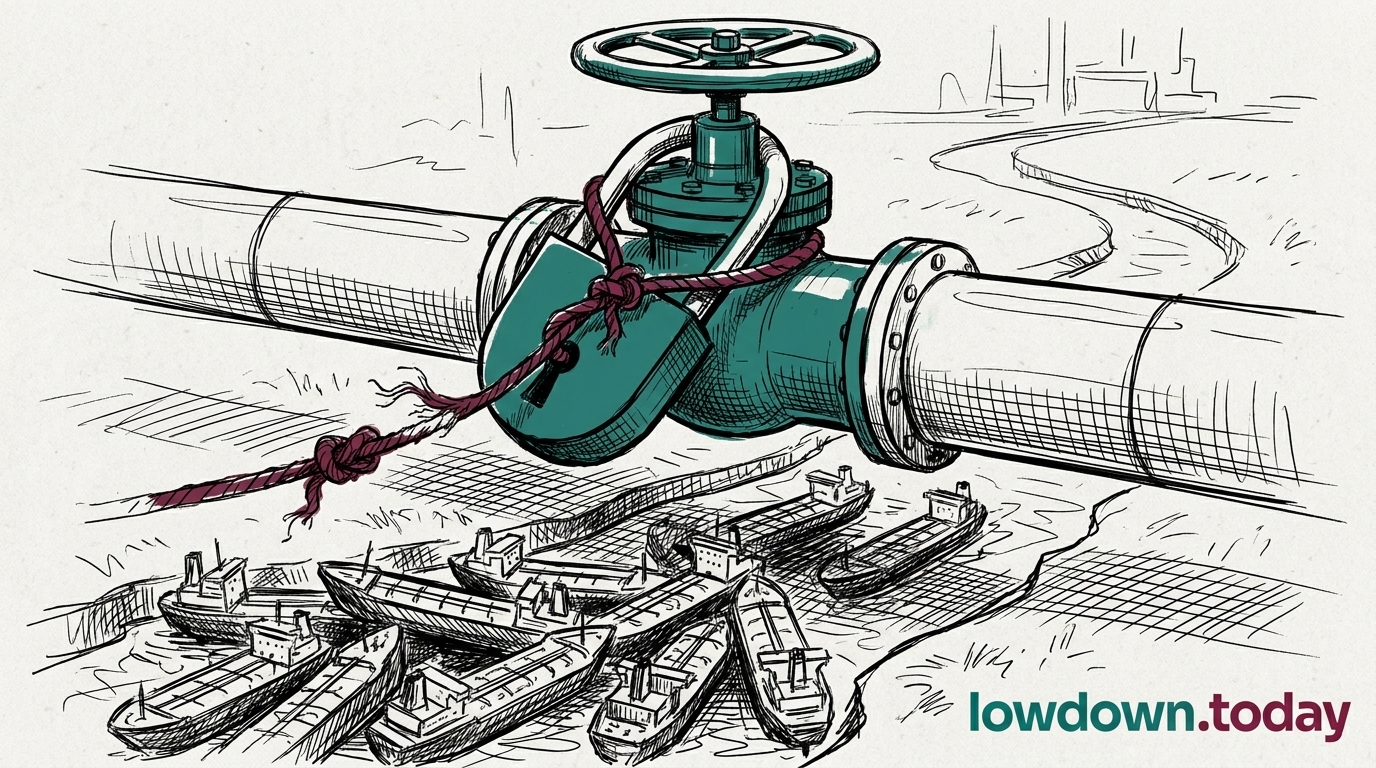
OFAC let General Licence 134C expire at 12:01 EDT on Wednesday 17 June with no GL 134D, stripping Western insurance, crewing and classification cover off Russian seaborne crude.

EconomicDeveloping
Key takeaway

OFAC let the Russian-crude insurance licence run out by inaction while renewing gas and nuclear cover.

OFAC, the US Treasury sanctions bureau, let General Licence 134C expire at 12:01 EDT on Wednesday 17 June with no GL 134D issued 1. The licence was the vessel-services umbrella that authorised Western insurance, crewing, bunkering, classification and salvage on Russian-origin seaborne crude. With it gone, that cover is off Russian crude, and Western P&I clubs and classification societies now carry the secondary-liability exposure outside narrow wind-down provisions.

The expiry date was flagged in early June , and the structure had been telegraphed. Marco Rubio signalled the end of the waivers by inaction . The decisive tell came when OFAC renewed GL 55F for Sakhalin-2 LNG and GL 115D for civil nuclear on 11 June, both allied energy-security dependencies, while leaving the crude umbrella to run out . Gas and nuclear cover stay; crude insurance goes. The instrument design reads the policy intent more clearly than any G7 communique.

OFAC renewed two allied-dependency licences on 11 June and let the crude umbrella expire six days later, a sequence too clean to be an oversight. The tradeable expression sits in the compliant-versus-shadow Aframax spread rather than the flat price, which is busy discounting a different barrel. Watch the Baltic and Black Sea compliance bid on TD7 and TD17 re-widen against shadow-fleet rates inside three to five days; if it does, the fraction of Russian crude still routed through European clubs has lost its placement, and the cut is real.


Deep Analysis

In plain English

US sanctions work partly through permission slips called general licences. GL 134C, valid until 17 June 2026, told Western shipping companies they could legally service tankers carrying Russian oil without violating US law. Those services cover insurance against collision and sinking, certification that a vessel is seaworthy (done by Lloyd's-market classification societies), and the crewing agencies that staff the ships. On 17 June, GL 134C expired and the US Treasury chose not to replace it. Any Western insurer, classification body, or crewing firm that continues servicing a tanker carrying Russian crude now risks being sanctioned itself. Western companies had been quietly exiting Russian crude business for months, but the expiry removes the last legal cover for staying. Russia will need to find non-Western replacements for all of these services, which is harder and more expensive than it sounds.

Deep Analysis
Root Causes

The GL 134 rolling-bridge architecture was itself a structural weakness: OFAC created a monthly expectation of renewal that provided the market with a rollover presumption, suppressing the incentive for Russian crude buyers to develop alternative cover earlier. Secretary Rubio's 5 June statement was the first break in that presumption.

The decision to renew GL 55F (Sakhalin-2 gas) and GL 115D (civil nuclear) on 11 June while allowing GL 134C to lapse reflects a deliberate commodity-class split: US energy-security dependencies on Russian LNG services and civil nuclear outweigh the geopolitical cost of renewal; Russian crude vessel services carry no comparable US dependency argument.

The secondary structural cause is that GL 134C covered completions for cargoes loaded on or before 17 April, meaning by 17 June the covered cargo universe was already in transit or delivered. The lapse is therefore forward-looking: new Russian crude cargoes departing after 17 June will carry immediate secondary-liability exposure on any Western-market insurer, classification society, or crewing agency that services them.

What could happen next?
  • Consequence

    Western P&I clubs and Lloyd's-market classification societies face immediate secondary-liability designation risk for services on Russian-origin crude cargoes departing after 17 June.

    Immediate · Assessed
  • Consequence

    Indian refiners' coverage for Baltic Urals cargoes becomes legally uncertain, potentially raising financing costs for Russian crude purchases.

    Short term · Assessed
  • Risk

    If OFAC does not follow up with a designation action against Western service providers that continue coverage, the lapse will be absorbed as a soft policy signal with limited operational impact.

    Short term · Assessed
First Reported In

Update #9 · Russia cliff landed while screens sold Iran

US Treasury OFAC· 18 Jun 2026
Read original
Different Perspectives
Indian refiners
Indian refiners
Indian refiners kept lifting discounted Urals as the India/Baltic price split widened past $9-10 a barrel, a gap that only grows as GL X1's Iranian wind-down cuts an alternative discounted grade off the market by 17 July. Cheaper Russian feedstock is being locked in while it lasts.
Chinese refiners
Chinese refiners
Chinese refiners gain leverage as the Urals-Brent discount widens, since Beijing's state buyers already source discounted Russian barrels near the fiscal floor unaffected by Western insurance costs. A wider discount, if it holds past 23 July, lets them lock in cheaper term contracts regardless of the cap's outcome.
US money managers (CFTC-tracked)
Managed money trimmed WTI net length into the rally, positioning that reflects doubt the Hormuz premium survives without freight or war-risk confirmation. The Brent-WTI spread widening almost entirely on the Brent leg supports that scepticism about a broad-based repricing.
OPEC+ (Saudi-led subgroup)
Saudi Arabia is defending market share through a fourth straight 188kbd August hike even as OPEC's own July MOMR cut 2026 demand growth for the fourth consecutive month. At a $108-111 fiscal breakeven, every added barrel costs Riyadh revenue it cannot recoup, so the hike reads as a positioning signal, not a demand bet.
Greek shipping registries
Greece, backed by Cyprus and Malta, is pushing a three-month cap-freeze compromise against the Commission's freeze to January 2027 ahead of the 23 July vote. Athens' and Valletta's combined tanker registrations mean a shorter review gives their insurers more frequent chances to reprice risk on Russian cargoes.
Russia (Deputy PM Alexander Novak)
Novak extended the diesel export restriction to producers on 8 July, the first producer-binding curb of the war, protecting the domestic pump price ahead of any refinery repair timeline. Urals still trades below Russia's $59 budget floor even as Brent gained, so the ban trades export revenue for fiscal stability at home.