Skip to content
You can now search across every topic, entity and event.What's new
European Oil Markets
16JUL

ARA gasoil hits a 2.5-year low

3 min read
09:39UTC

ARA gasoil stocks fell to a 2.5-year low near 13.66mb in mid-June even as imports rose, while Saudi Arabia supplied 33-37% of those imports through Suez and the Med, putting a Gulf-freight cost onto Northwest European diesel.

EconomicDeveloping
Key takeaway

Saudi gasoil now covers a third of ARA imports, baking a Gulf-freight cost into European diesel.

Gasoil stocks at ARA, the Amsterdam-Rotterdam-Antwerp hub that is Northwest Europe's primary independent storage and trading triangle, fell to a 2.5-year low near 13.66mb in mid-June even as import volumes rose 1. The 12-year product-stock low logged in late May was the prior floor; this deeper read confirms the tightness is structural, not a seasonal wobble that builds back into summer.

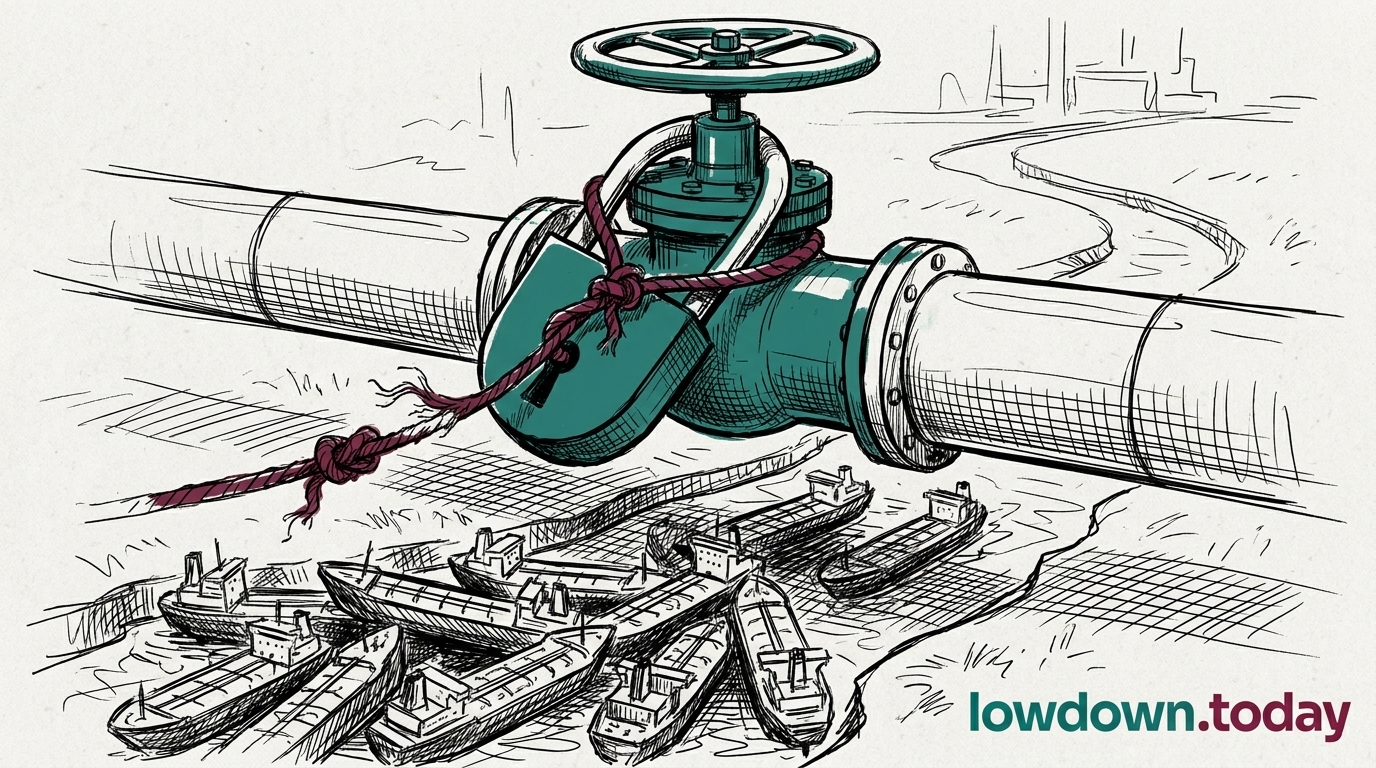
The sourcing has shifted. Saudi Arabia, the world's largest oil exporter, now supplies 33-37% of ARA gasoil imports, routing through Suez and the Mediterranean rather than the shorter Baltic legs 2. That change matters because it carries a cost the old Baltic barrels never did. The Persian Gulf Strait Authority (PGSA), the Iranian-backed body levying navigation-services tolls on Gulf-adjacent sea lanes, now sits in the freight bill on Saudi-to-NWE cargoes. A Cape reroute on a VLCC adds roughly $2-3/bbl; the toll absorbed on a Med Aframax adds roughly $0.50-0.70/bbl.

Either path is a new, unpriced floor under ARA supply cost. NWE diesel now carries a Gulf-freight beta it did not have when Baltic barrels dominated, which means the PGSA toll is no longer a Hormuz-politics story but a line item in the ARA crack. The ICE Gasoil crack floor near $54/bbl, which survived the May selloff in Brent , has these physical prints under it again, reinforced by the same forward-freight scramble the desk tracks on The Gulf VLCC curve.


Deep Analysis

In plain English

Amsterdam, Rotterdam, and Antwerp are Europe's main oil products storage hub. The amount of diesel-type fuel (gasoil) held there just hit its lowest level in two and a half years, even though imports into the hub have actually been rising. That means demand is drawing down stocks faster than supply can replenish them. A third of the gasoil arriving at this hub in June is coming from Saudi Arabia, travelling a long way through the Suez Canal and the Mediterranean. That is a much more expensive route than the old Baltic supply from Russia, and it passes through the same part of the Gulf that has been disrupted by the Iran-US conflict. So European diesel prices have a new cost floor built in from the longer shipping routes, even as the headline oil price falls.

Deep Analysis
Root Causes

ARA gasoil stocks reached a 2.5-year low in mid-June despite import volumes rising because end-demand is drawing down stocks faster than imports can rebuild them.

The structural demand driver is the substitution of gasoil for natural gas in European industrial and heating applications: European gas prices above the LNG import break-even have sustained industrial gas-to-oil switching since winter 2022-23, creating a semi-permanent uplift to European middle-distillate demand of an estimated 150-300kbd (OIES tracking).

The supply-side root cause is the routing premium embedded in Saudi Arabia's 33-37% June share: those cargoes transit Hormuz-Suez, embedding the PGSA navigation-services toll as a landed cost floor on ARA gasoil. A VLCC Cape reroute avoids the toll but adds approximately $2-3/bbl to the landed cost; a Med Aframax absorbing the PGSA toll adds approximately $0.50-0.70/bbl. Either way, ARA gasoil has a structural freight-cost floor it did not carry before May 2026.

First Reported In

Update #9 · Russia cliff landed while screens sold Iran

Hellenic Shipping News· 18 Jun 2026
Read original
Different Perspectives
Indian refiners
Indian refiners
Indian refiners kept lifting discounted Urals as the India/Baltic price split widened past $9-10 a barrel, a gap that only grows as GL X1's Iranian wind-down cuts an alternative discounted grade off the market by 17 July. Cheaper Russian feedstock is being locked in while it lasts.
Chinese refiners
Chinese refiners
Chinese refiners gain leverage as the Urals-Brent discount widens, since Beijing's state buyers already source discounted Russian barrels near the fiscal floor unaffected by Western insurance costs. A wider discount, if it holds past 23 July, lets them lock in cheaper term contracts regardless of the cap's outcome.
US money managers (CFTC-tracked)
Managed money trimmed WTI net length into the rally, positioning that reflects doubt the Hormuz premium survives without freight or war-risk confirmation. The Brent-WTI spread widening almost entirely on the Brent leg supports that scepticism about a broad-based repricing.
OPEC+ (Saudi-led subgroup)
Saudi Arabia is defending market share through a fourth straight 188kbd August hike even as OPEC's own July MOMR cut 2026 demand growth for the fourth consecutive month. At a $108-111 fiscal breakeven, every added barrel costs Riyadh revenue it cannot recoup, so the hike reads as a positioning signal, not a demand bet.
Greek shipping registries
Greece, backed by Cyprus and Malta, is pushing a three-month cap-freeze compromise against the Commission's freeze to January 2027 ahead of the 23 July vote. Athens' and Valletta's combined tanker registrations mean a shorter review gives their insurers more frequent chances to reprice risk on Russian cargoes.
Russia (Deputy PM Alexander Novak)
Novak extended the diesel export restriction to producers on 8 July, the first producer-binding curb of the war, protecting the domestic pump price ahead of any refinery repair timeline. Urals still trades below Russia's $59 budget floor even as Brent gained, so the ban trades export revenue for fiscal stability at home.