Skip to content
You can now search across every topic, entity and event.What's new
European Oil Markets
16JUL

ARA jet fuel hits a six-year low

3 min read
09:39UTC

ARA jet fuel stocks fell to a six-year low in the week to 22 June even as gasoline and total product inventories rebuilt, exposing a jet-specific squeeze the broader product recovery masks.

EconomicDeveloping
Key takeaway

Jet fuel drains to a six-year low at ARA while gasoline rebuilds, splitting Europe's product barrel by supply route.

ARA jet fuel stocks fell to a six-year low in the week to 22 June, Argus Media and Insights Global data showed, even as ARA gasoline stocks and total product inventories rebuilt on the week 1. The two product legs are pulling apart: the gasoline balance is recovering while jet keeps draining.

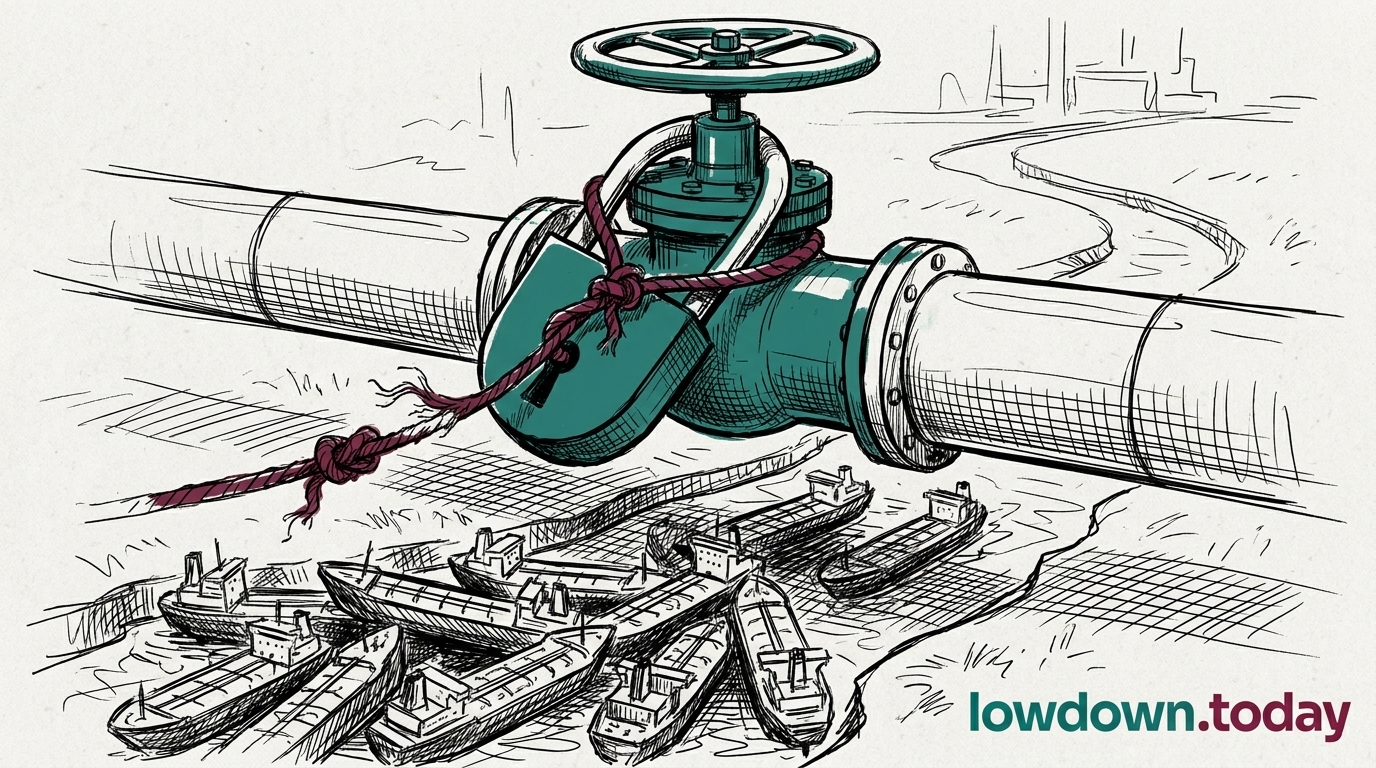
The split deepens the product-specific tightness visible since ARA gasoil fell to 13.56mb and the broader ARA stock low recorded earlier in June . Hormuz-dependent Middle East jet supply routes remain operationally constrained, while gasoline can lean on Atlantic-basin backfill from the US Gulf. Jet has no equivalent substitute leg, so the squeeze sits where the supply route is still shut.


Deep Analysis

In plain English

ARA stands for Amsterdam-Rotterdam-Antwerp, the main oil storage and trading hub for Northwest Europe. Large tanks there hold petrol, diesel, and jet fuel, which airlines, fuel retailers, and manufacturers draw from. Independent firms including Argus Media and Insights Global measure these stock levels weekly and publish the data commercially. This week, ARA jet fuel stocks fell to their lowest level in six years. Jet fuel is the kerosene-type fuel used by aircraft. At the same time, ARA petrol stocks and total ARA product stocks actually increased in the same week. Two products in the same hub went in opposite directions. Petrol and diesel reach ARA from the Atlantic basin: US refineries and West African producers load tankers that arrive in Rotterdam in roughly ten days. Jet fuel reaches Europe mainly from the Middle East, via Gulf producers such as Saudi Arabia, the UAE, and Kuwait, whose tankers transit the Suez Canal. With the Strait of Hormuz disrupted since April 2026, Middle East jet supply to Europe has fallen sharply, and no Atlantic producer can replace that volume at current production rates. Airlines flying in and out of Amsterdam, Rotterdam, and other Northern European airports are thus facing a growing shortage of fuel at the storage level, even as the pump price for car fuel begins to ease.

First Reported In

Update #11 · Crude longs flushed flat into a loaded week

QC Intel· 26 Jun 2026
Read original
Different Perspectives
Indian refiners
Indian refiners
Indian refiners kept lifting discounted Urals as the India/Baltic price split widened past $9-10 a barrel, a gap that only grows as GL X1's Iranian wind-down cuts an alternative discounted grade off the market by 17 July. Cheaper Russian feedstock is being locked in while it lasts.
Chinese refiners
Chinese refiners
Chinese refiners gain leverage as the Urals-Brent discount widens, since Beijing's state buyers already source discounted Russian barrels near the fiscal floor unaffected by Western insurance costs. A wider discount, if it holds past 23 July, lets them lock in cheaper term contracts regardless of the cap's outcome.
US money managers (CFTC-tracked)
Managed money trimmed WTI net length into the rally, positioning that reflects doubt the Hormuz premium survives without freight or war-risk confirmation. The Brent-WTI spread widening almost entirely on the Brent leg supports that scepticism about a broad-based repricing.
OPEC+ (Saudi-led subgroup)
Saudi Arabia is defending market share through a fourth straight 188kbd August hike even as OPEC's own July MOMR cut 2026 demand growth for the fourth consecutive month. At a $108-111 fiscal breakeven, every added barrel costs Riyadh revenue it cannot recoup, so the hike reads as a positioning signal, not a demand bet.
Greek shipping registries
Greece, backed by Cyprus and Malta, is pushing a three-month cap-freeze compromise against the Commission's freeze to January 2027 ahead of the 23 July vote. Athens' and Valletta's combined tanker registrations mean a shorter review gives their insurers more frequent chances to reprice risk on Russian cargoes.
Russia (Deputy PM Alexander Novak)
Novak extended the diesel export restriction to producers on 8 July, the first producer-binding curb of the war, protecting the domestic pump price ahead of any refinery repair timeline. Urals still trades below Russia's $59 budget floor even as Brent gained, so the ban trades export revenue for fiscal stability at home.