Skip to content
You can now search across every topic, entity and event.What's new
European Energy Markets
22JUN

China and Russia Veto Hormuz Resolution

2 min read
13:56UTC

UN Security Council

EconomicDeveloping
Key takeaway

The multilateral route to Hormuz reopening is closed; only bilateral talks or force remain.

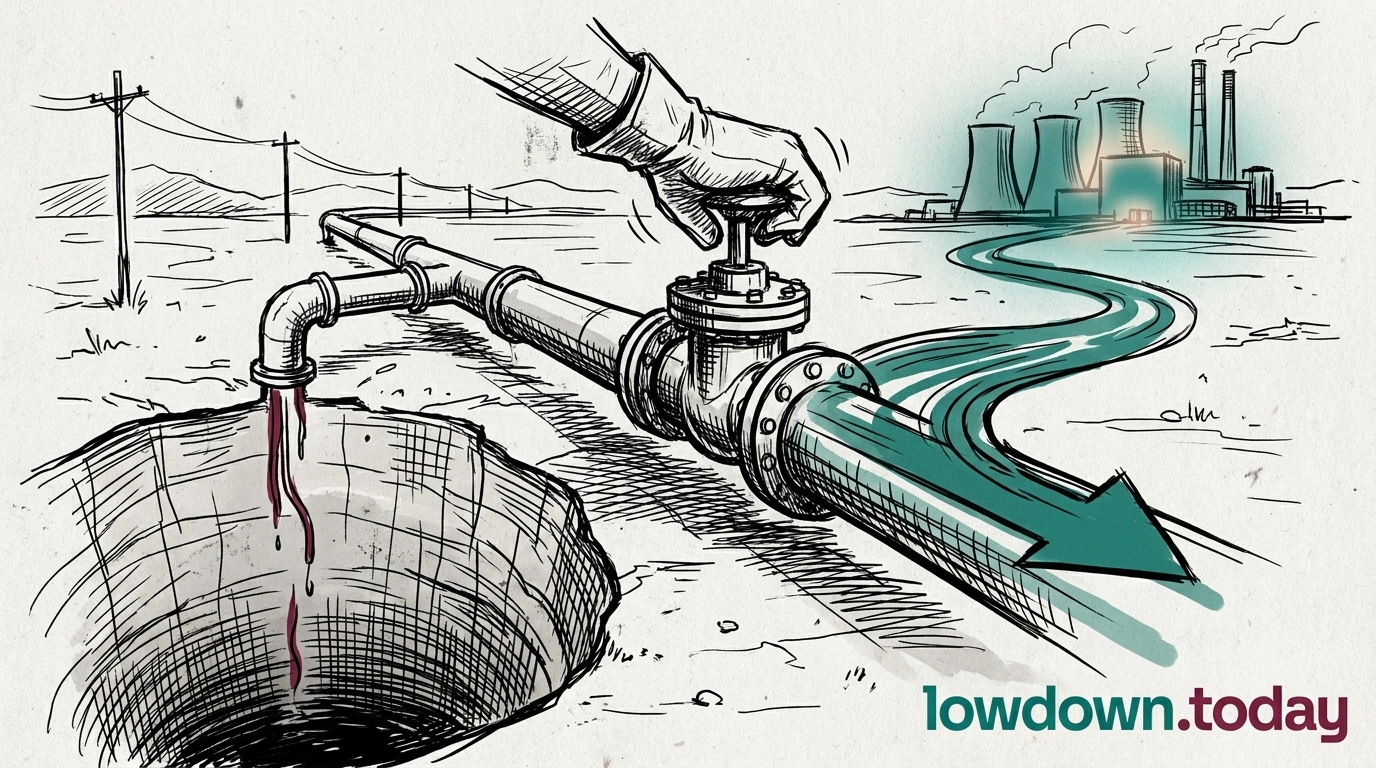
The UN Security Council voted 11 to 2 for a resolution calling for Hormuz reopening. Russia and China vetoed it. Russia's alignment with Iran was expected and follows its consistent pattern of shielding Tehran from multilateral pressure. China's veto is more consequential: its active protection of a toll regime that advantages its own shipping at the expense of Japanese, South Korean, and European competitors reveals a strategic calculation. The Hormuz disruption functions as an economic weapon against China's rivals, and Beijing has now voted to preserve it .

The veto forecloses the UNSC route for any future enforcement action. Hormuz reopening now depends entirely on bilateral US-Iran negotiation or unilateral US military action, both of which carry costs the administration has so far declined to pay . The IRGC mine chart corridor system operates without any multilateral challenge mechanism.

China's toll-paying tankers already transit while Japanese and South Korean ships wait. The competitive tilt is not incidental; it restructures East Asian energy access under a framework China has formally voted to protect. For the 325 tankers stranded inside the Persian Gulf, the multilateral route to freedom of navigation is now closed.


Deep Analysis

In plain English

The United Nations tried to pass a vote demanding the Strait of Hormuz be reopened to all ships. Eleven countries voted yes. Russia and China — who each have veto power on the Security Council — blocked it. China's ships are already paying Iran's fees and getting through while Japanese and South Korean ships wait. China benefits from the blockade hurting its economic rivals, so it voted to keep it.

Deep Analysis
Root Causes

China imports approximately 15% of its crude oil through Hormuz from Gulf states, plus additional Iranian crude. The toll regime, which its tankers pay and which Japan and South Korea's tankers cannot use freely, tilts a competitive advantage China's way during an energy-intensive period of industrial policy.

The veto is not ideological alignment with Iran — it is commercial self-interest in a system that disadvantages rivals.

What could happen next?
  • Consequence

    The UNSC veto closes the multilateral enforcement route permanently for this crisis; Hormuz reopening now requires either US bilateral negotiation with Iran or unilateral military action.

  • Precedent

    China's willingness to veto a free-navigation resolution signals to Gulf states, Japan, South Korea, and the EU that their energy security cannot be guaranteed through multilateral mechanisms when Chinese commercial interests conflict.

First Reported In

Update #64 · Islamabad talks open already cracked

Bloomberg· 10 Apr 2026
Read original
Causes and effects
This Event
China and Russia Veto Hormuz Resolution
The veto removes the multilateral route and confirms China's economic interest in the toll regime outweighs its stated support for free navigation.
Different Perspectives
Cross-border power traders
The France-Germany day-ahead spread flipped from a EUR 17.20 German premium on 1 August to a EUR 4.15 French premium on 3 August, the same day French curtailment peaked. They cannot yet attribute the flip to curtailment alone, since a like-for-like overnight comparison shows French nuclear output rising while wind fell and demand returned on the weekday step.
EDF
EDF
River-cooling limits took 7.6 GW, 12 per cent of its fleet, offline on 3 August, the highest curtailment since the heatwave began, with an easing forecast to 4.3 GW on 4 August and 3 GW after. It manages the cut as a recurring seasonal constraint, expecting it to lift with river temperature, not repair.
Gasunie
Gasunie
TTF, the Dutch hub it operates, drifted to roughly EUR 55 to 58 per MWh across the window, staying inside its recent range through both the German spark reversal and the French curtailment. It reads a flat hub price as evidence that neither event this window carried enough weight to move the fuel leg on its own.
German gas-fired generators
Record German solar of 18,761 MW on 2 August pushed the clean spark spread to minus 18.48 EUR/MWh, a loss-making day, before it returned to plus 16.20 on 3 August. They now price dispatch against post-solar residual load rather than wind alone, since the sign flipped inside 48 hours on unchanged fuel and carbon costs.
European Commission (DG Energy)
Its implementing-measures register logged transposition notices from only Portugal and Slovakia against Wednesday's Article 94 deadline for Directive (EU) 2024/1788, with 25 states silent. It expects the register to fill only gradually, since filing routinely lags legislating and any infringement track against non-notifying states runs on a slower clock than the deadline itself.
Spain's LNG terminal operators
Spain's 9,145 GWh terminal inventory is the largest single stock in the EU LNG network, an option value that can reroute cargoes wherever the winter strip pays best rather than a cavern gas obligation tied to a fixed date. That flexibility matters more as Germany's cavern shortfall pushes more of the winter security question onto import infrastructure.



