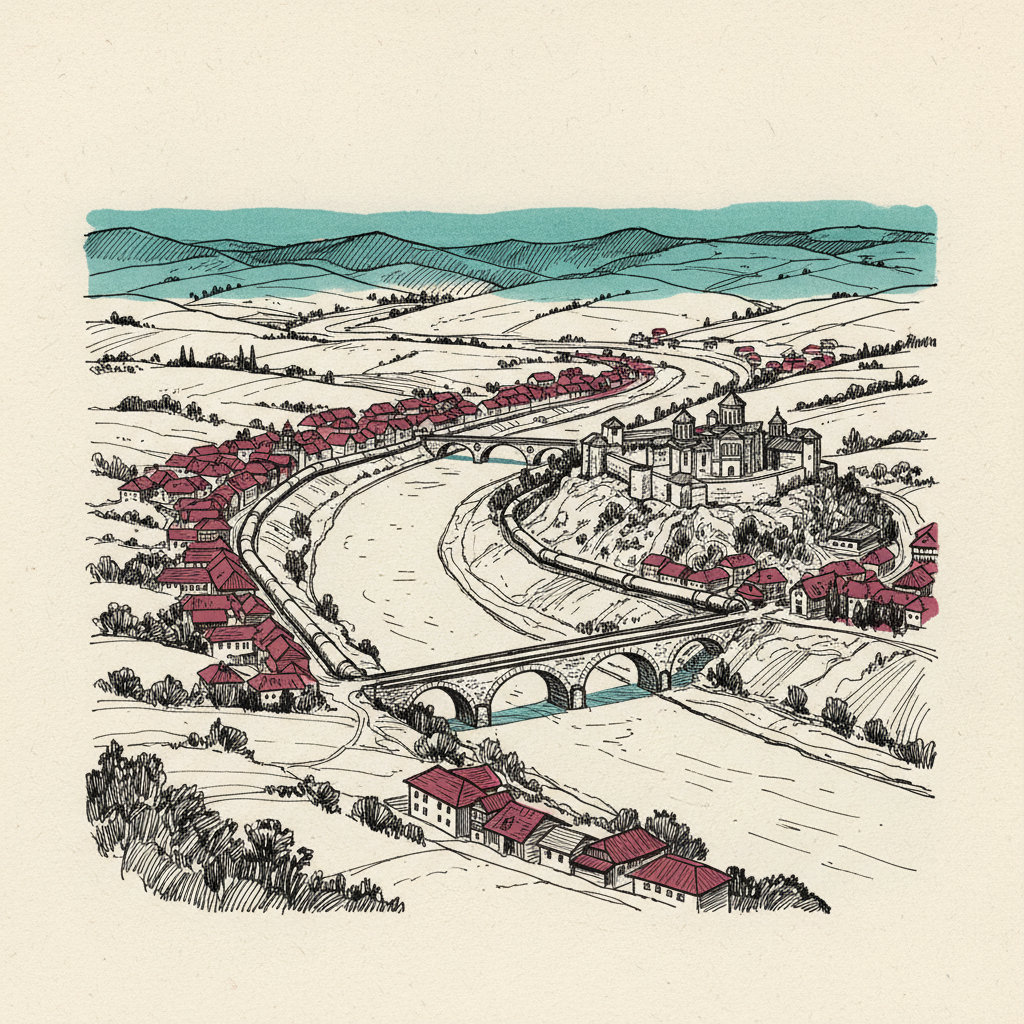
Serbia
Balkan republic and TurkStream transit country; explosives found near the pipeline on 5 April 2026.
Serbia's gas-transit role drew scrutiny after explosives were reported near the Balkan Stream pipeline on 5 April 2026. Its military security chief rejected an allegation that Ukraine organised the plot.
Last refreshed: 22 October 2026 · Appears in 3 active topics
With TurkStream explosives found on its soil, is Serbia still credibly neutral in this war?
Timeline for Serbia
Mentioned in: Beijing will not confirm Shenzhen summit
Russia-Ukraine War 2026Mentioned in: Ukraine hits a St Petersburg data centre
Russia-Ukraine War 2026Mentioned in: Russian strikes cut Ukraine's grid links
Russia-Ukraine War 2026Mentioned in: Thailand limits land border runs to two
Nomads & CommunitiesMentioned in: EU LNG send-out at 2,965.7 GWh/day
European Energy MarketsBackground
Serbia is a republic in the Balkans, with Belgrade as its capital. Its territory carries the Balkan Stream section of the TurkStream gas route, connecting Russian supplies with consumers further into Europe. That makes pipeline operation and security matters of both domestic and cross-border importance.
Serbia also contributes personnel to international peacekeeping. Its participation in the UN mission in Lebanon places Serbian troops in a separate security setting from the country's gas-transit role.
Serbia disputes the pipeline attribution
Serbian police reported finding two backpacks containing roughly 4kg of plastic explosives near the Balkan Stream pipeline at Velebit on 5 April 2026. The discovery put security of Serbia's transit infrastructure at the centre of a dispute involving neighbouring countries and Russian gas supplies.
Serbia's Military Security Agency director, Djuro Jovanic, said Ukraine had not organised the plot, contradicting Hungary's attribution. For Belgrade, that separated the reported physical discovery from the question of responsibility. His denial did not by itself identify who placed the explosives, and the reporting does not establish a completed prosecution.
Serbian passports sit in the arrival-visa tier
Is Serbia on Thailand's visa-on-arrival list?
Is Serbia in NATO or the EU?
Why has Serbia not imposed sanctions on Russia?
What happened to TurkStream in Serbia in April 2026?


Written with AI from Lowdown's published reporting. Not individually reviewed by an editor. Updated 22 October 2026. Editorial standards.