Skip to content
You can now search across every topic, entity and event.What's new
European Energy Markets
15JUN

US Army Apache goes down near Hormuz

3 min read
12:23UTC

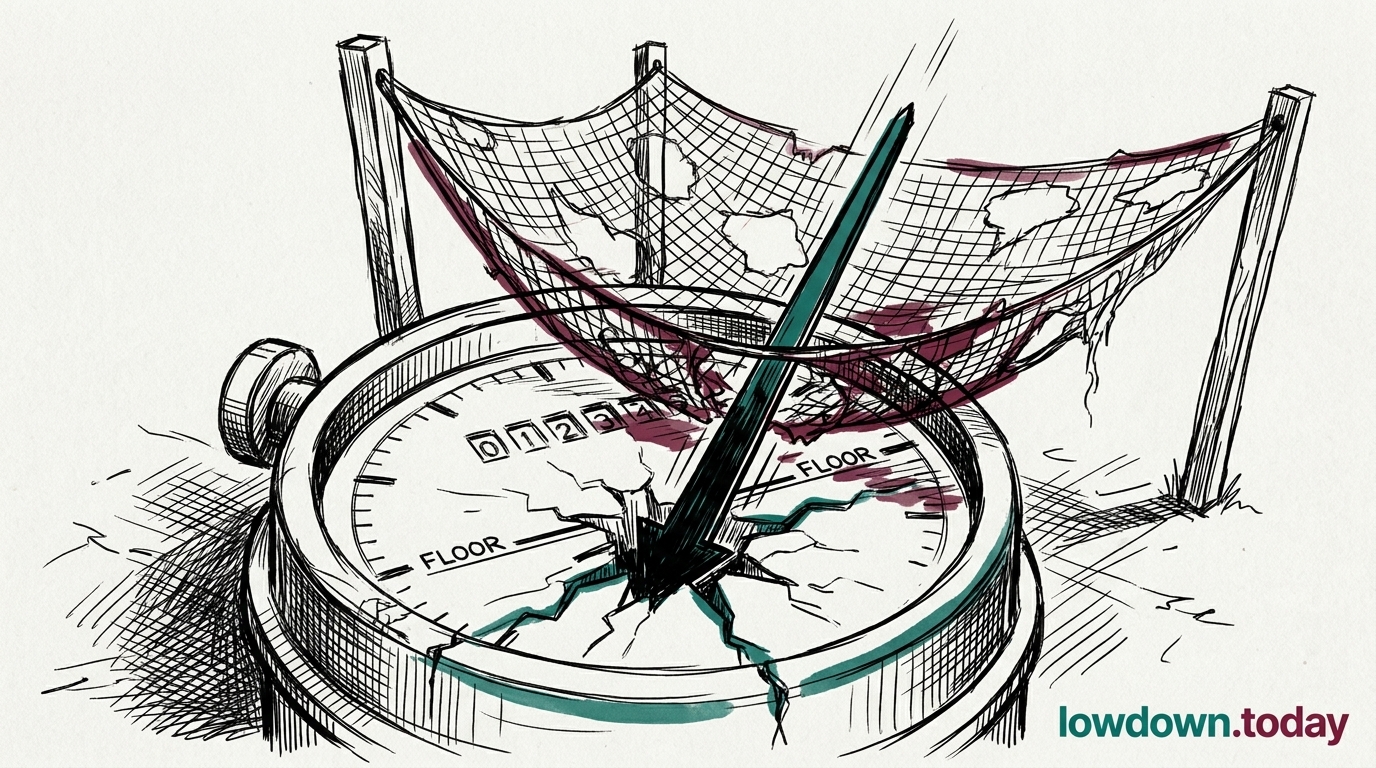
A US Army AH-64 Apache went down near the Strait of Hormuz on 9 June. Both crew were rescued and the cause is unconfirmed, with a report due the following day.

EconomicDeveloping
Key takeaway

A US Apache went down near Hormuz with both crew rescued; the cause stays unconfirmed.

A US Army AH-64 Apache went down near the Strait of Hormuz on 9 June; both crew members were rescued and the cause was unconfirmed, with a report expected the following day 1. The Apache is the US Army's primary attack helicopter, and the strait carries roughly a fifth of the world's seaborne oil through waters where US and Iranian forces have traded fire repeatedly through the war.

No party has claimed the loss, and it is not known whether the cause was hostile fire or mechanical failure. The location alone invites the question, because the airspace over Hormuz has been contested for days. On 5-6 June the IRGC fired a seven-missile salvo at US bases in Kuwait and Bahrain after CENTCOM struck Iranian coastal radar and downed four attack drones over the strait . A US aircraft going down in that same airspace will draw scrutiny no holding statement can settle.

CENTCOM said a cause-of-loss finding was due around 10 June, and whether it attributes the crash to enemy action or to a mechanical or environmental factor will shape how Washington reads the incident. Until then the only confirmed facts are the loss itself and the rescue of both crew.


Deep Analysis

In plain English

A US Army Apache attack helicopter went down near the Strait of Hormuz on 9 June; US forces pulled both crew members from the water. The military said the cause was unconfirmed and that an investigation report was due the next day. Apache helicopters from the US Army have been patrolling near Hormuz for months, hunting small Iranian fast-attack craft that operate inside the IRGC's littoral zone. It is not clear whether this was an accident, a technical fault, or something else. US Central Command issued no hostile-fire attribution by the time of reporting.

What could happen next?
  • Risk

    If the investigation confirms hostile fire, it would be the first acknowledged US rotary-wing loss to Iranian action in this conflict and would trigger a reassessment of the tactical risk calculus for low-altitude Apache operations near the Hormuz littoral.

  • Risk

    Even if confirmed as non-hostile, Iran and Houthi-aligned media will almost certainly claim credit, creating a public-perception risk that exceeds the operational one.

First Reported In

Update #122 · Trump warns Bibi as Israel strikes anyway

Middle East Eye· 9 Jun 2026
Read original
Different Perspectives
Spain's LNG terminal operators
Spain's 9,145 GWh terminal inventory is the largest single stock in the EU LNG network, an option value that can reroute cargoes wherever the winter strip pays best rather than a cavern gas obligation tied to a fixed date. That flexibility matters more as Germany's cavern shortfall pushes more of the winter security question onto import infrastructure.
European Commission
European Commission
Brussels holds the bloc to 90% on a flexible window while Germany, holding roughly a quarter of EU storage capacity, tracks toward missing its own lower 80% figure by 21 points. A national shortfall this size in the anchor market matters more to bloc security than the flexible timetable alone can absorb.
French power exporters and CRE
French day-ahead rose in step with Germany but by less, reopening a EUR 7-17 premium that makes northward export flows commercially attractive again after the EUR 43.09 discount evaporated in days. CRE separately authorised RTE and Enedis to buy flexibility locally, betting the coming winter's binding constraint is grid congestion rather than a shortage of firm capacity.
TTF trading desk
TTF trading desk
A visible national shortfall like Germany's 21-point gap is a directional signal, not noise, for a desk holding the summer-winter spread. TTF's flat EUR 58-60 range through this week's German price swings says the market has not yet chosen to reprice refill risk into the front of the curve.
German cavern and CCGT operators
German caverns kept buying prompt gas at TTF near EUR 58-60 through the inversion; the wind collapse to 2.4 GW then flipped the spark spread to plus EUR 29 and put turbines back in the same queue. Every day turbines win that bid, injection at a third of the 877 GWh/day pace needed falls further behind.
Slovakia
Slovakia
Slovakia says it dropped its hold-out on the 21st sanctions package only after Ursula von der Leyen personally signed written gas-price and supply guarantees. The Council of the European Union's own 17,238-character release on the package names neither Slovakia nor any guarantee, leaving Bratislava's account unconfirmed by the institutional record.



