Skip to content
You can now search across every topic, entity and event.What's new
European Energy Markets
15JUN

Islamabad four stall on Hormuz terms

2 min read
12:23UTC

Pakistan, Turkey, Egypt, and Saudi Arabia launched the war's most ambitious diplomatic effort, but Iran's non-negotiable sovereignty claim over Hormuz leaves the core dispute structurally deadlocked.

EconomicDeveloping
Key takeaway

The Islamabad talks are diplomatically visible but structurally incapable of resolving the Hormuz dispute.

Foreign ministers from Pakistan, Turkey, Egypt, and Saudi Arabia met in Islamabad on 29 to 30 March for the most substantial multilateral diplomatic initiative since the war began 1. The conference follows Pakistan's confirmation that indirect US-Iran talks had stalled.

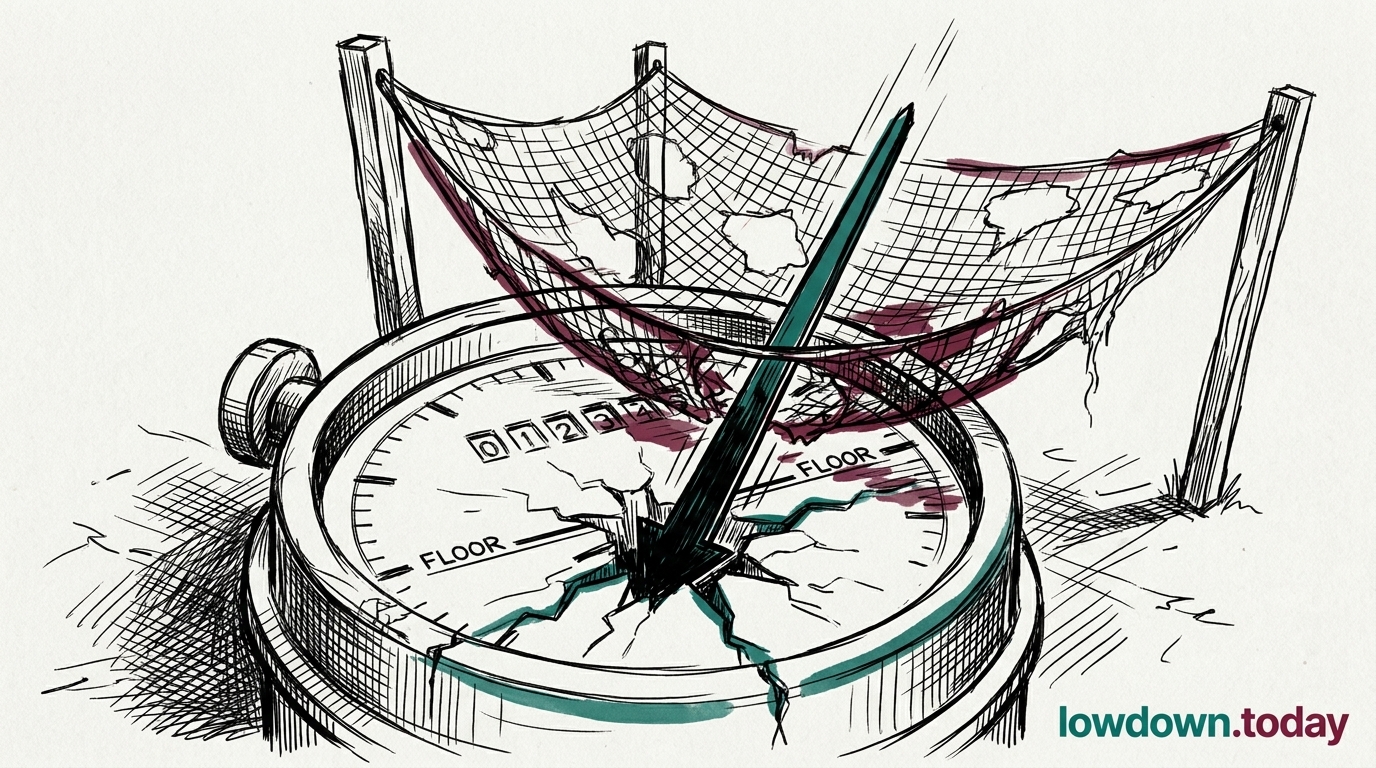
Iran's Condition 5 demands recognition of Iranian sovereignty over the strait of Hormuz as a "natural and legal right." Under UNCLOS Article 38, the strait is an international waterway with guaranteed transit passage. Accepting Iran's position would set a precedent the US has resisted globally for decades: no state may claim sovereignty over an international strait. Iran simultaneously notified the IMO of its legal position , building the kind of two-layer legal architecture (domestic statute plus international notification) that Egypt used after nationalising the Suez Canal in 1956.

Iran's Foreign Minister Abbas Araghchi has been direct: "intermediary messages are not direct negotiations." Tehran rejected the US 15-point plan as exclusively benefiting American and Israeli interests . The Islamabad Four can signal diplomatic intent. They cannot bridge the Hormuz sovereignty gap.


Deep Analysis

In plain English

Four countries (Pakistan, Turkey, Egypt, and Saudi Arabia) met in Islamabad to try to negotiate a ceasefire. All four are Muslim-majority states with different but overlapping interests in ending the conflict. The problem is that the central dispute is not about territory or money, but about who has the legal right to control the Strait of Hormuz. Iran says it does. International law says no nation can block international shipping lanes. Pakistan, Turkey, Egypt, and Saudi Arabia cannot resolve that disagreement. Only the US and Iran can, and Iran has said it will not sit down directly with the Americans.

Deep Analysis
Root Causes

Iran's Hormuz sovereignty demand has deep domestic legitimacy. The strait's control has been a central element of IRGC and Islamic Republic ideology since 1979; any leader who conceded it could face the accusation of surrendering national territory.

The UNCLOS Article 38 incompatibility is not a negotiating position; it is a structural conflict between Iran's constitutional claim and international maritime law as enforced by the US Navy for four decades. No regional diplomatic process can bridge that gap without US and Iranian leadership at the table.

What could happen next?
  • Consequence

    The Islamabad summit's failure to produce a framework shifts pressure back to the 6 April power grid deadline as the next decision point.

    Immediate · 0.8
  • Risk

    Each failed multilateral initiative reinforces Iran's reading that it can outlast diplomatic pressure and that time is on its side.

    Short term · 0.7
  • Opportunity

    If Pakistan's bilateral relationship with Iran yields a broader passage deal, other nations may replicate the model, creating a de facto two-tier maritime system.

    Short term · 0.6
First Reported In

Update #51 · Iran hits aluminium plants; Hormuz emptying

Egyptian Streets· 29 Mar 2026
Read original
Different Perspectives
Spain's LNG terminal operators
Spain's 9,145 GWh terminal inventory is the largest single stock in the EU LNG network, an option value that can reroute cargoes wherever the winter strip pays best rather than a cavern gas obligation tied to a fixed date. That flexibility matters more as Germany's cavern shortfall pushes more of the winter security question onto import infrastructure.
European Commission
European Commission
Brussels holds the bloc to 90% on a flexible window while Germany, holding roughly a quarter of EU storage capacity, tracks toward missing its own lower 80% figure by 21 points. A national shortfall this size in the anchor market matters more to bloc security than the flexible timetable alone can absorb.
French power exporters and CRE
French day-ahead rose in step with Germany but by less, reopening a EUR 7-17 premium that makes northward export flows commercially attractive again after the EUR 43.09 discount evaporated in days. CRE separately authorised RTE and Enedis to buy flexibility locally, betting the coming winter's binding constraint is grid congestion rather than a shortage of firm capacity.
TTF trading desk
TTF trading desk
A visible national shortfall like Germany's 21-point gap is a directional signal, not noise, for a desk holding the summer-winter spread. TTF's flat EUR 58-60 range through this week's German price swings says the market has not yet chosen to reprice refill risk into the front of the curve.
German cavern and CCGT operators
German caverns kept buying prompt gas at TTF near EUR 58-60 through the inversion; the wind collapse to 2.4 GW then flipped the spark spread to plus EUR 29 and put turbines back in the same queue. Every day turbines win that bid, injection at a third of the 877 GWh/day pace needed falls further behind.
Slovakia
Slovakia
Slovakia says it dropped its hold-out on the 21st sanctions package only after Ursula von der Leyen personally signed written gas-price and supply guarantees. The Council of the European Union's own 17,238-character release on the package names neither Slovakia nor any guarantee, leaving Bratislava's account unconfirmed by the institutional record.



