Skip to content
You can now search across every topic, entity and event.What's new
European Energy Markets
15JUN

Iran's five peace terms: Hormuz first

2 min read
12:23UTC

Tehran published five conditions for ending the war. The fifth, permanent control of the Strait of Hormuz, would rewrite international maritime law.

EconomicDeveloping
Key takeaway

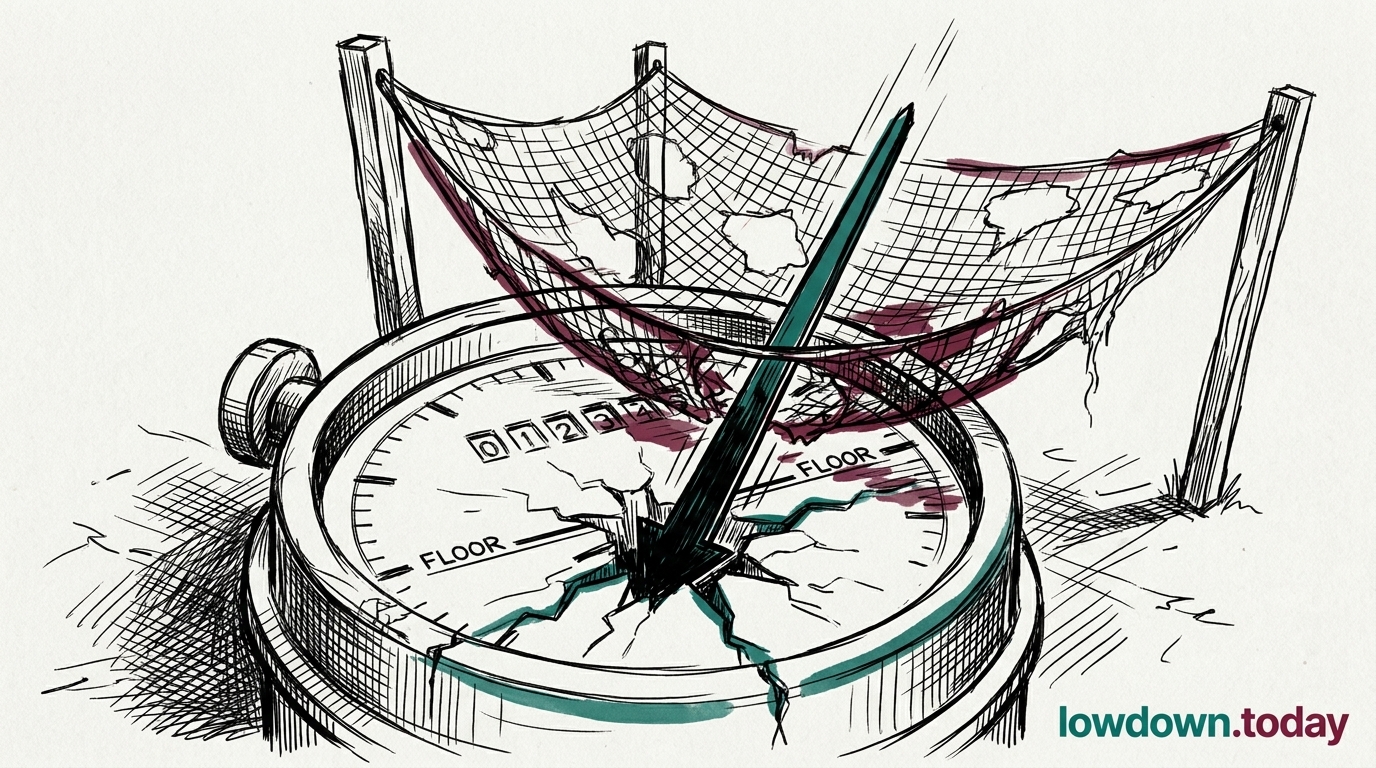
Iran is legislating Hormuz control into permanent law before any ceasefire.

Iran's stated terms for ending the war, relayed through PressTV on 25 March via a senior political-security official, are: (1) complete cessation of all attacks; (2) concrete security mechanisms preventing reimposition of war; (3) guaranteed reparations; (4) end of war across all fronts for all resistance groups; and (5) recognition of Iran's right to control the Strait of Hormuz. 1

Condition five is not a ceasefire demand. Under UNCLOS, the strait of Hormuz is an international waterway; Iran may regulate transit through its territorial waters but cannot claim sovereignty over passage itself. No US administration could accept this. Iran almost certainly knows that.

Western coverage has framed Iran as simply "refusing talks" . The five-condition structure tells a different story: Iran has a formal position, and its most consequential demand is being legislated domestically through the Majlis bill and formalised internationally through the IMO notification . Iran is building legal architecture to outlast the war, following the same model Egypt used after Suez in 1957: establish physical control during a crisis, then legislate before it ends.


Deep Analysis

In plain English

Iran has published five demands it says must be met before it will stop fighting. The first four involve ceasefire terms and compensation. The fifth is different: Iran wants permanent legal recognition that it controls the Strait of Hormuz, the narrow passage through which most of the Persian Gulf's oil leaves. Under current international law, the strait is an international waterway. Every country's ships have the right to pass through it. Iran cannot legally block that passage, even though the water runs alongside its coast. Iran's fifth condition would change that law. No US president can agree to this. And Iran almost certainly knows that. The more telling detail is that Iran is not just saying it; it is also passing a law in its parliament to formalise the toll regime, and filing paperwork with the international shipping body. Iran is building the legal infrastructure of permanent control while the war is still ongoing.

Deep Analysis
Root Causes

Iran's Hormuz sovereignty demand is thirty years in development. Tehran has consistently argued since the 1994 Law of the Sea negotiations that its territorial waters include the strait's northern half, and that innocent passage rights are not absolute for warships of hostile states. The IRGC's toll infrastructure built between 2015 and 2025 was designed to create an operational fact before any legal claim was tested.

The war created the opportunity to formalise what the IRGC had been building. The Majlis toll bill and the IMO notification are the legal superstructure on top of an operational infrastructure that already exists.

What could happen next?
  • Consequence

    Iran's five conditions remove diplomatic off-ramps: any deal requires accepting demands that no allied government can publicly endorse, guaranteeing talks collapse if aired publicly.

  • Precedent

    If the Majlis bill passes before a ceasefire, the Hormuz toll regime becomes Iranian domestic law that any future government would need to repeal, entrenching the leverage beyond this war.

First Reported In

Update #50 · Houthis join; Iran holds two chokepoints

PressTV· 28 Mar 2026
Read original
Different Perspectives
Spain's LNG terminal operators
Spain's 9,145 GWh terminal inventory is the largest single stock in the EU LNG network, an option value that can reroute cargoes wherever the winter strip pays best rather than a cavern gas obligation tied to a fixed date. That flexibility matters more as Germany's cavern shortfall pushes more of the winter security question onto import infrastructure.
European Commission
European Commission
Brussels holds the bloc to 90% on a flexible window while Germany, holding roughly a quarter of EU storage capacity, tracks toward missing its own lower 80% figure by 21 points. A national shortfall this size in the anchor market matters more to bloc security than the flexible timetable alone can absorb.
French power exporters and CRE
French day-ahead rose in step with Germany but by less, reopening a EUR 7-17 premium that makes northward export flows commercially attractive again after the EUR 43.09 discount evaporated in days. CRE separately authorised RTE and Enedis to buy flexibility locally, betting the coming winter's binding constraint is grid congestion rather than a shortage of firm capacity.
TTF trading desk
TTF trading desk
A visible national shortfall like Germany's 21-point gap is a directional signal, not noise, for a desk holding the summer-winter spread. TTF's flat EUR 58-60 range through this week's German price swings says the market has not yet chosen to reprice refill risk into the front of the curve.
German cavern and CCGT operators
German caverns kept buying prompt gas at TTF near EUR 58-60 through the inversion; the wind collapse to 2.4 GW then flipped the spark spread to plus EUR 29 and put turbines back in the same queue. Every day turbines win that bid, injection at a third of the 877 GWh/day pace needed falls further behind.
Slovakia
Slovakia
Slovakia says it dropped its hold-out on the 21st sanctions package only after Ursula von der Leyen personally signed written gas-price and supply guarantees. The Council of the European Union's own 17,238-character release on the package names neither Slovakia nor any guarantee, leaving Bratislava's account unconfirmed by the institutional record.



