Skip to content
You can now search across every topic, entity and event.What's new
European Energy Markets
15JUN

Islamabad talks end without a statement

2 min read
12:23UTC

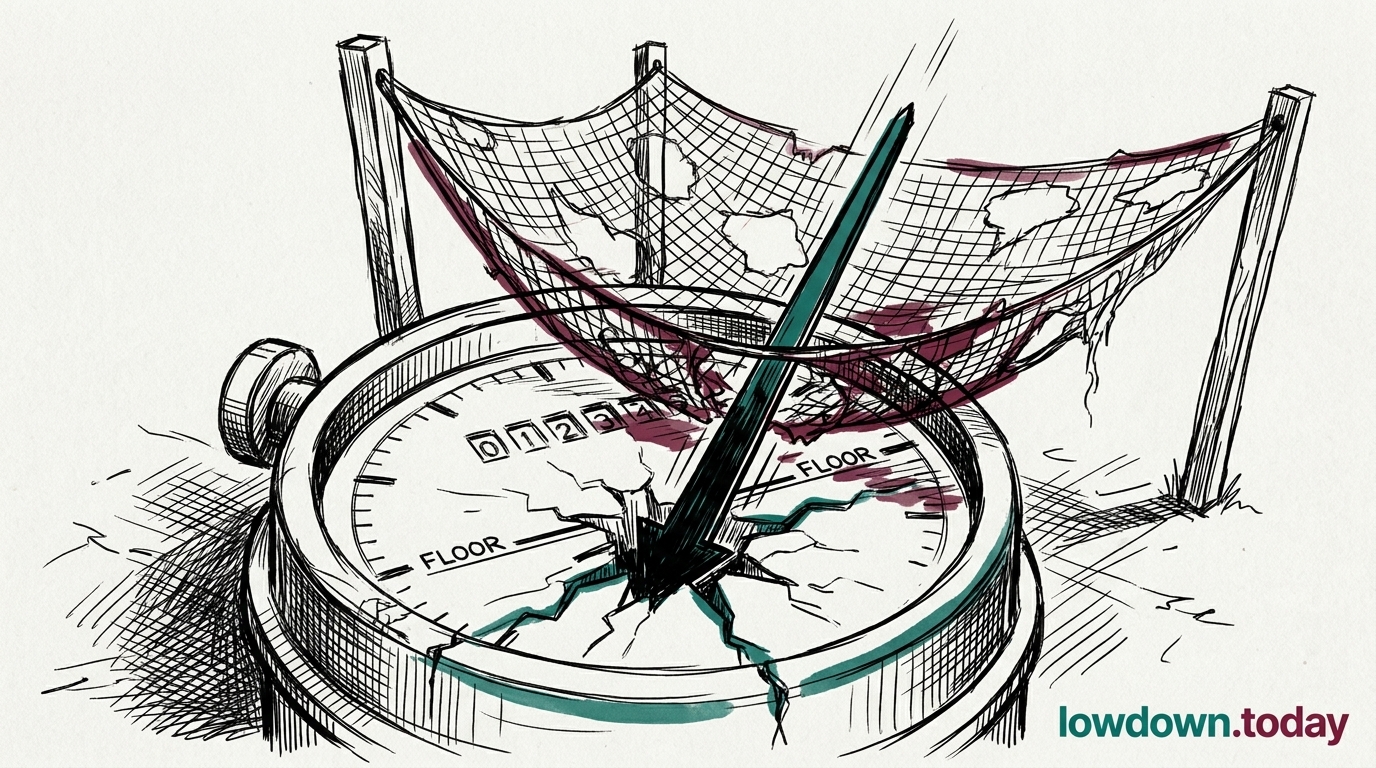
Four nations spent two days building a ceasefire framework. They produced the war's most substantial diplomatic initiative, and then concluded without committing a single word to paper.

EconomicAssessed
Key takeaway

The war's best diplomatic effort ended with no commitment.

Foreign ministers from Pakistan, Turkey, Egypt, and Saudi Arabia concluded two days of talks in Islamabad on 30 March. 1 China declared 'full support.' Pakistan's Foreign Minister Ishaq Dar announced his country would host direct US-Iran talks 'in coming days.' No formal communique was published.

The absence of a statement may reflect disagreement on language. It may reflect a deliberate decision not to commit positions in writing while Trump's Financial Times interview circulated. Either way, the four nations that convened to build a ceasefire framework concluded without committing to one. The summit was the most substantial multilateral diplomatic initiative since the war began , and it ended with an offer and a silence.

The structural problem has not changed. Iran's five conditions for ending the war include permanent sovereignty over the strait of Hormuz. The US 15-point plan demands guaranteed transit passage. No mediator can bridge a gap where one side claims ownership and the other denies it. Iran's Foreign Minister Abbas Araghchi repeated the position: 'Intermediary messages are not direct negotiations.'

Turkey's participation through Foreign Minister Hakan Fidan is worth noting: a NATO member participating in a ceasefire initiative independently of Washington signals the depth of the transatlantic fracture. But good intentions do not overcome incompatible red lines. Until either Washington drops its Hormuz transit demand or Tehran abandons its sovereignty claim, any mediator is working a problem that has no mathematical solution.


Deep Analysis

In plain English

Four countries, Pakistan, Turkey, Egypt, and Saudi Arabia, sent their foreign ministers to the Pakistani capital Islamabad for two days of meetings designed to find a way to end the war. China also voiced its support. At the end of two days, they produced nothing in writing. In diplomacy, a statement or communique is how countries show they agreed on something. Without one, there is no shared position and no commitment. The core problem has not changed: Iran insists it owns the Strait of Hormuz, the world's most important oil shipping lane. The United States demands free passage through it as a condition for any deal. No mediator can close a gap where one side says 'we own it' and the other says 'no you don't'. Then Trump gave an interview saying he wants to seize Iran's oil, on the same day the summit concluded.

What could happen next?
  • Consequence

    Turkey's NATO membership makes its independent participation in a ceasefire initiative a public signal of transatlantic fracture, with real countries on the ground diverging from Washington's position.

  • Risk

    The strongest multilateral mediation effort of the conflict has produced no binding framework. Each failed initiative reduces the credibility of the next.

First Reported In

Update #52 · Trump wants Iran's oil; 3,500 Marines land

Bloomberg / Al Jazeera· 30 Mar 2026
Read original
Causes and effects
This Event
Islamabad talks end without a statement
The absent communique means the strongest multilateral mediation effort of the conflict produced no binding framework. Trump's oil seizure statement, arriving the same day, structurally undermined any mediation before it could begin.
Different Perspectives
Spain's LNG terminal operators
Spain's 9,145 GWh terminal inventory is the largest single stock in the EU LNG network, an option value that can reroute cargoes wherever the winter strip pays best rather than a cavern gas obligation tied to a fixed date. That flexibility matters more as Germany's cavern shortfall pushes more of the winter security question onto import infrastructure.
European Commission
European Commission
Brussels holds the bloc to 90% on a flexible window while Germany, holding roughly a quarter of EU storage capacity, tracks toward missing its own lower 80% figure by 21 points. A national shortfall this size in the anchor market matters more to bloc security than the flexible timetable alone can absorb.
French power exporters and CRE
French day-ahead rose in step with Germany but by less, reopening a EUR 7-17 premium that makes northward export flows commercially attractive again after the EUR 43.09 discount evaporated in days. CRE separately authorised RTE and Enedis to buy flexibility locally, betting the coming winter's binding constraint is grid congestion rather than a shortage of firm capacity.
TTF trading desk
TTF trading desk
A visible national shortfall like Germany's 21-point gap is a directional signal, not noise, for a desk holding the summer-winter spread. TTF's flat EUR 58-60 range through this week's German price swings says the market has not yet chosen to reprice refill risk into the front of the curve.
German cavern and CCGT operators
German caverns kept buying prompt gas at TTF near EUR 58-60 through the inversion; the wind collapse to 2.4 GW then flipped the spark spread to plus EUR 29 and put turbines back in the same queue. Every day turbines win that bid, injection at a third of the 877 GWh/day pace needed falls further behind.
Slovakia
Slovakia
Slovakia says it dropped its hold-out on the 21st sanctions package only after Ursula von der Leyen personally signed written gas-price and supply guarantees. The Council of the European Union's own 17,238-character release on the package names neither Slovakia nor any guarantee, leaving Bratislava's account unconfirmed by the institutional record.



