Skip to content
You can now search across every topic, entity and event.What's new
European Energy Markets
15JUN

Hezbollah fired on Israel hours after signing

3 min read
12:23UTC

Hezbollah fired anti-tank missiles and mortars at Israeli troops in southern Lebanon across 15-16 June, hours after the digital signing. Araghchi said any continued Israeli presence in Lebanon would break the memorandum.

EconomicDeveloping
Key takeaway

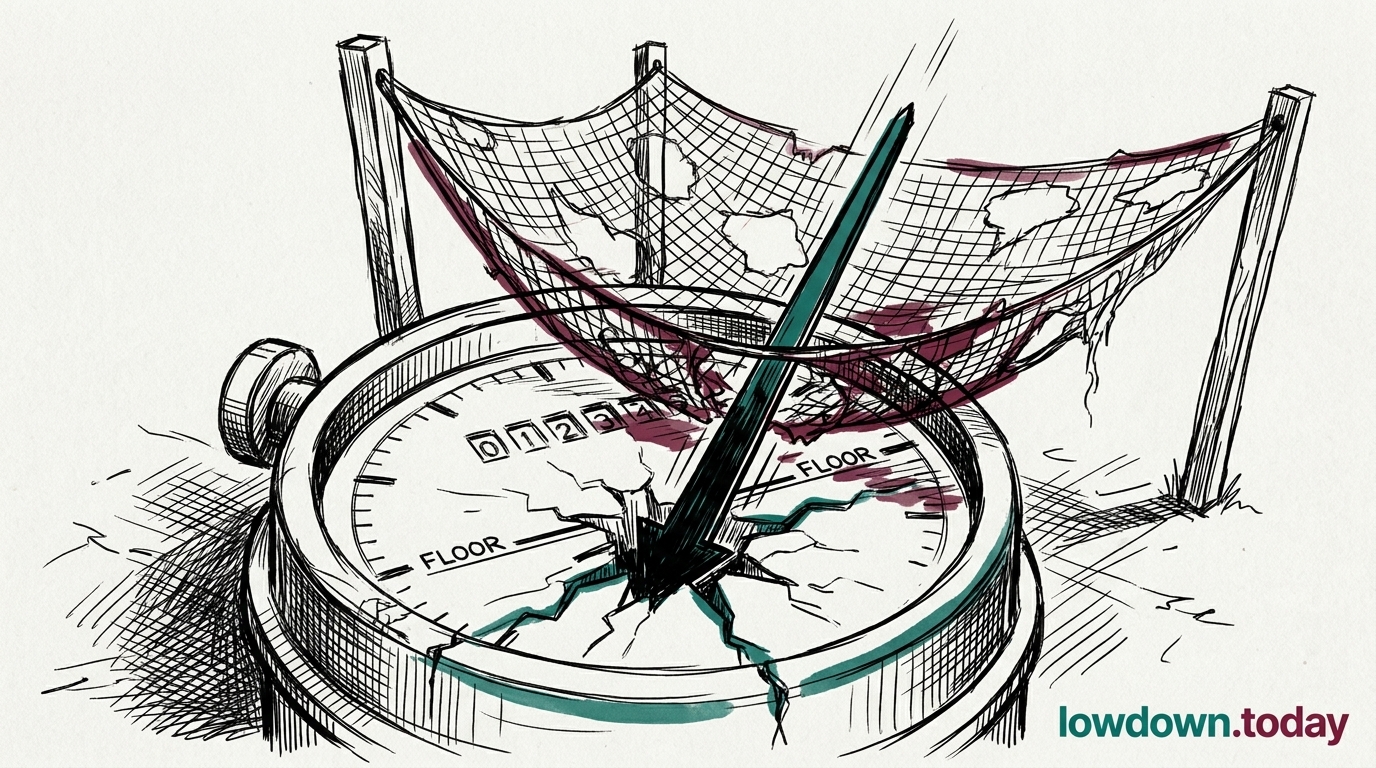
Combat resumed the day the deal was signed, and Iran's stated breach clause was triggered before Geneva.

Hezbollah fired anti-tank missiles and mortars at Israel Defense Forces positions in southern Lebanon across 15-16 June, hours after the memorandum was digitally signed. 1 The IDF answered with four strikes on the fighters it said had threatened its troops. Hezbollah is the Lebanese Shia militia and political party that Iran has armed and funded for four decades; the fighting eased after the exchange but did not stop, and no Israeli withdrawal followed.

Iranian foreign minister Abbas Araghchi had already set the tripwire. On 15 June he warned that any continued Israeli military presence in Lebanon would count as a violation of the memorandum, building on Israeli defence minister Katz's earlier ruling that the IDF stays "as long as needed" . Hezbollah firing on Israeli troops is active combat, which runs well past the mere presence Araghchi named. By Tehran's own definition the deal was being tested before its text was even public.

Washington described the same clause two incompatible ways inside one weekend. A US official told reporters on 16 June the memorandum was "not conditioned on Israel withdrawing from Lebanese territory" but "envisioned a ceasefire that covers both Iran and Lebanon". 2 One half holds Israel exempt; the other folds Lebanon into the truce. The ambiguity traces to the Lebanon carve-out written into the original mutual halt , the kind of constructive vagueness that papered over past Lebanon truces and works only until someone tests it. Hezbollah firing on 15-16 June is that test arriving early.


Deep Analysis

In plain English

When the Iran-US deal was signed, it included a clause about Lebanon, where Israeli troops have been fighting Hezbollah (Lebanon's armed Shia movement, backed historically by Iran). But Israel says the deal does not bind them and their army will stay in Lebanon as long as it chooses. Iran says the continued Israeli military presence in Lebanon breaks the agreement. Hezbollah fired missiles and mortars at Israeli troops in Lebanon on 15-16 June, and Israel struck back four times. A US official then described the same agreement clause in two contradictory ways on the same day: once saying the deal was 'not conditioned on Israel withdrawing', and once saying it 'envisioned a ceasefire covering both Iran and Lebanon'. That contradiction is now the central dispute about whether the deal is already broken.

Deep Analysis
Root Causes

Three forces produced the 15-16 June Lebanon situation. First, the MOU was drafted to include Lebanon from Iran's side and exclude it from Israel's, because Washington needed both parties to sign off on a ceasefire Iran said explicitly covered Lebanon. Washington paid for the signatures with clause language that Tehran and Jerusalem could each read as a win.

Second, Katz's ruling that IDF forces would remain in Lebanon for an unlimited period converted Araghchi's interpretation of the violation clause from a legal argument into a live operational trigger. The IDF has now officially stated it will not do the one thing the MOU's Lebanon clause requires.

Third, Hezbollah's capacity for independent action after 108 days of conflict remains intact. Hezbollah pledged to stop attacking Israel on 1 June but has continued firing on IDF forces inside Lebanon. Iran cannot control whether Hezbollah fires in response to an IDF advance, meaning Tehran holds a clause it cannot enforce on its own proxy.

Escalation

Hezbollah's firing and the IDF's four retaliatory strikes on 15-16 June, occurring within 24 hours of the MOU signing, establish a pattern where the document exists on paper while combat continues on the ground.

The immediate risk is that Araghchi's 15 June violation declaration gives Iran a ready-made legal pretext to announce non-compliance with the MOU before the Geneva ceremony. If the violation claim hardest, the 19 June ceremony will be defending an instrument whose Lebanon clause is already contested by the two sides who wrote it.

What could happen next?
  • Risk

    Araghchi's violation declaration could be invoked by Iran's hardline faction (Paydari Front, IRGC-aligned media) as legal grounds to repudiate the MOU before the Geneva ceremony on 19 June.

  • Consequence

    The US official's contradictory clause descriptions on 16 June remove the ambiguity that allowed both sides to claim the Lebanon clause favoured them; one interpretation must now be chosen for Geneva, creating a loser.

First Reported In

Update #129 · Iran deal signed, but no paper to show

Times of Israel· 16 Jun 2026
Read original
Different Perspectives
Spain's LNG terminal operators
Spain's 9,145 GWh terminal inventory is the largest single stock in the EU LNG network, an option value that can reroute cargoes wherever the winter strip pays best rather than a cavern gas obligation tied to a fixed date. That flexibility matters more as Germany's cavern shortfall pushes more of the winter security question onto import infrastructure.
European Commission
European Commission
Brussels holds the bloc to 90% on a flexible window while Germany, holding roughly a quarter of EU storage capacity, tracks toward missing its own lower 80% figure by 21 points. A national shortfall this size in the anchor market matters more to bloc security than the flexible timetable alone can absorb.
French power exporters and CRE
French day-ahead rose in step with Germany but by less, reopening a EUR 7-17 premium that makes northward export flows commercially attractive again after the EUR 43.09 discount evaporated in days. CRE separately authorised RTE and Enedis to buy flexibility locally, betting the coming winter's binding constraint is grid congestion rather than a shortage of firm capacity.
TTF trading desk
TTF trading desk
A visible national shortfall like Germany's 21-point gap is a directional signal, not noise, for a desk holding the summer-winter spread. TTF's flat EUR 58-60 range through this week's German price swings says the market has not yet chosen to reprice refill risk into the front of the curve.
German cavern and CCGT operators
German caverns kept buying prompt gas at TTF near EUR 58-60 through the inversion; the wind collapse to 2.4 GW then flipped the spark spread to plus EUR 29 and put turbines back in the same queue. Every day turbines win that bid, injection at a third of the 877 GWh/day pace needed falls further behind.
Slovakia
Slovakia
Slovakia says it dropped its hold-out on the 21st sanctions package only after Ursula von der Leyen personally signed written gas-price and supply guarantees. The Council of the European Union's own 17,238-character release on the package names neither Slovakia nor any guarantee, leaving Bratislava's account unconfirmed by the institutional record.



