Skip to content
Briefings are running a touch slower this week while we rebuild the foundations.See roadmap
Iran Conflict 2026
8APR

Lebanon clause splits three signatories on day one

2 min read
09:27UTC

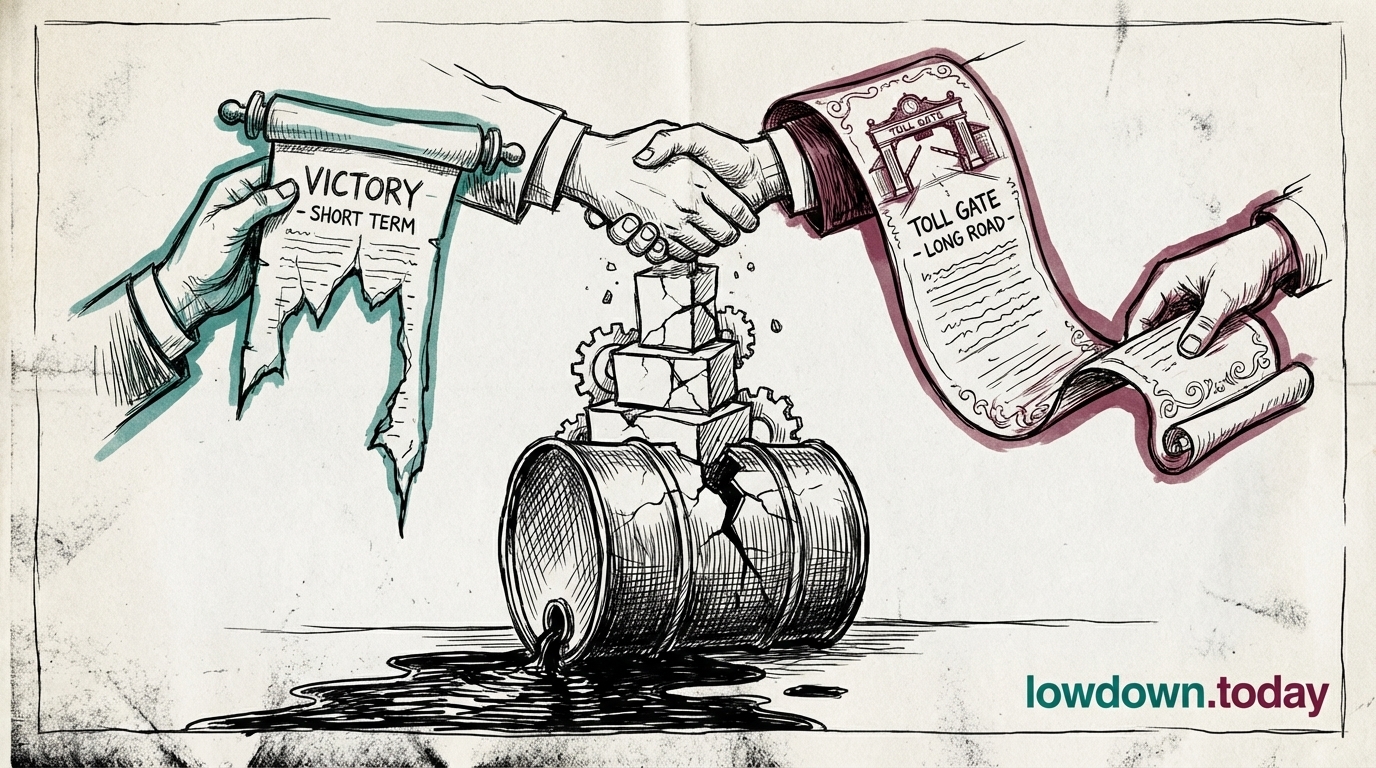
Iran says yes, Israel says no, Pakistan says yes — three primary parties describe the same deal three ways.

ConflictDeveloping
Key takeaway

Three signatories signed three different deals on the same day; Friday's Islamabad meeting must reconcile them.

The Lebanon question matters operationally because Hezbollah's 5 April precision anti-ship cruise missile against an Israeli warship was the most significant capability escalation of the Lebanese front. If Israel's reading prevails, IDF (Israel Defense Forces) operations on Lebanon resume inside the two-week window while Iran honours the Hormuz coordination protocol. If Iran's reading prevails, Israel must halt operations in a theatre Netanyahu's office has explicitly excluded.

The Islamabad Accord that Pakistan announced on 6 April was the framework Trump's deadline rhetoric leaned on for cover. Briefing #61 documented that the framework was unveiled over a dead diplomatic channel after Qatar refused mediation and Iran rejected the venue. Today's contradiction is the second structural problem: the deal exists as text only on each signatory's separate version of the page.

Deep Analysis

In plain English

Three countries signed the same ceasefire on the same day and gave three different answers to whether it includes Lebanon. Iran says yes. Israel says no. Pakistan says yes. The first thing the diplomats meeting in Islamabad on Friday have to fix is which one is right, otherwise Israel can keep bombing Lebanon while Iran honours Hormuz.

Deep Analysis
Synthesis

Day-1 ambiguity is the deal's load-bearing flaw.

Root Causes

The deal was constructed to be signable rather than precise. Each signatory needed a domestic framing that justified signing. The Lebanon ambiguity was the price of Israeli participation.

Escalation

Asymmetric risk. If Israel resumes Lebanon operations under its carve-out, Hezbollah retaliation could collapse the ceasefire through a Lebanese vector even while Iran honours Hormuz.

What could happen next?
  • Risk

    Lebanese-front escalation could collapse the Iran ceasefire.

  • Consequence

    Pakistan's diplomatic credibility depends on producing a unified text by Friday.

First Reported In

Update #62 · Two victories, two different lists

Middle East Eye· 8 Apr 2026
Read original
Different Perspectives
Islamabad (Pakistan Armed Forces and Foreign Ministry)
Munir's cancellation reflects Islamabad's assessment that no bridging formula survives the collision of Khamenei's uranium directive, Rubio's Hormuz red line, and the sequencing gap simultaneously; Naqvi's relay role signals continued Pakistani engagement without a mandate to close any of the three gaps.
Lloyd's of London war-risk market
Published PGSA coordinates give underwriters the cartographic input to model tanker route exposure inside the claimed zone; OFAC's Sunday GL V ruling determines whether Hengli-Singapore dollar-clearing routes carry secondary-sanctions risk from Monday, adding a compliance layer to the existing kinetic war-risk premium.
Hengaw Human Rights Organisation
Zaleh's trial lasted 'only a few minutes' before a conviction on PDKI membership charges at Naqadeh; the pattern of solitary detention, coerced confession, and minutes-long hearing is consistent with wartime political-charge architecture the organisation has documented across the Kurdish northwest.
Gulf Arab states (UAE, Bahrain, Kuwait)
The UAE has not published counter-coordinates to the PGSA's Hormuz zone map, leaving Emirati silence as the maritime-law response to Iran's charted boundary claim. Abu Dhabi's published position now defaults by omission toward implied acceptance of the zone's cartographic fact.
Beijing's Ministry of Commerce
MOFCOM's blocking order covers Hengli and four other designated refineries on the mainland but does not extend to the dollar-clearing layer in Singapore, making Sunday's GL V expiry the first live test of whether Beijing's sanctions-defiance architecture reaches the place where dollars settle.
The White House
The White House
Trump's verbal track on Iran has produced no signed Iran-specific presidential instrument across 84 days; both financial-sector EOs signed on 19 May are unrelated to Hormuz or the IRGC. Rubio's public naming of the Hormuz toll architecture as a deal-killer is the administration's most concrete new position this week.