

Skip to content
You can now search across every topic, entity and event.What's new
Cuba Dispatch
19JUN

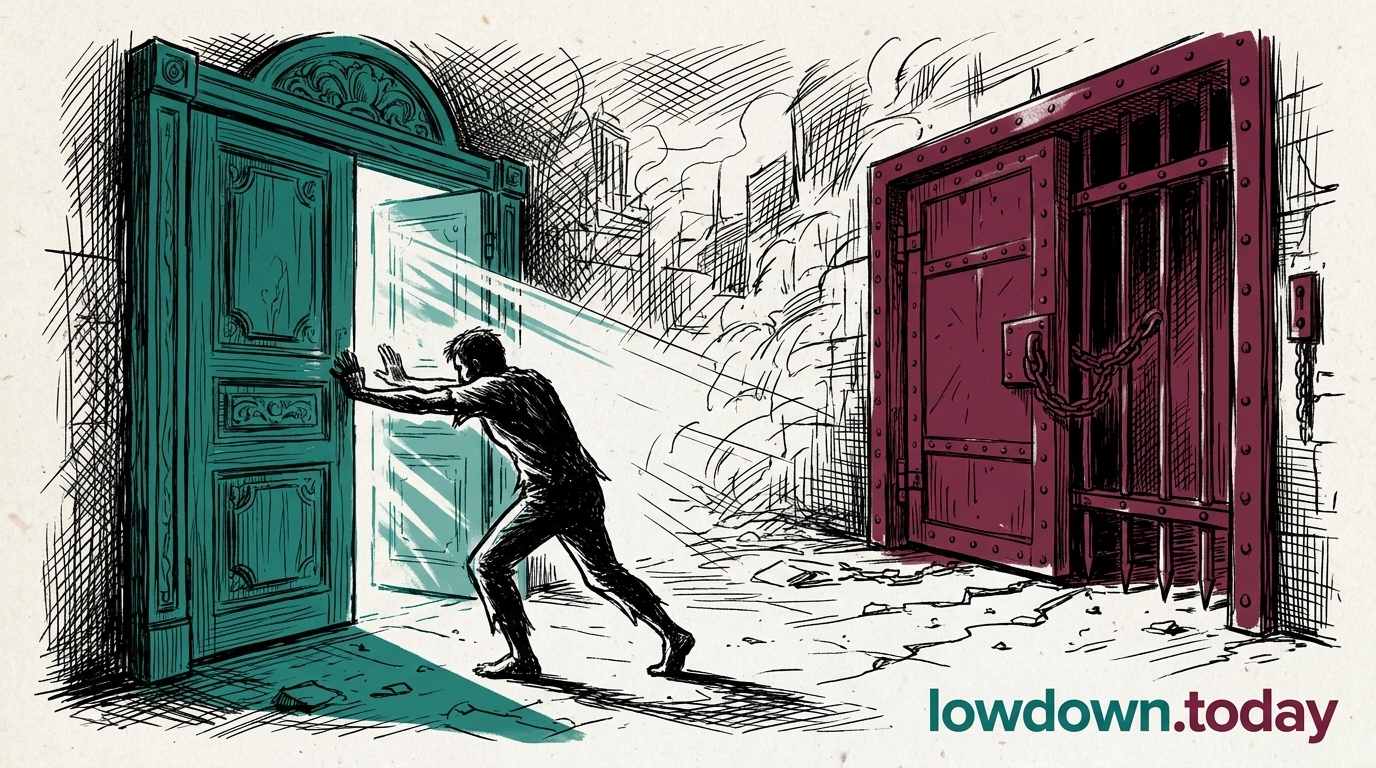
Cuba opens its economy as the door slams

3 min read
12:03UTC

Cuba's National Assembly passed 176 economic reform measures on 18 June, its deepest market opening since the 1960s nationalisations: private banks, dollar accounts, fuel imports and a cryptocurrency framework. The same 48 hours brought Rubio's dismissal, a European Parliament sanctions vote, and protesters in Santa Clara shouting 'down with the dictatorship'. The reform unlocks the exact functions the sanctions have just disabled.

Key takeaway

Cuba legalised a private economy on 18 June; the US, EU, and Cuban street all rejected it the same week.

This briefing mapped
Domestic
Economic
Diplomatic
Humanitarian
Infrastructure

Cuba's National Assembly passed 176 economic reform measures on 18 June, its deepest market opening since the 1960s nationalisations, in the same fortnight US sanctions slammed the door shut. Diaz-Canel told lawmakers: 'We are not doing this because of Yankee pressure.'

Sources profile:This story draws on mixed-leaning sources from United States and Qatar
United StatesQatar

Cuba's National Assembly passed 176 economic reform measures on 18 June 2026, the most sweeping market opening since the 1960s nationalisations. Measures include removing the 100-worker business cap, scrapping general price controls, and legalising non-state fuel imports.

Independent economist Pedro Monreal identified four absent preconditions that limit the reforms: energy, foreign currency, technology, and external demand. Cuba's state oil company was sanctioned on 11 June , blocking the fuel-import measure before it could start. 
The reform authorises private corporate banks, dollar accounts without forced peso conversion, a crypto framework and private remittance agents, ending GAESA's monopoly on diaspora flows. The catch: GAESA is itself a US-blacklisted entity, so the new channel inherits its sanctions exposure.

Sources profile:This story draws on neutral-leaning sources

Cuba's 18 June 2026 reform legalises private banks, a cryptocurrency framework, and dollar accounts without forced peso conversion. Transfermovil was licensed as a non-bank payment institution. New private remittance agents can now compete with the military conglomerate GAESA (Grupo de Administracion Empresarial).

GAESA sits on the US sanctions blacklist. Any new channel must prove it has no GAESA link. Otherwise it faces the secondary sanctions that drove Visa and Mastercard out of Cuba in June 2026. 

US Secretary of State Marco Rubio dismissed Cuba's 176-measure reform the day after parliament passed it: 'Not dramatic enough. It's not going to fix it.' The Trump administration signalled no change to the sanctions regime in response.

Sources profile:This story draws on centre-left-leaning sources from Qatar
Qatar

Marco Rubio dismissed Cuba's 176-measure reform on 19 June 2026. 'Not dramatic enough,' he said. 'Not going to fix it.' The Trump administration confirmed no change to the sanctions regime.

Rubio's rejection closes the diplomatic path the reforms appeared designed to open. Economist Pedro Monreal's analysis shows why: none of the inputs the private sector needs, energy, foreign currency, technology, external demand, are within Cuba's unilateral control. 

Sources:Al Jazeera

The European Parliament voted 283 to 199, with 85 abstentions, for Magnitsky-style sanctions on Diaz-Canel and GAESA leadership and urged suspending the 2016 EU-Cuba cooperation agreement. The resolution does not bind the EU Council, where Spain's tourism stake has long held the line.

Sources profile:This story draws on neutral-leaning sources

The European Parliament voted 283 to 199 on 18 June 2026 to urge individual sanctions on Cuba's President Diaz-Canel and military conglomerate leaders. It also urged suspension of the EU-Cuba cooperation deal signed in 2016.

The resolution does not bind EU governments, which must agree in the EU Council before any sanctions take effect. Spain holds a veto there, though its position weakened after Melia exited 15 of 34 Cuban hotels under US pressure. 

Cacerolazos broke out in Santa Clara and Havana on 17 June, the eve of the Communist Party plenum, with slogans shifting from 'electricity and food' to 'down with the dictatorship'. The Cuban Conflict Observatory logged 1,311 protests in May, near the December 2025 record.

Sources profile:This story draws on neutral-leaning sources

Protesters banged pots and pans in Santa Clara and Havana on 17 June 2026, the night before Cuba's Communist Party approved the reform package. Slogans shifted from 'electricity and food' to 'down with the dictatorship.' Cuba's Conflict Observatory logged 1,311 protests in May alone.

By the time the economic reforms passed on 18 June, the protest movement had already moved from economic complaints to political demands. The reforms addressed the first grievance; they did not address the second. 

Sources:CiberCuba

The Madrid-based OCDH logged 332 repressive actions in May, including 79 police sieges of activists' homes. Berta Soler, leader of the Ladies in White, and her husband were detained; a Colombian journalist was arrested and barred from re-entry.

Sources profile:This story draws on neutral-leaning sources

Cuba's human rights observatory, the Madrid-based Observatorio Cubano de Derechos Humanos, logged 332 repressive actions in May 2026. State security detained Berta Soler, leader of the Ladies in White, and her husband. A Colombian journalist was arrested and barred from re-entering Cuba.

Prisoners Defenders counted 1,281 political prisoners in May, with one death in custody. Ernesto Brieva Sempe died from kidney disease and malnutrition. Three members of the Patriotic Union of Cuba face sentencing on 1 July in Santiago

No tanker has reached Matanzas or Santiago since CUPET's designation on 11 June. Vanguard Energy's 250,000-barrel deal was cancelled after Washington denied it any authorisation to use CUPET facilities. The reform legalises a fuel import the sanctions physically block.

Sources profile:This story draws on mixed-leaning sources
LeftRight

No oil tanker has reached Cuba since US sanctions authorities designated CUPET (Cuba's state oil firm) on 11 June 2026. A 250,000-barrel Vanguard Energy deal was cancelled after the State Department denied authorisation. Energy expert Jorge Pinon identified one narrow workaround: isotank containers through Mariel port.

The reform's non-state fuel-import measure is inoperable because CUPET controls every terminal and filling station. Cuba generates 95.9% of its electricity from oil and gas. 

Sources:CSIS·CiberCuba

Tourism arrivals fell to 30,883 in May, with the January-to-April total down 55.8% year on year, stripping out roughly half the foreign currency tourism feeds Cuba. The reform bets private capital can rebuild a hard-currency base the sanctions are gutting.

Sources profile:This story draws on neutral-leaning sources from United States
United States

Cuba recorded only 30,883 tourist arrivals in May 2026. Total visitors from January to April fell 55.8% year on year. The informal peso rate hit 670 per dollar on 15 June, a new record.

Economist Pedro Monreal warned reforms cannot work without foreign currency, which tourism and remittances normally supply. CEPAL (the UN's Latin America economic commission) projects Cuba's economy will contract around 6 to 7 percent in 2026. The reforms address market rules; they cannot restore missing hard currency. 

Closing comments

Sideways tending down. The critical mechanism is fuel: if no tanker reaches Matanzas or Santiago by 30 June 2026, the 20-hour Villa Clara blackouts will spread to Havana. Cuba's 1994 Maleconazo began after five days of Havana cuts; the 2021 11J protests ignited within hours of a San Antonio de los Banos outage. A sustained Havana peak-hour deficit, which CEPAL's 6.5% contraction trajectory implies by July, is the specific trigger that would shift escalation from sideways to up. On the EU track, Spain's formal veto position has weakened after Melia's exit from 15 of 34 hotels but no member state has filed a Council restrictive-measures proposal; the September 2026 EU Council foreign-affairs schedule is the next institutional window.

AI-assisted, human-edited under the editorial responsibility of Bannermedia Ltd. Reviewed by Ed Woodcock on 19 June 2026. Editorial standards.

Different Perspectives
Cuban Government
Cuban Government
Diaz-Canel told parliament the 176 measures are not a response to US pressure but represent genuine ideological evolution: "We are not doing this because of Yankee pressure." The party frames market reform as a sovereign choice and the sanctions as economic coercion confirming Washington's bad faith rather than setting a bar Cuba must clear.
United States (State Department)
Secretary of State Rubio dismissed the reform the day after passage: "Not dramatic enough. It's not going to fix it." The Trump administration confirmed no modification to the sanctions regime, signalling that incremental economic liberalisation without political transition does not meet Washington's threshold.
European Union
European Union
The European Parliament voted 283 to 199 for Magnitsky-style sanctions and PDCA suspension; EU High Representative Kallas conceded the agreement "has not yielded the expected results." The EU Council has not moved, and Spain's formal veto persists despite Melia's hotel exits weakening Madrid's commercial rationale.
Spain
Spain
Spain has held the EU Council veto on Cuba restrictive measures since the PDCA was signed in 2016, arguing the commercial stakes of Melia and Iberostar justify engagement. Both chains have now exited GAESA hotels under US secondary-sanctions pressure, eroding the commercial argument without Madrid formally shifting its Council position.
Cuban opposition and human-rights monitors
Manuel Cuesta Morua called the reform "belated Chinese-style measures", crediting the direction while condemning the timing; OCDH and Prisoners Defenders document 1,281 political prisoners and 332 May repressions as the economy opened. For the internal opposition the reform addresses market rules while the security state remains intact.
Russia and China
Russia and China
Moscow and Beijing sent birthday solidarity to Raul Castro and rhetoric of anti-imperialist support but no cargo: the Sovcomflot Universal turned into the South Atlantic on 26 May with 270,000 barrels of diesel undelivered, and no successor Russian tanker has been confirmed. China has offered no oil substitute.