Skip to content
You can now search across every topic, entity and event.What's new
Cuba Dispatch
12JUN

Cuba's president lands on the OFAC blacklist

2 min read
09:35UTC

Washington designated Miguel Diaz-Canel personally on 4 June, the first sitting Cuban head of state on the OFAC list, then sanctioned the national oil company CUPET on 11 June. A new ownership-tree rule widened the net to the whole military economy. Prisoners Defenders logged a record 1,281 political prisoners and one death in custody.

Key takeaway

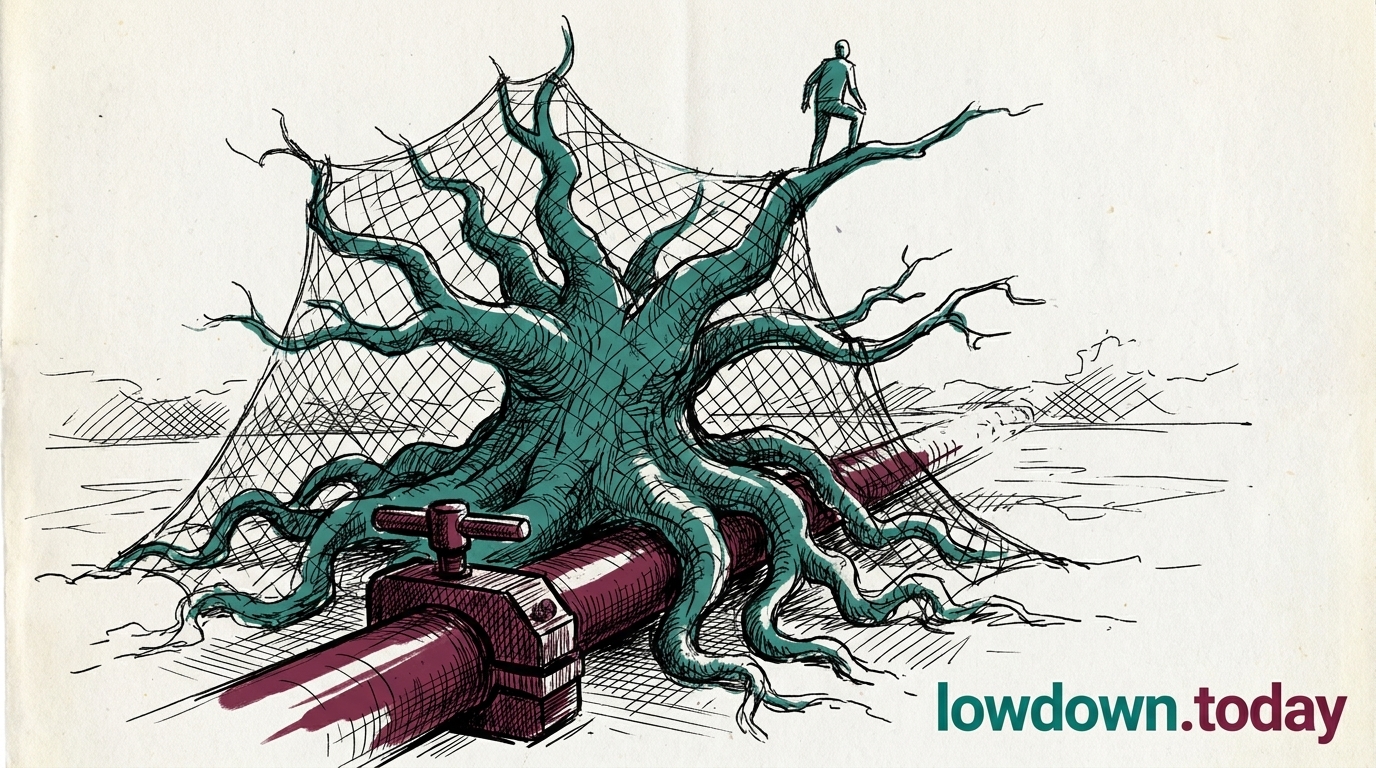
CUPET's designation locked the fuel crisis in by law; FAQ 1258's ownership rule is the broader weapon.

This briefing mapped
Loading map…
Regulatory
Humanitarian
Legal
Military

OFAC named Miguel Diaz-Canel to its sanctions list on 4 June, the first sitting Cuban head of state on the SDN register, then issued a quieter rule that reaches companies it never named.

Sources profile:This story draws on neutral-leaning sources

On 4 June 2026 the US Treasury blacklisted Cuban President Miguel Diaz-Canel, his wife, her son, Alejandro Castro Espin, and the armed forces ministry. Diaz-Canel is the first sitting Cuban head of state to be listed.

A rule issued the same day went further. It extends exposure to any firm half-owned by GAESA (Cuba's military business empire), even if unlisted. Foreign companies must now trace who really owns their Cuban partners. 

OFAC designated CUPET, the state oil company, on 11 June, closing the last legal channel for fuel imports as the grid ran more than 2,000 MW short with no replacement cargo in sight.

Sources profile:This story draws on mixed-leaning sources from Qatar
Qatar

On 11 June 2026 the US Treasury sanctioned CUPET (Union Cuba-Petroleo), Cuba's state oil company, citing the 1960 seizure of American assets. Rubio said the seizure had stripped American owners. CUPET licenses every fuel import, leaving no private-sector route around it.

Venezuela had already cut supply in late 2025, and a Russian tanker turned back on 26 May. The grid deficit hit 2,000 megawatts on 11 June. 

Ernesto Brieva Sempe died in custody of kidney disease and malnutrition, the one death in the May census that put Cuba's political-prisoner count at a record 1,281.

Sources profile:This story draws on neutral-leaning sources

Prisoners Defenders, a Spain-based group, tracks every named political prisoner in Cuba. Its May 2026 count, published on 11 June, reached 1,281 people, a record, up from 1,260 in April. Ernesto Brieva Sempe died in custody from kidney disease and malnutrition.

Cuba's Amnesty waves do not cut the count. The pardon law excludes the charges used against protesters. The 449 seriously ill prisoners face conditions like those that killed Brieva Sempe. 

Santiago prosecutors sought up to ten years for three UNPACU women who protested the November 2024 blackouts; after 18 months in pretrial detention, they learn their sentences on 1 July.

Sources profile:This story draws on neutral-leaning sources

On 5 June 2026, prosecutors in Santiago de Cuba sought ten years for Mileidis Maceo Quinones, eight for Edilkis Leon Giraudis, and five for Oneida Quinones. The three belong to the opposition group UNPACU (Patriotic Union of Cuba). Their crime was a November 2024 blackout protest. Sentencing is set for 1 July.

All three have spent over 18 months awaiting trial. This is the first 2024-protest case to reach sentencing. 

Sources:CiberCuba

The 24th MEU ran fast-rope assault drills at Guantanamo on 4 June, the same fortnight a Cuban general called a meeting with the US SOUTHCOM commander positive, so the force display and the quiet talking are running at once.

Sources profile:This story draws on neutral-leaning sources

US Marines from the 24th Expeditionary Unit practised fast-rope helicopter insertions at Guantanamo on 4 June 2026. The Marine unit built its formation for rapid building entry, not drug interdiction. US Southern Command announced the drill on 11 June, the day Washington sanctioned Cuba's oil company.

Cuban General Roberto Legra Sotolongo met the US commander, General Francis Donovan, on 29 May. He called the meeting positive. 

Sources:CiberCuba
Closing comments

With 27 entities and individuals now designated under EO 14404 and CUPET, the fuel chokepoint, on the SDN list as of 11 June 2026, the programme has reached the physical-infrastructure ceiling of the named-designation architecture. The remaining levers are secondary-tariff enforcement against third-country firms, a new executive order extending the legal architecture beyond EO 14404, or military action. The Legra-Donovan back-channel on 29 May and the simultaneous FRIES exercise at Guantanamo suggest a managed dual-track: coercive pressure maintained alongside a deconfliction floor. Direction: sideways to up. The specific tip-point is whether a Russian or Chinese tanker tests the CUPET designation by August 2026, or whether the 1 July Santiago sentencing triggers an EU restrictive-measures response that forces Washington to either accelerate or offer a wind-down licence.

Different Perspectives
OFAC / US Treasury
OFAC / US Treasury
OFAC's 4 June action placed Diaz-Canel on the SDN list and published FAQ 1258 extending secondary-sanctions exposure to unlisted GAESA-subsidiary firms; the 11 June CUPET designation invoked the 1960 expropriation as Rubio's stated legal rationale. The programme has now exhausted the main institutional targets within EO 14404's named-designation architecture.
Cuban government / MINREX
Foreign Minister Bruno Rodriguez Parrilla condemned the CUPET designation as 'further tightening the economic and energy blockade'; Diaz-Canel's standing public line is willingness for dialogue 'on equal terms' but political prisoners are explicitly off the table. Havana offers no new concessions after the personal listing.
Russia
Russia
Moscow sent birthday solidarity to the indicted Raul Castro on 3 June but despatched no replacement cargo after the Sovcomflot Universal turned back on 26 May. Russia's practical support for Cuba is constrained by its own war economy and secondary-sanctions exposure under the same OFAC architecture it benefits from in the Ukraine context.
China
China
China joined Russia in birthday solidarity to Raul Castro but has not moved a tanker to Cuba since the CUPET designation. Beijing's calculus resembles the post-PDVSA Venezuela calculation: barter or renminbi-denominated crude outside the US legal perimeter is technically available but requires absorbing secondary-sanctions risk Washington is deliberately signalling.
EU / Netherlands Foreign Affairs (Ollongren track)
EU Special Representative Kajsa Ollongren received the OCDH Acuerdo de Liberacion in Brussels on 13 May demanding asset freezes and a victims' compensation fund for political prisoners. Madrid's hotel-sector stake and the Spanish chains' own exit decisions create a structural tension within EU policy between restrictive-measures pressure and commercial-engagement continuity.
OCDH / Prisoners Defenders
OCDH (Observatorio Cubano de Derechos Humanos, Madrid-based) documented 332 repressive actions in May and formally demanded an EU reparations fund for Cuban political prisoners. Prisoners Defenders' May census placed the count at a record 1,281 with one death in custody; both organisations argue the EU restrictive-measures track is the remaining lever after the US programme has exhausted institutional designations.